Poftă bună

my surprising fantasy…

So I guess when I find myself lingering over an internet news story illustrated with a picture of a Big Mac, it’s time to start to talking about food.  I’ve managed to steer clear of the subject pretty handily for the last three months, other than giving sidebar compliments to my Stauceni host mom for her “healthy cooking.”  It was healthy, primarily, for being composed almost entirely (other than a tablespoon of oil here and there) from items plucked directly from the ground outside her kitchen door.   I ate soup (or ciorba, as they call it) for breakfast, lunch, and dinner.  Cold, lukewarm, and sometimes hot.  This had nothing to do with the weather, but rather when she might have prepared it and how long it had been sitting in the beci since then.

Honey, I Shrunk the Plates

You’ve all heard of Super-sizing your meal, right? That’s what we do in America – take reasonably sized things and inflate them to gigantic proportions: cars, houses, airplanes, hamburgers, sodas, boobs, lips, waistlines.  Well in Moldova, they haven’t quite caught up yet.  Everything is micro-sized. Or maybe it’s actually normal-sized and I’m just myopic in registering things on this scale.  Honest to god, their plates are six inches across.  They look like saucers.  I thought they were saucers when I first arrived and I kept searching through the cupboards for the dinnerware.
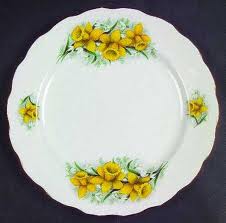
Moldovan plate only slightly smaller than actual size

Small plates actually equate to small portions – who would’ve thunk?  Dietetic problems solved – bingo!  One starts to realize how much was being previously consumed after finishing the micro-sized portion and not yearning for more.  Now, this can be partially attributed to the relative blandness of the composite ingredients – there are not a lot of fat/carb combinations stimulating the production of insulin and keeping the engine of fork to mouth churning.  But I think, for me, the very act of having a smaller portion in front of me (and not being the one in control of the portions or distribution) has changed my experience of eating altogether.  Since I actually eat more slowly (the food is just not that exciting) there is time for my brain to register that my stomach is full and I can blithely refuse the second helping that Moldovans are seemingly obligated to offer (probably because their plates are so small.)

What’s Cooking

While Moldovan cuisine isn’t bad by any means, it isn’t built on a distinctive melding of complex flavors.  There doesn’t seem to be the potential for artistry or creativity that propel some other ethnic foods to world-renown status (the French and Italians pop immediately to mind.)  I know some of my fellow PCVs would argue this point, but to me one cook’s placintă tastes pretty much the same as the next person’s.  I like sarmale, but it’s comprised of basic ingredients –  meat of choice (usually pork,) rice, onions, tomatoes, broth, with some dill and bay leaves stewed on the stove for a couple of hours, then wrapped in grape leaves and steamed for an hour or so.  Tada.

Lunch

Their cheese (brinza) is made, oftentimes, from sheep or goat milk and has a very distinctive, shall we say pungent, taste.  It doesn’t melt well. Butter is expensive and used sparingly – primarily as a spread (along with mayonnaise and ketchup – yuk!) on white bread.   Their herbal potpourri is limited (but maybe that’s because I can’t read all the Russian labels?) Meats – the ones cured from their farm-grown ducks, chickens, pigs and rabbits – are VER Y lean and spare.  (These aren’t animals that’ve enjoyed a pharmaceutically-enhanced, hormone stimulated, grain fed existence. A whole chicken here doesn’t contain near the amount of meat that’s in a two-piece lunch meal from El Pollo Loco.)  There is no brown/wild /jasmine rice, quinoa, barley, bulgur, faro, millet, or wheat berries to be had.  There is white rice, corn meal, and buckwheat, white flour and semolina pasta.  And plenty of grapes, pears, plums, potatoes, green beans, cabbage, carrots, onions, eggplant, tomatoes, and cucumbers (tons and tons of cucumbers.)  No lettuce, or spinach, or bok choy, or radishes, or radicchio, or leeks, or broccoli, or Brussels sprouts, or fennel. Occasional mushroom of the standard white capped variety.

I guess what I’m trying to convey is that the cook’s palette is very circumscribed.  You eat locally here.  And you also eat they what they’ve eaten for the last two centuries.   There isn’t much imagination or variance that goes into the pot.  Mostly it’s some combination of vegetables in a broth or sauce with a bit of meat added (sometimes) as a flavor enhancer.  Some cooks rely on pasta and rice to fill up the saucer/plate (my first Nina shunned these staples, but my new Nina is a fan. I don’t eat with her much.)  Putting cabbage and potatoes in a pastry (placintă) is a national favorite.  So is wrapping rice/meat fillings in grape leaves (sarmale.)  Zeama or ciorba de pui (sour chicken soup) is eaten two to three times a week.  Cold, for breakfast.

Anyway.  I have found my lifelong gusto for all things culinary has abated here.  Food is fuel.  That’s about it.  Mostly, it bores me.  I do get a brief frisson when I know the kitchen is clear and I can go in and wield a knife on the cutting board, but the dearth of stimulating ingredients when I open up the refrigerator soon quells it.  How many ways can one slice and dice vegetables?  Without an oven or food processor or crock pot, I’m kind of running thin on ideas.

Poftă Bună

With all the aforementioned now said, I must emphasize that Moldovans – like most cultures – use food as a primary mechanism for displaying graciousness, appreciation, inclusion, and nurturance.  They want to feed you.  PST devotes an inordinate amount of hours to discussions about food.  Yes, they tell which  foods to avoid and instruct on boiling water and sanitizing cooking implements and warn about checking label dates.  But they also provide guidance on how to politely refuse a third helping (customary politeness dictates acceptance of the second one, but not all of us are polite.)  They suggest tactful means of explaining that one doesn’t need to ALL the food that has been prepared in order to convey one’s appreciation to the cook.

I think this treatment of food as a bounteous expression is most beautifully illustrated by the Moldovan phrase “poftă bună.”  The word loosely translates as „bon appetit,” however, in other idioms the word poftă can also mean to lust for or after.  (And ”poftim” is an interjection with a variety of useful applications, from ”here you go” to ”pardon me” or ”Wtf?” – my interpretation, not the dictionary’s.)

In America, we enjoy our food with the best of them.  But we don’t regularly wish anyone sitting down to a meal “eat with lust!” or “Go for the gusto!”  But Moldovans do.  If any Moldovan, from five to seventy, walks into a room where someone is eating they say “poftă bună.” When someone hands you a plate of food, he says “poftă bună.”  When a server delivers you a bag of potato chips – “poftă bună.”  When a newly arrived guest joins the dinner table, be prepared for the refrain.  It’s ingrained in them, just like “gesundheit” or “god bless you” after a sneeze is for others.
Chai

Anytime I bring a friend into the apartment, Nina immediately prompts me to offer them chai.  When I try to tell her it’s not necessary, the person either doesn’t like chai or has only swung by to pick something up, she conveys a grudging but reluctant understanding through a barely tempered glare of disapproval.  I am not acting graciously in her mind. Moldovans will offer you chai if you look in their front gate as you’re passing by.

Perhaps it’s a good thing that I’m just not that into their cuisine.  Otherwise I might weigh 50 pounds more at the end of my service.  And that is definitely NOT on my Peace Corps agenda.

Dance, World.

So today is the 11th anniversary of 9/11.  Not necessarily a time period that will garner huge headlines back home, but – because I coincidentally referenced 9/11 in yesterday’s blog – it was in my mind as one of those shared experiences that, unfortunately, create a separate cultural context for me and my fellow PCVs from that of our Moldovan counterparts.  And that’s a shame.  Because it is through fostering that sort of subtle, but seemingly insurmountable divide, that those who wish to “terrorize” us win.

Yet it also put me in mind of a wonderful cross-cultural experiment that one crazy American is carrying on throughout the world: Matt Harding dances and is encouraging people to join him in rollicking troupe performances at locations across the planet.  You can read his whole story here, and I really encourage you to take a moment and do so, because it is one of those heart warming tales that affirm our best aspirations and that will breathe fire into whatever little fantasy might lurk in the wee morning hours about taking your life and propelling into a whole new trajectory.

Matt, for me, is the quintessential expression of everything that is uniquely, wonderfully amazing about Americans.  His ability to spread joy and create a shared space for exuberant fun and laughter is the BEST weapon I know for fighting the effects of terrorism.  I think the United States government should sponsor Matt, and others like him, to travel the world and spread the infectious exhilaration that being silly and energetic and jubilant together can germinate.  I defy anyone to watch this video and keep a smile from leaking across your face.  To paraphrase John Lennon: let’s give dance a chance.

So, as my friend Patty likes to say, “Put on your dance pants” before clicking: Where in the hell is Matt?

Here are the lyrics to Trip the Light, the song that everyone in the world should get to dance to, together, someday:

If all the days that come to pass

Are behind these walls

I’ll be left at the end of things

In a world kept small

Travel far from what i know

I’ll be swept away

I need to know I can be lost and not afraid

We’re gonna trip the light

We’re gonna break the night

And we’ll see with new eyes

When we trip the light

Remember we’re lost together

Remember we’re the same

We hold the burning rhythm in our hearts

We hold the flame

We’re gonna trip the light

We’re gonna break the night

And we’ll see with new eyes

When we trip the light (x2)

I’ll find my way home

On the western wind

To a place that was once my world

Back from where I’ve been

And in the morning light I’ll remember

As the sun will rise

We are all the glowing embers

Of a distant fire

We’re gonna trip the light

We’re gonna break the night

And we’ll see with new eyes

When we trip the light (x3)

Right back at you, al Qaeda!

Private Idaho

This slideshow requires JavaScript.

One of the more difficult aspects of my service in Hîncești is having to live with a roommate – or sora gazda, as she is called here.  Nina is always gracious and warm to me, but it is still strange to move in with someone you just met and whose language and culture you are still learning.  The most difficult part about it is being in another woman’s kitchen and bathroom – very intimate and personal places for most women, at least in the United States.  I am still not comfortable leaving my shampoo and razor in the shower, or storing my towels in her bathroom cabinet, or intruding into the kitchen cupboards with baking supplies, or preparing a full-fledged meal when she is at home.  It feels as if I am encroaching on her habitat; after all, I’ve been here about six weeks now and she still has her clothes in the wardrobe and pictures of her daughter hanging on the wall in my room.  I feel more like a transitory guest here than a renter with a two-year contract; perhaps I will move beyond this feeling in time, but for now, I keep my activities very circumscribed when she is at home and mostly live in my room.

So, on the weekends when Nina travels to her village farm, I get pretty excited.  Almost like I’m a teenager again and my parents have left me at home alone.  Only instead of breaking out the bong and beer keg, I buy pasta, tomatoes, and garlic and do some cooking.  On Sunday, Lindsey came over and prepared a bunch of wonderful salads – egg, potato, and cabbage with carrots – that furnished a relaxing picnic by the lake. (Lindsey is an accomplished cook and loves to experiment in the kitchen; I have been the lucky recipient of a couple of her concoctions!)

Matt and Patty H joined us.  I spend a lot of time with these three so it’s a good thing we all get along. In fact, it is beginning to concern me the amount of time that we spend together.  It is too easy to find comfort in the company of the familiar – no matter their age, gender, or provenance, they are AMERICANS.  People who immediately understand a reference to Walmart shoppers or reality TV shows or soccer moms or Starbucks.  (Ok, Matt and Lindsey probably don’t know who Eldridge Cleaver is, but how often does his name come up, really?) You don’t realize how much these shared cultural allusions pepper conversation, standing in for extraneous explication, allowing one to abbreviate and link ideas more efficiently.  It’s truly gratifying just being with people that come from the same place you do – and now that place stretches the length and width of the nation.  I am amazed how much I have in common with people with whom I would never have imagined being friends.

The most trenchant experience, I’ve found, that Peace Corps provides is to continuously drop you in social contexts which you would never elect at home.  Some are more comfortable than others.   But in every case, you learn more about yourself: you attain new altitudes of tolerance, irritation ,adaptibility, diplomacy, patience, curiousity, and compassion.  It is a common experience for us to have different personas or  „masks” that we wear in different situations.  But here, it’s as if the change goes deeper.  Being thrown together with a group of people that would ordinarily never coalesce within my purview, and then sharing such startling and foreign circumstances with them, changes the channels of my emotions, my reasoning, and my needs.  I think differently, feel differently.  My inner space is expanding, accommodating more and simultaneously losing landscape quickly.  Things are mobile, transitory.  And I hold on to these Americans in a desperate effort to grasp those orienting touchstones slipping from my world.

Moldova is very different from other foreign countries, like Guatemala, or Peru, or Ecuador, that I’ve visited.  In those places, being from “America” (read the USA) made you special, as if there were an invisible halo surrounding you, or your fingers emitted sparkles, or your laugh tickled people’s funny bone.  In those places, the children would gather round me in puddles, lapping up my attention, fingering my clothing like it was made of stardust.  People smiled spontaneously at me on the street.  I felt a little like a Kardashian, celebrity as categorical referent.  Moldova? Not so much. In conversation, I have asked Mldovans about 9/11.  Disneyland.  Hollywood.  The Golden Gate bridge.  Nope. Nah, no ințelege.  Not a clue.  How do you find common ground with someone whose never hear of Batman?  Mickey Mouse?  Star Wars?

Sunday, I found myself lying on my back on the grass, watching the clouds roil above me and listening to conversation (eu ințeleg) drift over me.  The sun was diamond glinting the lake and birds were skittering through the reeds. Almost, I could have been lying by a lake in Orange County.  Just for a moment, a small enclave carved itself out from the turbulence of the past three months and gleamed warm and radiant.  And I realized that I was retreating into another safe haven, that I have made my site mates into my little private Idaho (another cultural reference.)  And the final step in my  integration will be to attain this level of comfort in the house where I live with the person that is my roommate.

When (if) I do, I will have achieved one important goal of this journey.

 
If all the days that come to pass
Are behind these walls
I’ll be left at the end of things
In a world kept small
Travel far from what i know
I’ll be swept away
I need to know I can be lost and not afraid
Remember we’re lost together
Remember we’re the same
We hold the burning rhythm in our hearts
We hold the flame
..
I’ll find my way home
On the western wind
To a place that was once my world
Back from where I’ve been
And in the morning light I’ll remember
As the sun will rise
We are all the glowing embers
Of a distant fire

Hitching a Ride

Matsura

So this past Saturday I am cornered into attending baby Alexandru’s 5 month birth day party.  As mentioned in a previous blog, my host sister Nina is the nona for a delightful young couple who have three boys, the youngest one for whom Nina is the „matsura.”  This is akin to a godmother, though it doesn’t appear to have as much to do with religion as it does with providing presents each month on the anniversary day of his birth. (I am beginning to wonder if I will have to be in attendance for the next 7 months, until he turns one.)

The celebration is again in Boghaceni but – since it is not raining this time – I feel a bit less trepidation regarding the logistics of the journey.  That was before I figured out that Nina would be traveling at a different time than me, so had arranged for me to accompany a male friend of hers that had been by the apartment a week or so ago for lunch.  (Nina has quite a little harem of male friends whose relationship to/with her I am not able to absorb with any real degree of understanding.)  This particular friend is a „profesor de mașina școala” (a driving school instructor) and purportedly has his own vehicle in which he conducts his lessons.

So I’m thinking: Cool, my own chauffer again – ala Therry .  Only this time it’s an actual driving instructor so he probably drives a whole lot better.  And, as I wait on the street in front of the apartment building for him to appear, I actually begin to have little fantasies about the car he drives: Perhaps it has door handles that work from the inside…maybe even seatbelts… air vents…maybe it will be one of those Landcruisers I see all over town with leather seats and leg room… crap! It might even have air conditioning OMG!!! 

Then suddenly, he’s in front of me, smiling and lifting my bag and motioning for me to cross the street.  Huh?  Where’s the car?  Maybe he parked across the street…  Hey wait a minute!  I realize this is not the driving instructor, but his side kick, the one that kept asking me if I had a daughter in SUA and whether she was married (dude, gross, you’re my age!)  As I am busily trying form topics for conversation that don’t involve my daughter we stop at the corner amidst the crowds waiting for a ride out of town.  Hmmm.  Is he trying to solicit a passenger before we even get in the car? I’ve never seen this done before, but okay. 

It takes me a full minute to realize that, in fact, there is no car, we have no ride, and we are among a haphazard hoard coalesced on this corn attempting to flag down some sort of vehicle to transport us into the hinterlands.  Ok.  I can do this.  I can get into a car with a veritable stranger driven by another stranger to go to a strange village to celebrate a strange event with strangers.  I am in the Peace Corps. And I have equipped myself suitably, this time, with a bottle of wine and a bag of candy.  I am integrated.  Can’t wait to get there.

It takes maybe 10 to 15 minutes, during which time my friend – let’s call him Andrei, I never did get his name, because, after spending as much time in close quarters with someone as I did him, you just can’t figure out the tactful way to ask his name  – approached a variety of vehicles, from luxury SUVs to something sporting four wheels that was just barely above a horse cart, before he finally found us a ride on a plumbers? Electricians? Construction suppliers? van headed for the Romanian border.  It had room enough for a multitude of us and that’s indeed what boarded….maybe 8 to 10 people.  My friend Andrei seemed to immediately adopt the cruise director role – he is inviting others aboard and negotiating prices and storing baggage and helping old ladies board.  Everybody instantly adores him.

We sit in the front with the driver and I am instantly in the middle of a lively repartee.  Jokes are flying back and forth and words I’ve never heard, punctuated by loud guffaws, are exchanged (everyone in back is strangely silent – I think it best not to ask.)  I clutch my bag, managing not to land on the dashboard or Andrei’s lap through interminable miles of bumpy, pothole punctuated road.  Two times the van/truck pulls over and Andrei  negotiates prices with the people congregated on the side of the road (why he is suddenly anointed part of the bargaining team, I could not for the life of me figure out.)  He also gets out to help another bunică (grandmother) onto the truck.  She apparently gets to ride for free.

After about 45 minutes we are dropped off at the side of the highway at a place I vaguely recognize to be near the road I turned down the last time I visited the baby Alexander.  Only we’re some 100 yards afield ( kilometers?) from the turnoff and Andrei doesn’t appear to be the least bit interested in heading that way.  Instead, he motions me to pull out my phone (it seems he doesn’t have one – what?) and we make a call to Nina, who shouts something rapidly, and all but unintelligibly, to me and then hangs up.  We try several other phone numbers with no answer.  We call back Nina and I hand the phone quickly to Andrei.  He speaks for awhile and I gather that the car that is supposed to retrieve us is not working and we will have to walk.  Oh really.  Here we go again.  (Me and my diva knee.)

So we walk.  Down a road in the opposite direction of the road I took before.  (Andrei?  I don’t think this is the road…no cred acest este drumul…) And we walk.  But – oh  my lord above, and now I hear the angels singing, – a rutiera goes by and dear Andrei flags it down.  Some words are exchanged.  Things aren’t perfect I can tell – this is a rural road going nowhere and this rutiera cannot be the final solution, but we board.  And drive about a hundred feet (meters?) And then stop.  In front of a gate to a house.  And someone comes out.  And I dare to think: oh, we are here!  Even though this wasn’t the road I took before and this isn’t the house I went to before, perhaps we are here!  And Andrei is back slapping the dude and they are talking and laughing and he invites us in and then we’re in a courtyard where some 20 people are seated around a table with a pile of food and wine. And a glass of wine is poured, for both me and Andrei.  And the standard “Noroc” is hailed and we clink glasses and drink.  But I don’t see Nina…unde este Nina? I ask. Andrei looks at me funny.  Mergem…(we go.)

To continue walking.  A mile of country road. Goats. Geese. Silence.  Unde vom merge? (Where are we going?)  Another quizzical look from Andrei.  (Like, why is this so hard to understand, you dimwitted American?) Then there is a man standing on a corner.  Andrei engages him in animated conversation.  The man takes my bag. He begins to walk with us down another road.  (Is he a guide, sent to find us? An angel affirming our path? A beggar looking for a handout? I have not a clue.  I never will find out.)   Some twenty or so minutes later we enter another gate.  No one appears to be around.  Andrei calls out.  A man emerges from one of the houses in a bathrobe.  It is the original driving school instructor.  He is naked beneath a bathrobe that barely hits his knees.  The man carrying my bag returns it to me, gives us a salute and departs.  I guess we don’t know him, after all. (Just like we didn’t know the people at the first house, where the rutiera dropped us, and they offered us wine.)

The driving school instructor returns to the house.  I accompany Andrei into the extensive garden out back, where I spend a half hour admiring the plushly plump grapes and dead yellowed corn.  We return to the house when we hear Nina’s voice.  She is really here.  I am not a victim of an eastern European human trafficking ring, after all.

Thence commences a three hour interlude in which I am fed wonderfully roasted meats, fresh vegetables, homemade bread, and watermelon, washed down by a not insignificant number of glasses of homemade wine.  I must confess that I spend most of the time with the six year old, who is completely and all too easily enamored by the games I’ve previously downloaded onto my iPad ( I do think ahead, folks.) Romanian chatter surrounds me.  I understand a smattering.  A mere smattering.  I am blissfully happy not having to respond, caught up in play with the six-year-old ( never mind that it isn’t me he wants, it’s the iPad doing all the engagement.)

And then it’s time to leave (after the dancing part, but I don’t think I could really do that justice, so I’ll just leave it out for now.)  We’ve made the obligatory trip to the beci (the underground cave where Moldovan’s store their wine and jars of peppers and probably conduct all their dirty deeds) and I have been offered, and drank, the requisite cupful of 200 proof alcohol.  My head is reeling.  Now we need to find our way home, the three of us (thank God,) Nina, Andrei, and me.

Alexandru’s father gives us a ride to the highway. We disgorge from the car a laughing, rollicking mess – all three of us are drunk beyond our extended years.   We’re much too old for this. Now we find ourselves standing by the side of deserted highway. Not a car in sight.

But- what’s this?  There are hummingbirds.  Yes.  Hummingbirds, feeding on flowers by the side of the highway.  And I am, of course, enamored.  Hummingbirds!!  I say.  (This in English.)  Andrei and Nina don’t speak English.  I MUST find the words to communicate.  BBBBRRRRRR, I say, and flap my arms.  I point to the hummingbirds. “Pasarea mica”  (Little birds) BBBBBRRRRZZZZ.   Nina grimaces.  “Insecte!” she says, very clearly.  Huh?  Insect?  NO, IT’S A HUMMINGBIRD!  BBBBRRRRZZZZZ.

And then they start laughing, Andrei and Nina.  And laughing.  And laughing. And laughing.   “Nu vorbești Engleza, nu vorbești Română.”  (you can’t speak English, you can’tspeak Romanian.”  They think I am making buzzing noises because I am drunk.  They are falling down by the side of the road; laughing at me.  I laugh along.  I WILL integrate, I will!!!

And then a huge truck is pulling up, right alongside of us, as we are rolling about on the road.  Andrei springs to action, garnering us a ride.  And then I am heaving myself after Nina, 10 feet (meters?) up in the air.  The seat is dented, crooked ( like so much of Moldova) and I spend the entire 45 minute ride trying not to roll onto Andrei’s lap as he braces himself against the dashboard.  Jokes are flying, along with our bags, as we careen down the road at a high rate of speed, accompanied by a mishmash of Russian/Ukranian rap inexplicably punctuated with American love ballads. By this time of night I should be asleep, only I am too conscious of how close I am brushing up against anonymous death.  I should be remembering this moment, I think.

And it seems that I did.


(Were they really hummingbirds, I try to recall the next day?  Or giant scary insects?  Who is right, I think?  Who really cares…)

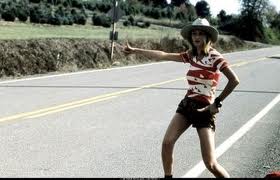
The Sissy Hankshaw Reprise

When I was 21 years old I lived with April on the beach at Mussel Shoals, just north of Ventura, California.  I can’t remember why we decided we were going to walk up Highway 1 all the way to her parents’ home in Sacramento – as I remember neither one of us had a car or very much money – but it didn’t take many miles to abandon any notion of completing the journey on foot.  (I think she developed a terrible toothache and it became imperative that we reach our destination quickly.)  Anyway, roundabout San Luis Obispo we stuck out our thumbs and it didn’t take long for a nice man to pull over and invite us into his van.

Now this was the early 80’s, when serial killers like William Bonin, the Zodiac Killer, Richard Ramirez, and Randy Kraft were out and about, conducting their grisly business.  The public was just becoming aware of the “dangers of hitchhiking,” but it was still a common enough practice that one didn’t need a cardboard sign, a camp chair, and two liters of water to wait out a lift.  Generally, if a female stuck out her thumb, she was going to get picked up.  And – lucky for us – the nice man took us home, let us shower, fed us, and refrained from assaulting us with anything more than a fatherly lecture on the potential pitfalls of two girls accepting rides in vans from strangers.  He then drove us to the southern terminal of BART where we bought tickets for the remainder of our journey.

And that was the last time I had hitchhiked.  Until I came to live in Moldova, that is, where hitchhiking is an integral and absolutely necessary aspect of the national transportation system.  I thought it was rather odd that – while PST was chock full of dire warnings about walking home alone after dark, or leaving a fellow volunteer alone in a bar, or smiling openly at men passing by – not much was said about the “dangers of hitchhiking.”  It was if there was a tacit understanding that anything said about it was useless and gratuitous.   Volunteers, just like everyone else in Moldova, are going to end up hitchhiking to get around; it’s a fact of life.

People in Moldova hitchhike because most of them don’t have cars, the rutieras are invariably jam packed, they stop every block to pick up and discharge passengers,  and they quit running  altogether between most points by 6:00 or 6:30 every evening.  If you don’t have two hours to waste making the 35 kilometer trip between Chișinău and Hîncești on a bus then you join the crowd standing out on the highway in front of the Gara de Sud and flag down a passing car to negotiate a ride.  Actually, you don’t even need to flag them down – cars pull up almost every minute offering empty seats to interested parties.

And what are the details of the transaction?

Well, strangely enough (for Americans at least) they aren’t worked out beforehand.  If a car stops and the driver is heading to the same destination you are, then you get in.  End of story.  Many times, not another word is exchanged.  (I know this from because Therry has picked up many a stray passenger during my various trips with him.)  When you reach your destination, you offer the driver some money.  The „acceptable” rate equates to what you would have paid on a rutiera.  But most people offer 1.5 to 2 times that amount.  Sometimes the driver accepts the entire amount, sometimes *he only accepts a portion, and sometimes he doesn’t accept any money (what????)

I have no clue what the subtext of the transaction might be.  Do some drivers never accept money?  Or do they accept it from people that seem like they have money and not from those who don’t?  Do they take it from men, but not from women?  Do they charge more for young people and less for old?  Perhaps they only take it when they’re low on petrol?  I will have to be better integrated to figure out this particular cultural puzzle, I guess.

What I do know is that it is a system that works and supplements the public transportation suprisingly well.  It makes not having a car a much more viable choice.  And Sissy Hankshaw was a damn fine character, after all.  America, you might want to rethink this option.  Really, serial killers are not that prevelant in the population and gas is not getting any cheaper…

And there are times when it can be a whole lot of fun.  Next post: last weekend’s rides with long distance truck drivers…..

*Note the use of the pronoun „he” – I have ridden once in a car with a female driver (the wife of the English ambassador) and have seen exactly NO female rutiera drivers.  About one in 15 or 20 drivers on the street is female.  I think this is probably because driving is such an aggressive and extreme risk-taking endeavor here.  Most women are not in favor of causing gratuitous multi-vehicle pile ups and needless deaths just to establish their hormonal merits.

Rethinking the Peace Corps Experience


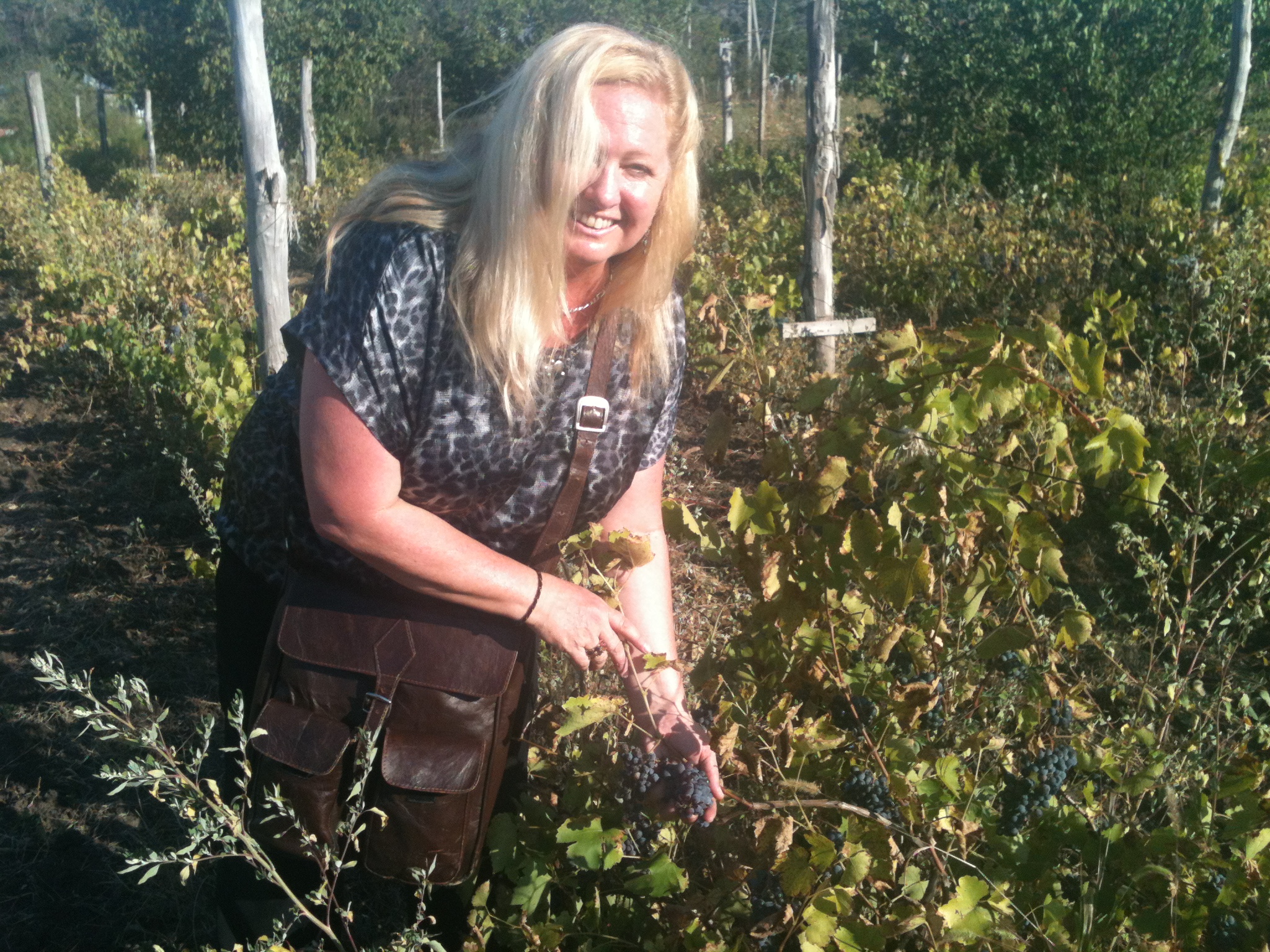
Picture of me unrelated to this post but provided for the benefit of my grandma and father. You’re welcome.

My postings are shifting from frantic, nearly daily hand wringings when I first arrived in Moldova to a more leisurely drop-in visit once a week or so, I have realized.  I attribute this both to becoming more acclimated to my surroundings – successful integration – and to having beat a retreat into a state of meditative contemplation, which is a really a westernized, acceptable way of admitting I have a remarkably empty mind these days.

For so long I had been preparing to leave overseas, having to think about applications and essays and medical visits and disbursing twenty years’ worth of accumulated possessions and packing clothing and selling the condo and tying up financial matters; and then I was here, in Pre-Service Training, meeting herds of people, hearing and speaking a new language, familiarizing myself with a new culture and geography and transportation system, eating different foods, establishing routines of boiling and filtering water and hand washing clothes, setting up a new bank account and telephone…it was so much novelty coming at me my head was like to burst at times and I had to get it all down  and out of me.

Now, I live in Moldova.  And life is becoming routine.  Funny how three months changes things.

Last Tuesday, I began going to the “office” everyday.  I started Tuesday because Monday was the 21st anniversary of Moldova declaring its independence from Russia and I only worked through Thursday, because Friday is their national language day.

Political/cultural segue – skip if you’re not into history.

Going to the office as a Peace Corps Volunteer is very different from going to the office as an executive administrator, I am finding.  People only darken my doorway to ask, “Ați dori sa mancați?” (Would you like to eat?)  I am not responsible for anything related to day to day operations and – obviously, with my language being as juvenile as it is at this point – am not an abundant source of pertinent information (or gossip, for that matter.)  Other than Ana, my partner, stopping by to struggle through our (pathetic) attempts to plot her management strategies, I am mostly left alone to translate documents, peruse online funding resources, study Romanian, or surf the web as the whim takes me.

The Peace Corps drills into us, over and over and over again, that it will take months and most likely all of our first year to become sufficiently proficient in the language to be of any real use to our partners.  This is the primary reason Peace Corps service lasts for two years and why volunteers who extend to a third year are so valued and effective. Though we accept this conceptually, in practice it is simultaneously anxiety-provoking and stultifying.  Who wants to spend a year confined within a little tower of Babel, unable to begin a satisfying – much less challenging – task because one cannot communicate with one’s compatriots?  There is a buzz of activity and purpose in the air but you cannot participate in or contribute to it because your ears and tongue are not set to the same station.

I think it is doubly hard for Americans, as our culture is built on the precept that activity equals  Purpose and Purpose defines Meaning, from which all notions of success derive.  Sitting at a desk madly trying to imprint the squawking hieroglyphics of a foreign language into one’s reluctant brain does not feed one’s longing for Purpose, let me tell you.  So the most mentally satisfying practice I’ve found at this point is to cultivate an empty mind.  Think about nothing. Or rather, quit thinking about the things that formally filled up one’s brain and open it up to new content.

With the result that I (and most other PCVs here) flee to the comfortable filler of the Internet when the afore-mentioned empty mind’s echoes begin to reverberate too loudly.

Silly but informative segue: OMG!  The wealth of free entertainment available on the internet!!! PCVs and their cohorts are scrappy treasure hunters that regularly unearth and proclaim the bounteous pleasure of sites like Project Free TV, which is currently providing me with every episode of How I Met Your Mother (the Friends of the 21st century.)  Or Grooveshark, where for the first time ever I found an uploaded copy of Buckingham Nicks (orgasm!)  And Brain Pickings, where the inimitable Maria Popova, an Atlantic Montly writer and MIT Futures of Entertainment Fellow, curates a delectable sampling of cross-pollinated tidbits from the writings of Anais Nin to the science of Michio Kaku. Or the delightful and stimulating Big Think, where some fascinating thinkers propose tantalizing ideas in a series of video monologues.

Honestly, I think the Peace Corps would be a substantially different experience without access to the Internet.  My fellow PCVs and I talk all the time about our dependency on its encyclopedic information and divertissements.   When one is ready to pull one’s hair out from hearing Romanian ad naseum, there is always English to be heard on the internet.  When one has a need to build a white board from scratch, check the internet.  Question about substitutions for ricotta (impossible to find in Moldova) in lasagna?  It’s on the internet.  Need to translate that indecipherable Russian label on a hygiene product?  Internet. Hopelessly confused by the unfathomable melancholy many Moldovans display for aristocratic and/or authoritarian forms of government? Wait for it…..Internet!

We reluctantly admit that we cannot claim to be having the “authentic Peace Corps experience” that by now has attained mythic status amongst us.  What would it be like to be serving in Thailand, for example, in a mud hut with no electricity?  Or Timbuktu, in a yurt at 40 below?  Or in Birkina Faso, helping to deliver babies with traditional midwives with no plumbing, sanitation, or medical safety nets?  There are PCVs right now living in conditions that far exceed Moldova’s (the ‘Posh Corps’) in hardship, isolation, depravation, and cultural displacement.  Moldova is too much like a younger, poorer, distant cousin of the United States to make it feel as if we’ve been kicked out of our universe.  And we have the internet.

A couple of us were speculating yesterday on why the Peace Corps is still in Moldova.  They feel so close sometimes to having attained a foothold into western-style economic capitalism – see the McMansions and BMWs and Victoria Secret fashions and cell phone towers cluttering the landscape – that we are often puzzled by what the substance of their need might truly be.  One of the answers we posited relies most heavily on the last two of the three main goals of the Peace Corps:

  1. Helping the people of interested countries in meeting their need for trained men and women.
  2. Helping promote a better understanding of Americans on the part of the peoples served.
  3. Helping promote a better understanding of other peoples on the part of Americans.

Just by being here, we help foster an important political and cultural dialogue for the Moldovans as they continue to struggle with the lingering, sugar-coated memories of the Soviet system of minimum entitlement while concurrently suffering from democratic capitalism’s imperfect success in bridging economic, social and educational barriers within their country.

And by having access to the internet, and sharing our experiences, perceptions, and thoughts, perhaps we PCVs are contributing to the emerging discussion in American about our hardwired cultural precepts, blindfolded nationalism, and rampant materialism.  And we run across fresh takes on why the juxtaposition of post-soviet mentality with 21st century EU aspirations of consumerism are so confusing, yet potentially stimulating and fruitful.

Slavoj Žižek is a Slovenian philosopher and cultural critic who is a professor at the European Graduate School, International Director of the Birkbeck Institute for the Humanities, Birkbeck College, University of London, and a senior researcher at the Institute of Sociology, University of Ljubljana, Slovenia.  He proposes an extremely interesting take on what our global mission should be at this particular point in civilized history.  After reminding us of the horrible failure that communism in practice turned out to be, he turns to the would-be capitalism reformists:

This is why, as I always repeat, with all my sympathy for Occupy Wall Street movement, its result was . . . I call it a Bartleby lesson. Bartleby, of course, Herman Melville’s Bartleby, you know, who always answered with his favorite “I would prefer not to” . . . The message of Occupy Wall Street is, I would prefer not to play the existing game. There is something fundamentally wrong with the system and the existing forms of institutionalized democracy are not strong enough to deal with problems. Beyond this, they don’t have an answer and neither do I. For me, Occupy Wall Street is just a signal. It’s like clearing the table. Time to start thinking…

My advice would be–because I don’t have simple answers… precisely to start thinking. Don’t get caught into this pseudo-activist pressure:”Do something. Let’s do it, and so on”. .. [T]he time is to think. I even provoked some of the leftist friends when I told them that if the famous Marxist formula was, “Philosophers have only interpreted the world; the time is to change it” . . . thesis 11 . . . , that maybe today we should say, “In the twentieth century, we maybe tried to change the world too quickly. The time is to interpret it again, to start thinking.” (emphasis mine)

And actually, the internet provides a very effective means for sustaining and building this strategy.   Especially for Peace Corps Volunteers.  We have cleared our metaphorical tables, so to speak.  Our minds have become empty.  Now we can begin filling them again with impressions, perceptions, and interpretations formulated through exposure to a people striving to follow our journey, but with a much more complex web of cultural, linguistic, political and economic circumstances to untangle.  (If you actually clicked the link on Moldovan history above, this would make more sense.)

Our dialogue is potentially fruitful and enlightening for both parties.  We can learn from each other’s histories.  Knock ourselves out of repeat mode. Think rather than mindlessly do.

Perhaps by me living and working with Moldovans, and them puzzling over the discordant picture I represent of Western-style success (You left your family why?  They pay you what?), and both sides spreading stories through emails and blogs and Skype sessions and Facebook and Tumblr and tweets, we are – each of us – reframing, reinterpreting, rethinking our world.

And, while we’re at it, that enduring myth of the “Peace Corps experience.”

Sofer mi franceza

So another adventure in Moldovan logistics leaves me wilted and limp from the effects of too much sun and an adrenaline rush.  Some times I wonder if I will survive my Peace Corps service intact.

This is my driver, Therry.  Now he’s not my personal driver, but he has been the person – other than anonymous rutiera drivers – primarily responsible for transporting me from point A to point B in Moldova.  He picked me up in Chișinău and brought me to Hîncești, he drove Ana and I to a work-related meeting in Chișinău last week, and yesterday she arranged for him to drive me and two other PCVs to Orhei Veche for the Gustar music Festival (more on that in a minute.)  He is somehow connected to Ana and/or the organization where I work, but the details remain ambiguous and elusive.

Therry is French.  He speaks only French, yet he’s lived in Moldova for more than two years.  He doesn’t appear to have a job, yet he certainly isn’t without money or other resources.  I asked him once (through Google translate) how he made money to live here and he actually made the sign for zipping his lips and walked away. That was the end of that conversation.

Therry is almost stereotypically, cartoonishly French, his gestures are so animated and exaggerated. He is forever kissing women’s hands, arms and cheeks – a mode of greeting viewed as informally, inappropriately intimate and not usually welcomed or tolerated by Moldovan woman from perfect strangers.  But somehow he gets away with it.  Probably because he’s French.

Therry drives in a manner commensurate with his personality – large, haphazard, and flamboyant.  Lanes are not even suggestions, they’re meaningless markings left behind from some another rule-bound activity that couldn’t possible apply to him.  One side of the road is as legitimate as the other in the race to reach his destination.  Other drivers are obstacles placed in his trajectory that he must surmount and occlude. Potholes are launching pads for gaining air speed. At one point I checked the speedometer and he appeared to be doing 95.  This, in a Renault four-speed van that was not manufactured in this century, equipped with just the shoulder-harness part of the seatbelts and door handles that only work from the outside. Now I understand why vehicle accidents represent the largest percentage of all Peace Corps’ in-service fatalities.  And I’m not even in Africa.

Therry was supposed to pick me up at my house at 10:00am for the two-hour trip to Orhei Veche.  By 10:30 when he hadn’t arrived, I texted Ana.  (This, and all my subsequent communication with Therry throughout our tumultuous day, had to be conducted through a web of communication devices involving my partner Ana, who speaks French and Romanian; her friend Doina, who speaks Romanian and English; Irina, who was in the car with us, but only speaks Romanian; and me. It felt a bit like the United Nations.)  Ana texted back to say that Therry was at the vets with his dogs and would be here at 11:00.

When 11:30 arrived with no sign of Therry I texted Laura, who was waiting for us at the PC Office, to call her work partner Doina to find out what was going on.  Doina called Ana who said that Therry had come to my door, knocked and rang the bell repeatedly, but got no answer.  (Apparently, he went to the wrong apartment.) Ana sent Therry back again to retrieve Lindsey and me.  When he pulled up, there were already five people in the van, including him.  He was motioning for us to get in, even though there was no room.  I climbed in the luggage space in back of the seats and Lindsey got onto someone’s lap in the back.  I immediately called Doina to tell her I didn’t know where we were going to put Laura.  As we were talking, however, Therry pulled up to an apartment building and the three others in the back with Lindsey got out. (It turned out they were Irina’s kids who they decided to take with them when they couldn’t find us.)

By 12:30, 2 ½ hours after our scheduled departure time, we had picked up Laura and were on the road to the Gustar music festival at Orhei Vechi.  Why anyone would allow music promoters to hold a festival at the site of a thousand-year-old archeological site astounds me, but this is what happens when governments are occupied with struggles that prioritize concerns more basic than the preservation of history and culture.  (Paul, you were interested in hearing samples of the local music: click on the “Gustar” link above for a video showcasing many of the performers.)

We roared into the parking lot about 2:30pm.  And I do mean roared. Therry barely slows down to park, so we hit the small boulder that you see in the left foreground in this picture at about 25 miles an hour.  Hence, the flat tire.  Puzzled at the hissing of air, Therry exits the vehicle sees the tire and shrugs: “Nu problemu.”  (I think this is an amalgamation of Spanish, French, and Romanian.)  We left him to deal with the ‘problemu’ and climbed a few steep grades in 95 degree heat to find the festival.  We ran into a host of other foreigners, from various points in the globe, all of whom spoke English (it is the common tongue of the world, still.)

In case you didn’t click on the links above, here are some of the pictures I took of the monks’ cells carved out of the slope and the most amusing site at the festival: a train made from oil cans and drawn by a tractor:

This slideshow requires JavaScript.

The festival was the just the juxtaposition of centuries I’ve come to expect from Moldova: horse drawn carts and hay wagons coupled with a state of the art sound system and cold beer on tap.  A host of PCVs were there with tents and sleeping bags; they planned on making a weekend of it.  Me?  I guess 50 is NOT the new 18 when it comes to sleeping on the ground, peeing in the bushes, and negotiating crowds of party animals.  I braved the ride back with Therry, whom we only found again after an hour of cross-texting and phoning between our multi-lingual navigation team.  When we finally reunited (after another mile and half trudge in mind-bending heat – no wonder I’m losing weight by the hour) I climbed in the back, buckled my scrap of a seat belt, and closed my eyes.  I didn’t open them again until Therry slammed us into the curb in front of my apartment.  Man was I glad to be home.

First Steps in Hîncești

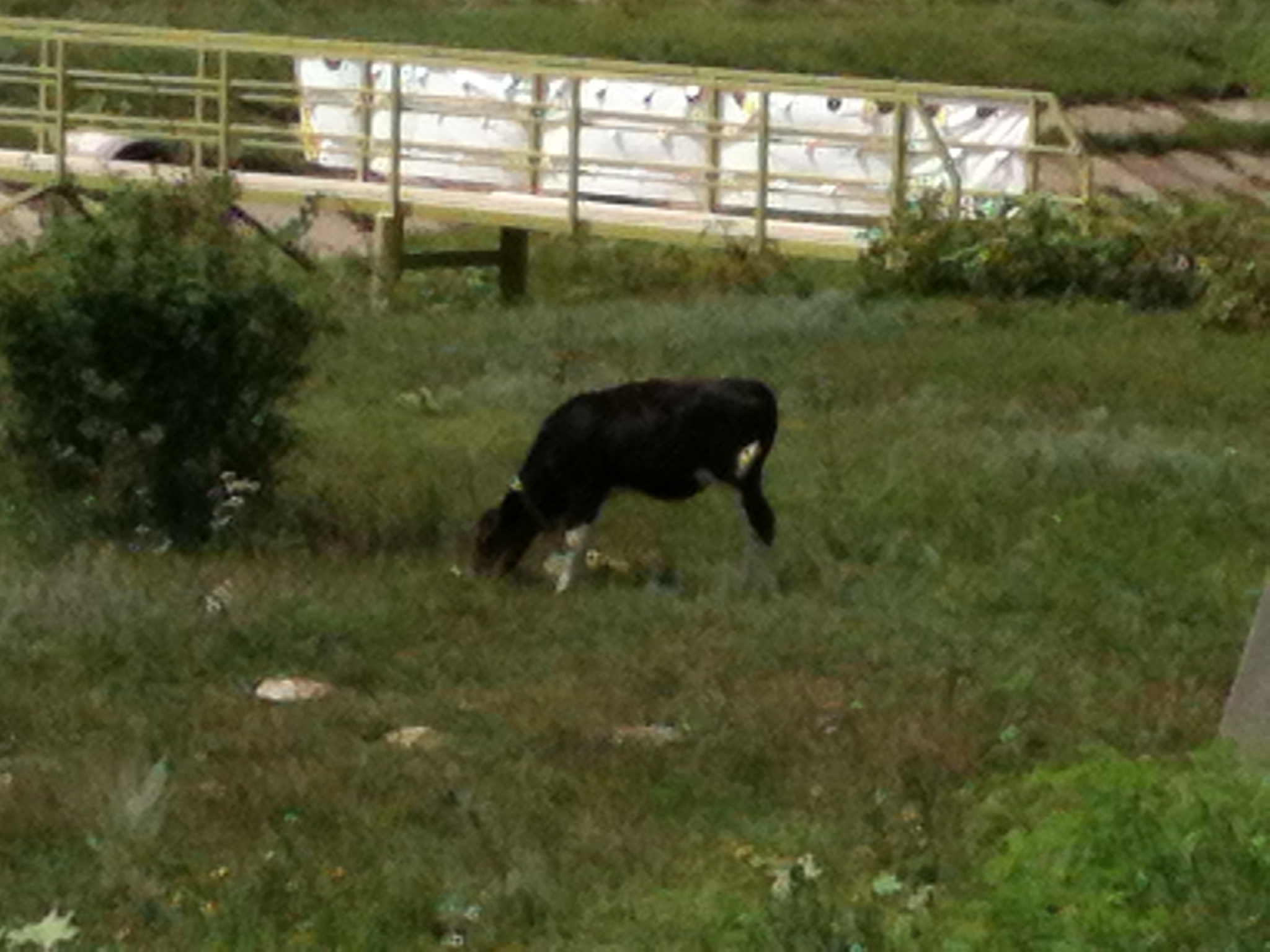
Cow in field next to piața

So I thought I would share some random notes on my first days living in Hîncești.  This is a great place to be stationed, actually.  I am close enough to Chișinău to make it accessible (it’s roughly a 60-75 minute bus ride to get to the PC Office, 26 lei roundtrip.)  But I also have the advantages of being in a more rural atmosphere – hence the cow grazing in the field right up the street from my apartment building.  And crossing the street with this on our right on our way back from language lessons:

Yet, we have at least three good pizza places, one of them overlooking the lake.  There is a public pool that costs 90 lei to enter for the entire day; I hear tell it is as good as being at a resort (by Moldovan standards) as they play contemporary music, have lounge chairs and umbrellas, and serve beer and pizza for a small price.  I think I’m going to go hunt it down today as the temperature is climbing back into the 90’s this week.

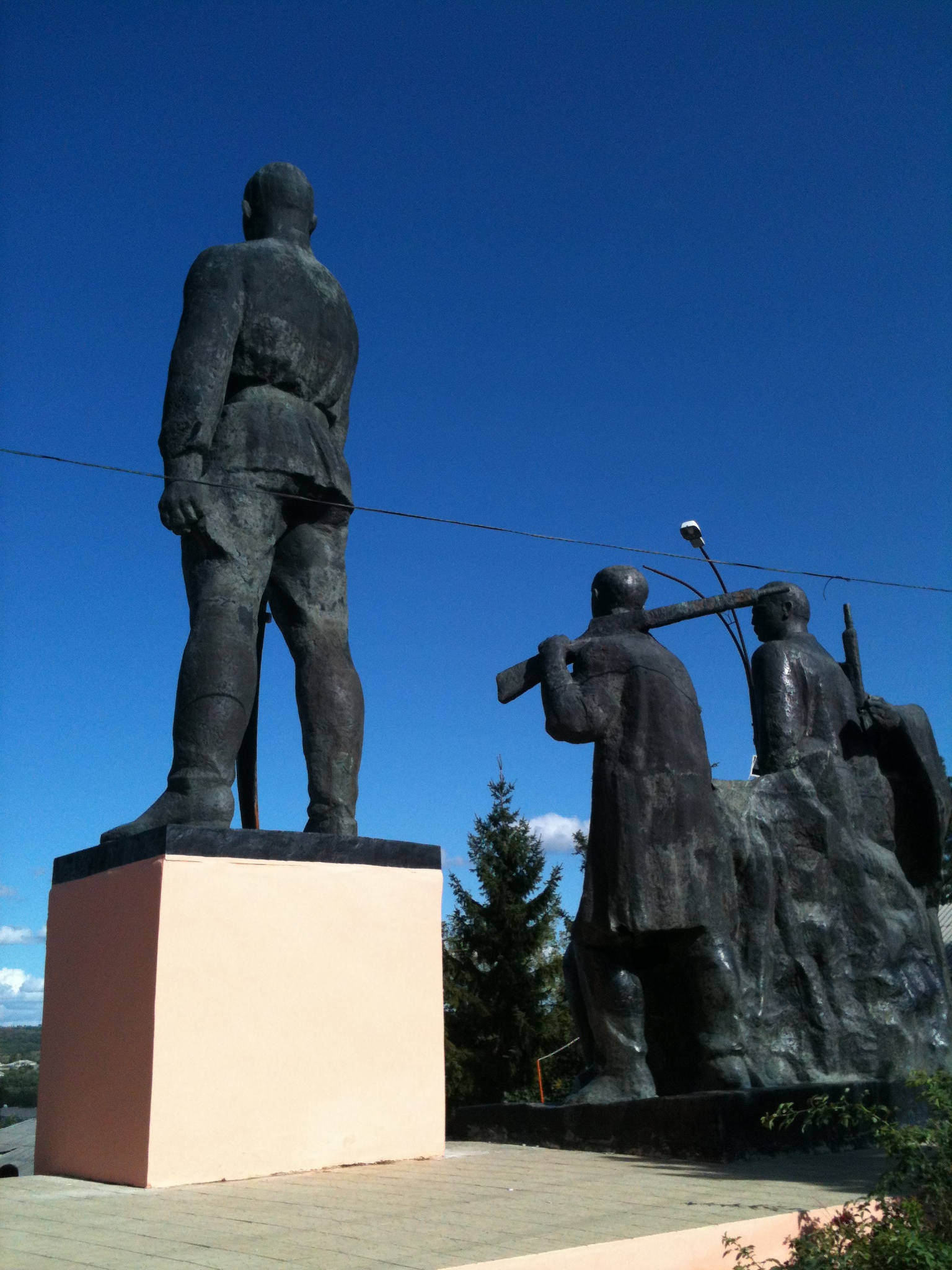
Speaking of the lake, these are the stairs I have to climb to get there – 172 of them to be exact.  Note the large monument on top:

Stairway to Heaven

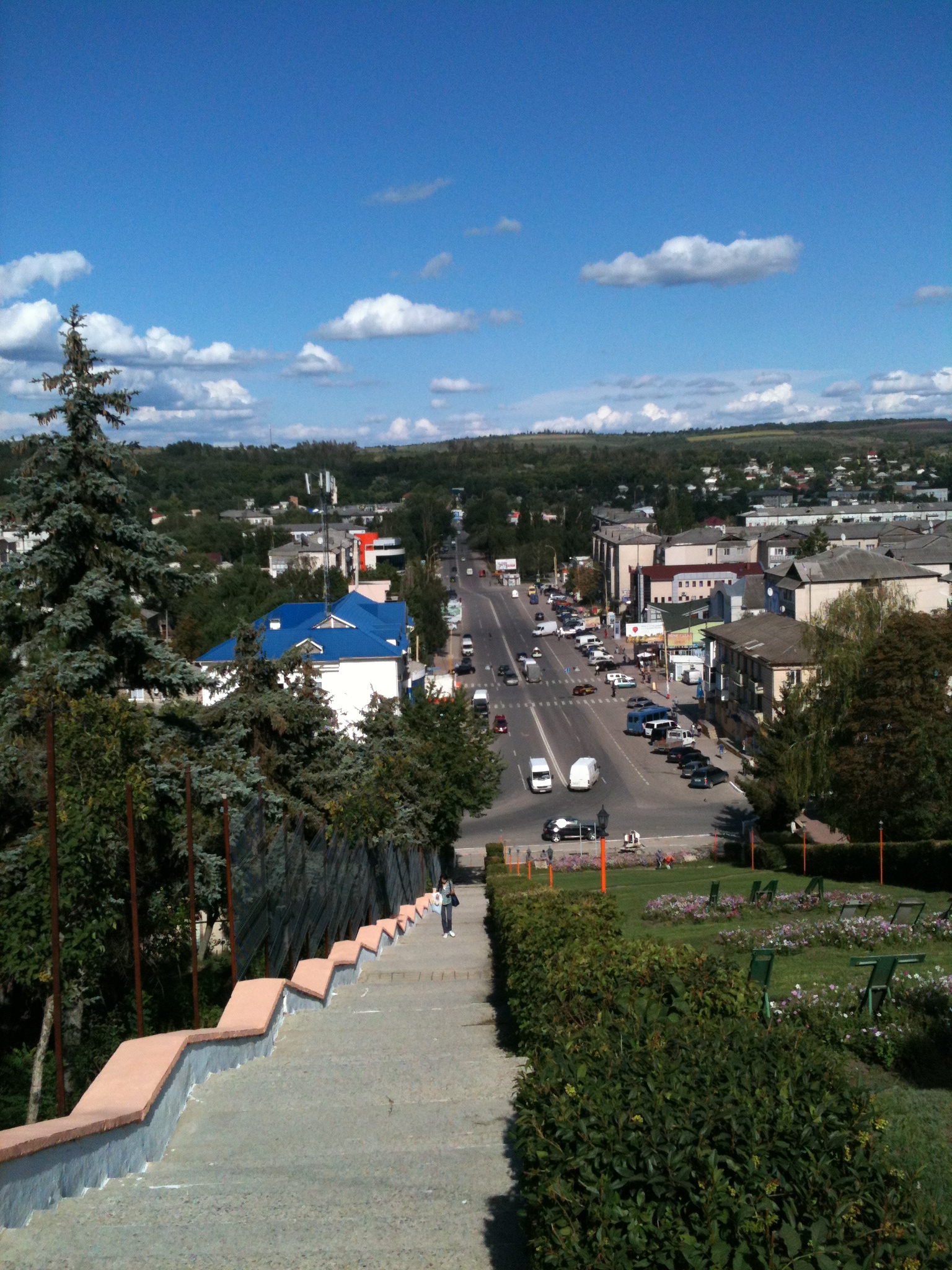
Once you make it to the top, here is the view:

View from Heaven (location, Hîncești)

And here is the backside of the monument.  I haven’t quite figured out what the statues represent, though a fellow volunteer told me they were “Haiducii,” which is a Moldovan term for a sort of Robin Hood figure.  These were groups of bandits that at one particularly savage point in their history were pillaging the landowners’ estates in order to pass on food and goods to the poor.

Haiducci?

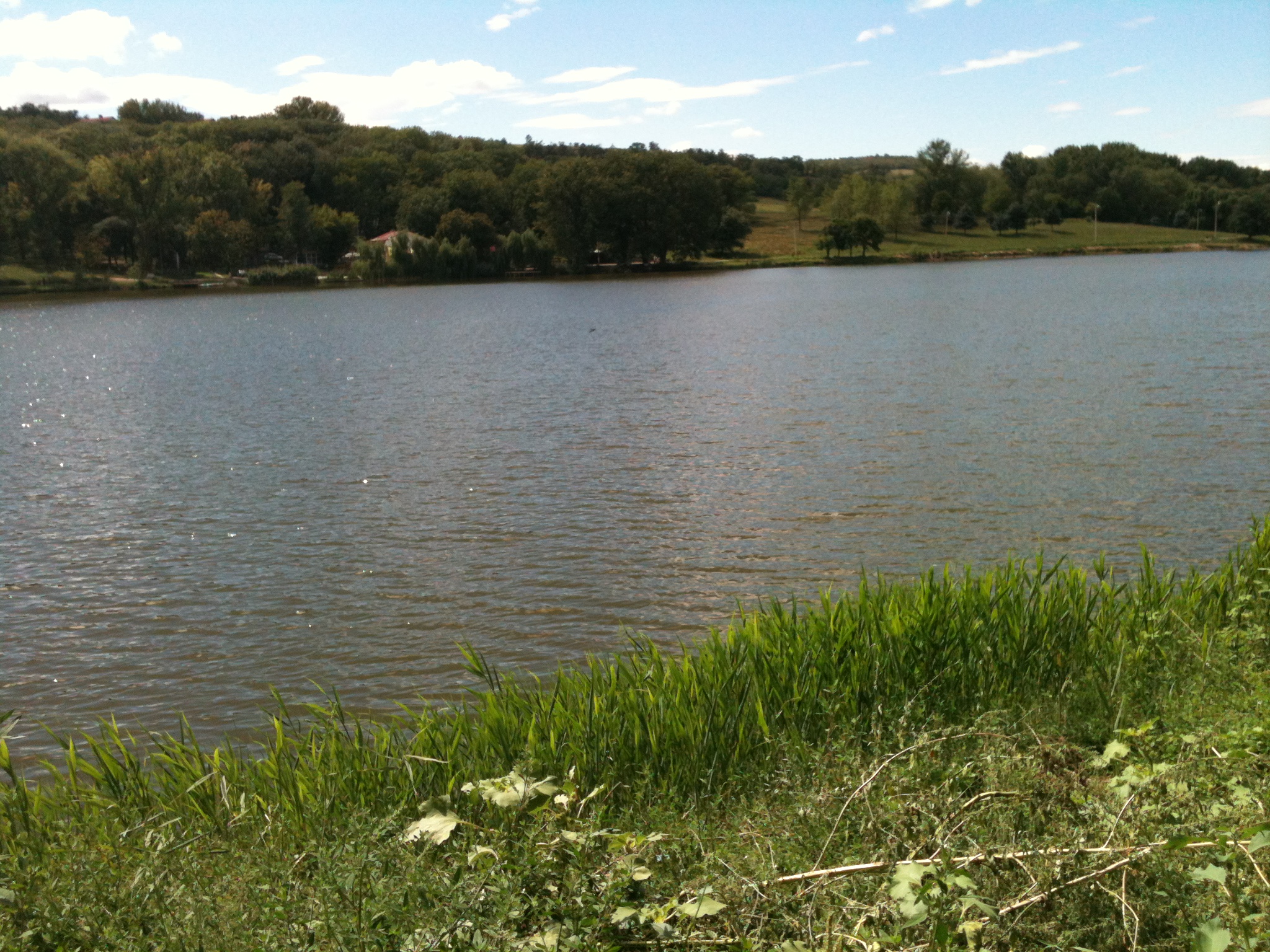
And then of course there is the lake itself.  If you happened to miss my (rapturous) posting about the lake right behind my apartment building, here are a couple of pictures:

View from my bench
View behind my bench

Hîncești, being a bigger town, is falling victim to that mindless, artless form of corporate sposored entertainment known (pretty much all over the world now, I guess) as the  “autorile.”  Ana made a big deal of this event, encouraging me to attend on Sunday, saying that it was “foarte frumos” and “interesant.”  Well, you tell me.  This is what the cars did for about an hour. No discernible rules, time strictures or game strategy.  Just round and round and round and round.  At a very high decible.  In whichever direction you want. After about 15 minutes, I retreated home:

And then of course, there’s my life at home with my new Nina.  (Remember I lived with another Nina in Stauceni.  I’m beginning to think Nina’s are my destiny.)  Things are beginning to evolve into a very comfortable situation.  Nina (Stauceni) was much more mindful of my comings and goings and seemed to take more ownership of my health and well-being.  This was really great when I first came to Moldovan, as it was rather like having a very solicitious and gracious inn-keeper making sure your meals were hot and satisfying and that she knew where you were at all times in case you got hit by a rutiera and didn’t make it home.

Nina (Hîncești) is much more like living with a room mate.  I come and go as I please and am free to cook or not as the mood strikes me.  If she makes food, she offers to share it with me and vice versa, but neither one of us is obligated.  She was gone all last weekend – as she is normally, I gather, during planting and harvest seasons – working at her farm in Basarabeasca where she keeps her husband stashed (you can’t imagine how amusing I find this – she is the working woman with an apartment in the city while he is the country gent who stays tucked out of sight.)  She has invited me to come, but I don’t know how down I am quite yet with the idea of working hard in the sun for two days with (most likely) no running water or toilets.  I might be a city girl, after all.

Anyway, when she came back on Monday morning she was laden with tubs of meat from the pig and cow they had slaughtered, as well as boxes of tomatoes, onions, and potatos that are now stashed under the benches in the kitchen.  Here are Nina and her friend making gevir from the pork meat.  The white substance that they are wrapping the meat in is (I think) ropes of fat or stomach lining.  I couldn’t quite translate the words.  You will note me doing what I perenially do when trying to converse in Romanian – laughing a lot and saying “dah, dah, dah.”

I will not be working steadily until September 1, when the center where I am assigned – Pasarea Albasta – reopens after the summer break.  But I did go in today to meet with the English Ambassador’s wife, who is a member of an organization called The International Women’s Foundation of Moldova.  Kate is a simply lovely woman possessed of a British accent, of course, which is perhaps why it took me about 5 minutes to recognize that she was speaking English, not Romanian. Anyway, the IWF provided some funds for Pasarea Albastra to replace a broken washing machine so we went to the local electronics store to make the purchase.  While the transaction was processed I got to spend some time speaking English with someone NOT connected to the Peace Corps, which was in itself delightful.  If I had it to do all over (rhiannon are you reading this???) I would really consider a life in the diplomatic service.  She and her husband were previously posted in Lithuania and they have been here in Moldova for three years now.  Who knows where after that.  What a great life.  She has the benefits of a first world standard of living in a second world economy. Plus, she is making a difference and not just sitting on her butt and enjoying ex-the pat (priviledged) life.  I really like her.

And I did start language lessons up again. I am working with the director of one of the high schools, along with Matt and Lindsey.  It is rather interesting as the woman speaks only a bare minimum of English so it becomes quite the challenge to place our queries in context for her.  One of the hardest things in learning a new language is understanding the idiomatic language – for example, when Americans say “go ahead,” Moldovans say “more farther” or when we say “stop!” or “enough” when someone pours us a drink, they say “arrived!”  It is things like that which cause the most stumbling errors for me and it’s the main reason why one cannot rely solely on Google translate to get by.

After we complete our language lessons, I have a bar literally steps from my apartment where we are cultivating a nice relationship with the Romanian chelneriță.  This represents one of our more earnest efforts at integration…Plus, there is a very nice view.

View from our table

Dancing the waltz

Anais Nin and Henry Miller

I will admit that I spend more time on the Internet these days (and I didn’t know that was even possible) since the work site I have been assigned to won’t open until September 1 and it’s back to being a bloody inferno outside.  Because I have so much time to surf, I fortuitously encounter different articles from divergent sources that somehow overlap or coincide, amplifying each other’s message and causing the information to echo through my brain for several days.

Here’s one example.  On Monday morning I received my weekly newsletter from Brain Pickings, a website I highly recommend if you want to be served a veritable smorgasbord of interesting information dipping into such varied topics as art, design, science, technology, philosophy, history, politics, psychology, sociology, ecology, and anthropology.  There was a piece culled from the third volume of Anais Nin’s diary, wherein she transcribed a letter written to her by Henry Miller. He is describing the synergy of altruism:

“For me it is no problem to depend on others. I am always curious to see how far people will go, how big a test one can put them to.

Certainly there are humiliations involved, but aren’t these humiliations due rather to our limitations? Isn’t it merely our pride which suffers? It’s only when we demand that we are hurt. I, who have been helped so much by others, I ought to know something of the duties of the receiver. It’s so much easier to be on the giving side. To receive is much harder — one actually has to be more delicate, if I may say so. One has to help people to be more generous. By receiving from others, by letting them help you, you really aid them to become bigger, more generous, more magnanimous. You do them a service.

And then finally, no one likes to do either one or the other alone. We all try to give and take, to the best of our powers. It’s only because giving is so much associated with material things that receiving looks bad. It would be a terrible calamity for the world if we eliminated the beggar. The beggar is just as important in the scheme of things as the giver. If begging were ever eliminated God help us if there should no longer be a need to appeal to some other human being, to make him give of his riches. Of what good abundance then? Must we not become strong in order to help, rich in order to give and so on? How will these fundamental aspects of life ever change?”

Miller manages to make so many points here pertinent to my situation in Moldova that I wonder if perhaps he’s been peeking over my shoulder some days from wherever his juicy spirit happens to be oozing right now.

Peace Corps Volunteers – in all countries where we serve, I would venture to say – are involved in a delicate dance with their host country nationals.  We are giving to them, of our time, our expertise, our education, our energy.  But they are reciprocating: they are opening their homes and work places, teaching us their language and customs, sharing their food and wine, welcoming us in to important life events and celebrations, such as weddings, baptisms, and funerals.  Think about how difficult it might be to have a stranger show up at your door one day for a two year visit – one who does not know your language or cultural norms, much less recognize or respect your little idiosyncratic daily routines.  You need to familiarize them with your town, where the market is, the bank, the pharmacy, who the neighbors are and which places maybe dangerous or unsafe after dark. You need to show them where they can buy a hair dryer and how to hand wash their clothes.  Perhaps they don’t know how cook.  Or make a bed.  Maybe they are messy – even dirty, tracking mud throughout your home when they keep forgetting to remove their shoes at the door.

Then think about including this person into all your most emotional and memorable family events, taking them to your sister’s birthday party, your daughter’s graduation, your niece’s wedding, your father’s funeral, and having to watch out after them the whole time so they don’t do something culturally inappropriate like slap your aunt on the back or hug your brother when they are introduced or collapse on the ground in a heap if they’ve danced too hard or had one too many vodkas.  One must possess a true wealth of spirit and a large portion of patience to continue giving of oneself through those (perhaps seemingly endless) two years.

I won’t go into detail, but I did hear one story from a volunteer who was disrobed, bathed and cleaned like a baby, put to bed in crisp sheets, and had the bathroom swabbed of her mess after a bout of giardia that had her spewing from both ends.  (Did I mention there was no toilet – only a flimsy trash can – in said bathroom?)  And this all took place within minutes of her meeting her host parents. And the father was just as solicitous and nurturing as the mother. So there is definitely give and take going on here.

And this odd waltz can take place precisely because of the manner in which Peace Corps operates: it is coordinated and supported aid that doesn’t involve giving money to the “needy” – it is all about extending a hand of service within an intimate context that allows both the giver and receiver to participate fully in the exchange and to take the lead at different times.  And that hand can be extended by anyone – rich or poor, educated or ignorant, male or female, old or young, privileged or needy.  We can all be generous in spirit, in caring, in listening, in sharing, in inclusion, in opening ourselves to each other.

So after having had this Miller piece slosh around in my head for a couple of hours, I happened upon the following story on the NPR website about a new study published in the Chronicle of Philanthropy:

Study Reveals The Geography of Charitable Giving

For those of you who can’t bear to leave my scintillating expository, I extract a few pertinent quotes here:

Ever wonder how charitable the people are who live in your state or community? It turns out that lower-income people tend to donate a much bigger share of their discretionary incomes than wealthier people do. And rich people are more generous when they live among those who aren’t so rich.

…. High-income people who live in economically diverse neighborhoods give more on average than high-income people who live in wealthier neighborhoods.

Paul Piff, a social psychologist at the University of California, Berkeley, says that’s consistent with what he’s found in years of research on income and giving.

“The more wealth you have, the more focused on your own self and your own needs you become, and the less attuned to the needs of other people you also become,” he says. “Simply reminding wealthy people of the diversity of needs that are out there is going to go a long way toward restoring the empathy or compassion deficit that we otherwise see,” he says.

The NPR article concluded that it is important people see need first hand by integrating into heterogeneous neighborhoods that are economically diverse.  And I would amplify that thought by saying this is true not merely because those who see need will tend to be more generous, but because it is imperative that we allow the osmosis, the synergy, the waltz of generosity to be fully and deeply expressed by both the giver and the receiver.  And that can only happen when we are not isolated from each other, when we become part of the fabric of each other’s lives, when our homes and neighborhoods and customs and idiosyncratic behaviors are no longer “foreign” to each other.  I love Peace Corps for illustrating the truth of this, each and every day, all over the world, amongst thousands of dancing partners.

There are merits to playing both roles, to attaining the flexibility and humility to both lead and be led. We Americans must realize that the money and material goods some of hold in relative abundance are not the only sources of wealth that exist in this the world.  And that, perhaps, a much greater gift is presented sometimes by standing in the role of receiver.

I know most of you out there are not going to run out and join the Peace Corps.  But realize that you can give by receiving, too.  By stopping to talk to that person asking you for money on the corner, allowing him to tell you his story.  By accepting the dinner invitation from the couple that bores you to tears and just keeping your heart and mind open for a few hours.  Perhaps through attending the dance rehearsal of your next door neighbor’s granddaughter and clapping vigorously and enthusiastically.  Or going to the ethnic festival in your community center and participating in the dances, eating the food, and intermingling with people from diverse backgrounds.

Try putting yourself in places you normally avoid, meeting people that unnerve you just a bit, stepping outside of your comfort zone and risking humiliation by joining in the waltz maybe once or twice a week, all in the spirit of dancing.  Go ahead: I challenge you.  I’m doing it.

(And I’d love to hear any comments on what it felt like …)

Floored

Floored

There is no other way to put it.  I wandered down the road just above my apartment building and found this:

Hîncești Lake

I don’t know what else to say.  (Of course, I always have more to say.)  I wrote in my journal:

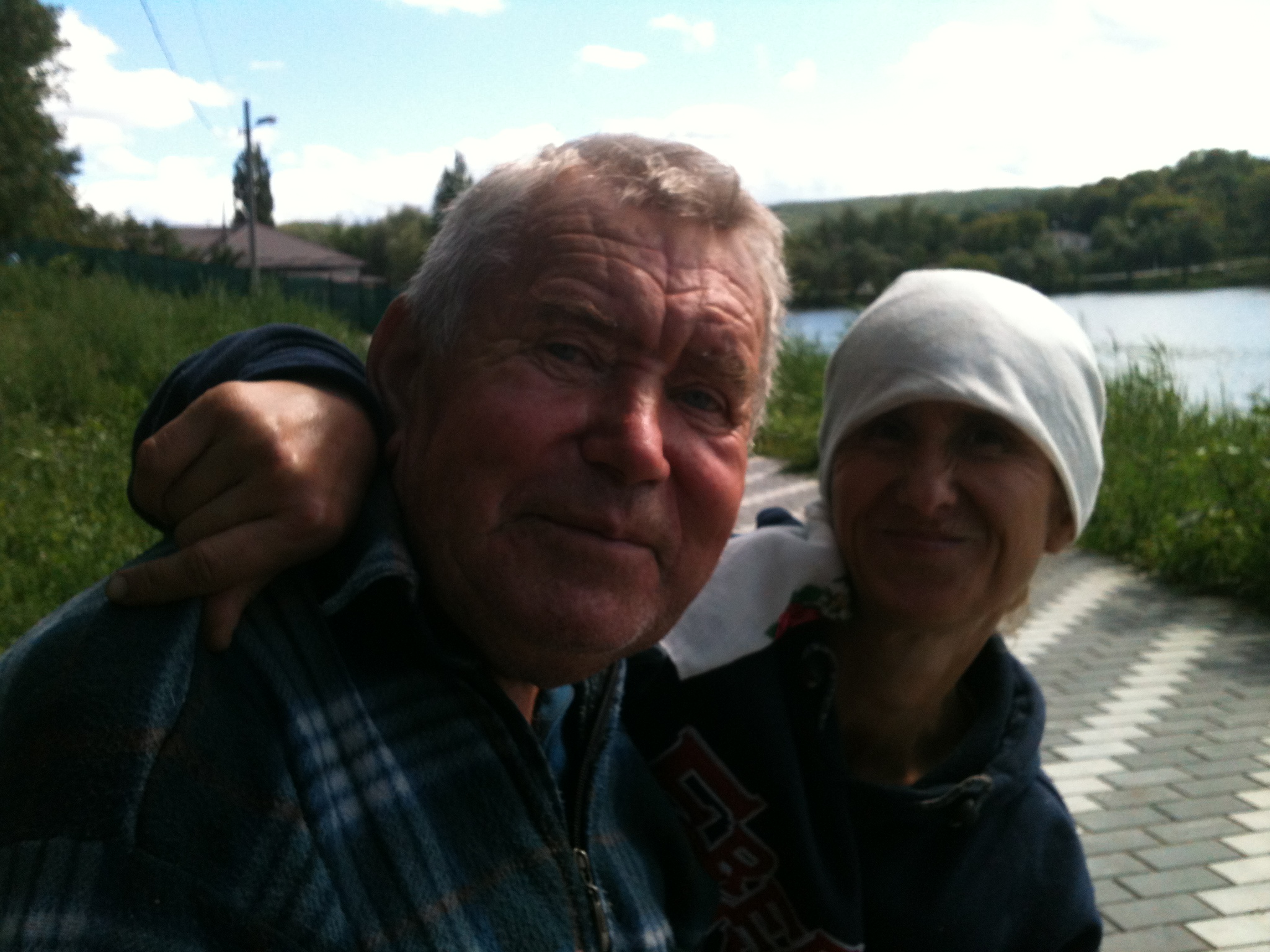
What did I do to deserve this?  I finally, finally found the place where I can be completely at home here.  The language, the culture, the buildings, the corruption, the sadness, the confusion, the disparity, the discomfort – none of that intrudes here.  Though I did have a half hour conversation with two seemingly homeless, mentally ill folks who sat down on the bench next to me and shot me questions in Ruski-romanian .  They really wanted to know when we could hook up again…

Friends at the Lake

I appreciated the opportunity to converse really slowly and repetitively with people who were happy to play along.  I am blessed.

As I was soaking up the last of the afternoon rays I got a text from my site mates, Matt and Lindsey.  I made my way to the bar next door to my apartment and spent a relaxing couple of hours with them, comparing notes on how lucky we are to live in Hîncești.  Patty was walking by and heard my laugh (mom, are you listening?)  and then we were four.  Patty just moved to site today, having completed her 10 week English Education Training.  Took her oath this morning.  Now the whole M27 group are officially Peace Corps Volunteers!

Matt
Patty and Lindsey

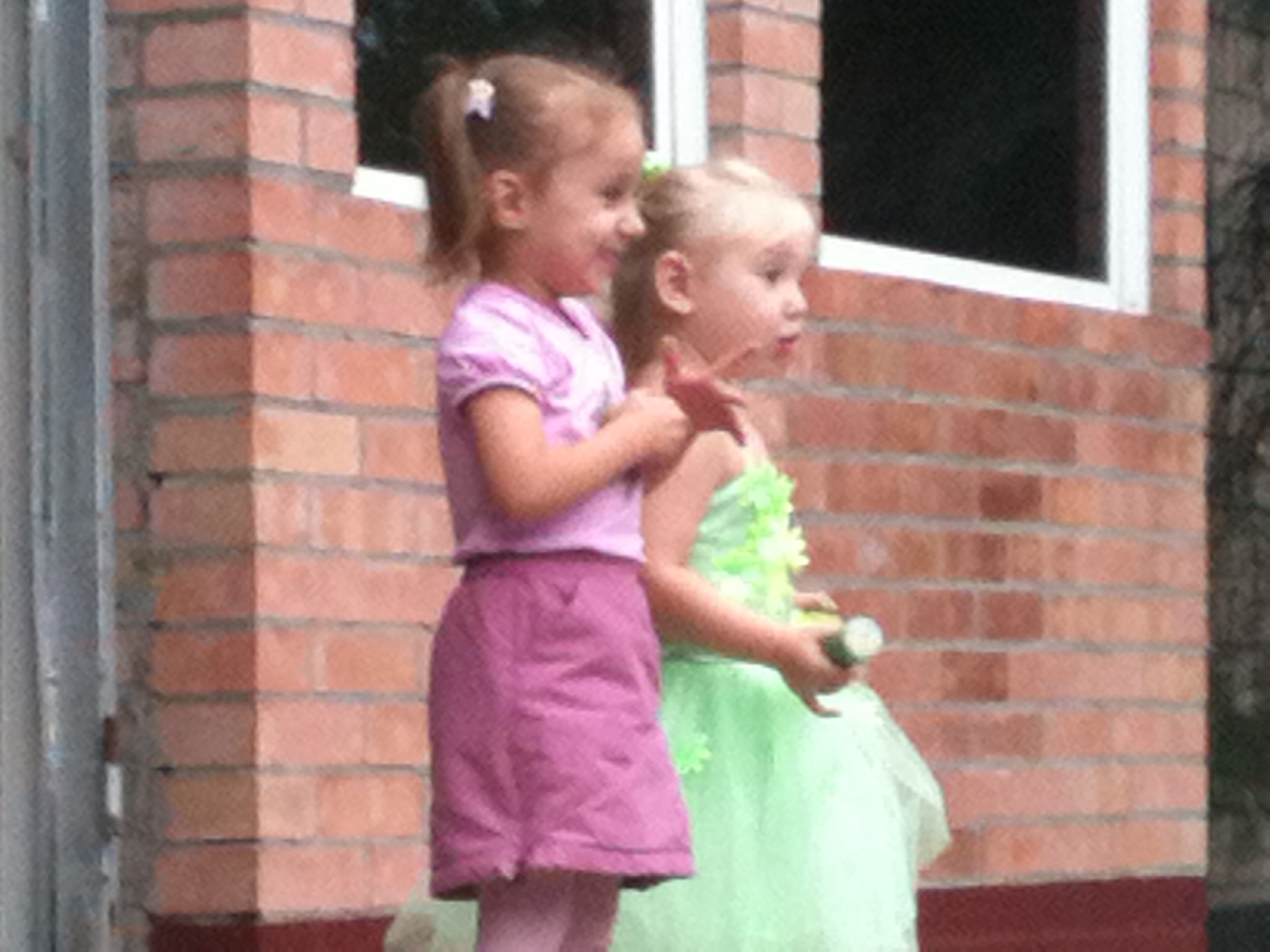
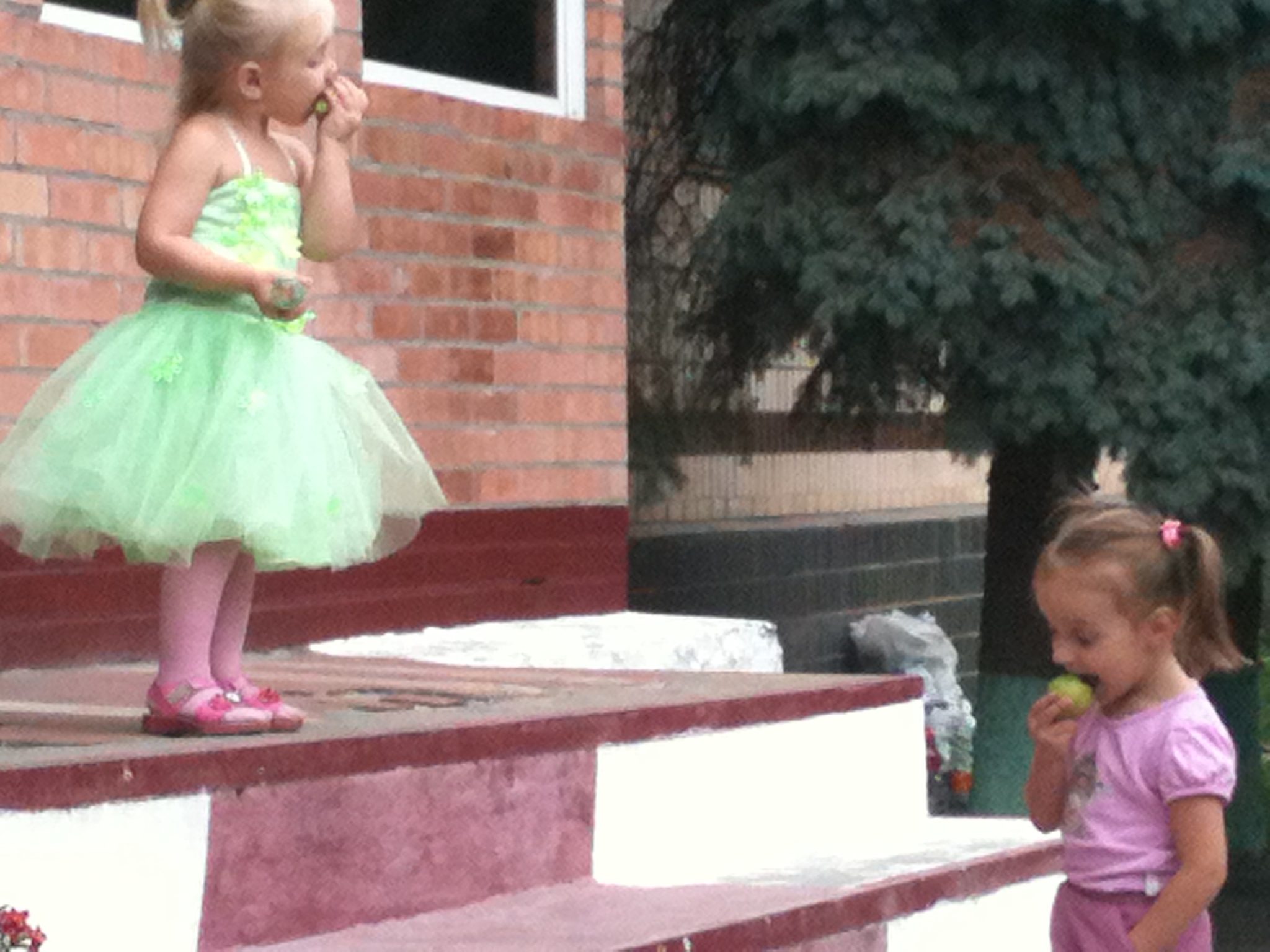
I don’t know what these adorable little girls were doing in the bar, but they certainly provided a whimsical touch:

I felt a bit like her, finally having put on my tutu and ready to dance for the world.  I have some good friends, a great host sister, an energetic work partner, and a bustling village in which to live for the next two years.  The Peace Corps is proving to be everything I wished it would be…I am so blessed!