Prima Zi

Proud parents

This last Sunday I arose with some little trepidation (I’ll admit it) and put the last stray items into my luggage in readiness to move to my final destination.  It has been a long journey that brought me to this point, all the way from my sallying cry in the dark so many years ago.  It was not registering completely that this trip in Terry’s van would probably be my last ride in a personal vehicle with all my luggage in tow while I’m in Moldova. (When you leave the country at the end of your service, for some reason you have to find your own way back to the Peace Corps offices and the airport.  Hence, most people leave most of their things here, only taking back the REALLY important stuff….)

When they arrived – Ana, my work partner, and Eduard, her husband, and Terry, the driver – we had to haul my luggage out from the apartment all the way around the building to the front to the car, because of course I couldn’t manage to open the gate into the parking lot.  (This was the beginning of the end of my ‘healed’ knee.)  On the way to Hîncești we stopped at a store called Metro, which I heard about but didn’t quite believe existed.  I was wrong.  Costco has married WalMart and moved to Moldova.  Here is a huge warehouse store with everything from dish soap, to washing machines, to socks, to watermelon and cheese.  All under one tin roof.  For a nation of bus riders.  That’s right.  You know how much you buy when you visit a warehouse store….well imagine transporting all of that home on a jam-packed rutiera.  I don’t get how this works.  But Moldovans are diligent and proficient at getting done what needs to get done, with very little technology most times.  It makes me yet again realize how much consumption we take for granted in the USA.  Ana and I have hesitant conversations, comparing the price of laundry detergent.  We find a bag for 20 lei cheaper and send her husband to put back the more expensive versions we had just picked up.  Terry careens madly through the store, flirting with every woman he sees.  (More on Terry at later time – he really deserves his own post.)  I am feeling vaguely comfortable with Moldovans, not an American in site.  We stuff all our purchases in the van with all my bags and climg aboard for the wild toad ride to Hîncesti. Terry pilots the van somewhat like a flying carpet.  We seem to be zipping a couple of inches over the actual road. Is this better than a rutiera? I think.

I had barely set my bags down and hadn’t even unzipped a suitcase before Nina, my new host sister (I have to call her that as she is my own age – it feels too weird to call her my “host mom”) tells me that we are going to a masa in the small village of Boghaceni in celebration of a four month old baby boy born to a couple for whom she is the “Nona.”

Culture break: A Nona is sort of like a godparent for married couples.  It is a non-relative whom a couple asks to serve as a guide and mentor for them during their married life.  It can be a couple or a single man or woman.  Generally, the person or couple is quite a bit older with some life experience under their belt.  They will help the new couple make big decisions, teach them about parenting, offer advice and comfort during difficult times, etc.  I find this especially perceptive in NOT having it be a relative, as many times married couples can encounter difficulties with parents and in-laws that require some sound guidance to help them through so they don’t make a mess of things.

So we cross the street in front of our apartment building and begin waiting for a ride to this village.  Now ruteiras come by every ten-fifteen minutes or so, but most folks are impatient and try to flag down passing cars that are going the same way.  Of course, Peace Corps advises volunteers against this practice, but everyone does it anyway.  It is a good way to meet Moldovans and practice your language, I guess, but I haven’t tried it on my own.  Now that I’m with Nina, I guess I’m ready to hitch hike (I actually don’t have a choice.  She’s madly flagging down every car that whizzes by.)  A couple of cars stop but they’re either going a different way or they can only fit one person.  We end up in a rutiera just as it starts to rain.

And then it’s pouring.  (Luckily at this point I had not learned of the horrible accident that just claimed the lives of ten people in a 17-seat rutiera that was carrying fifty persons. It’s brakes failed on a curve and the mayor of a town and his wife were among the fatalities.)   I am not looking forward to the walk from the rutiera to this masa, as I left in such a hurry I didn’t grab an umbrella and hadn’t changed out of my sandals.  After about an hour, I hear Nina yell for the driver to stop.  We’re out in the middle of nowhere.  I am confused.  After we disembark, a young man comes up to greet us.  His car is parked right there where the bus stopped.  Oh thank the lord, I don’t have to walk.  We get in his car and proceed down a dirt road that is quickly melting into mud.  He is driving fast, trying to beat the disintegration of traction.  A couple of times I find myself wondering if walking would’ve been better, but the road turns out to be miles long.  The house that we’re going to comes into view ahead – it’s way up on a hill to the right of us and as we slowly drive by it is apparent that the car is not going to make it up the slippery slope of mud flowing down that is probably a road in dryer times.  We exit the vehicle and ponder the slope.  Nina is in high heels, I am in sandals.  The young man grins, grabs my arm, and says: Sos!  (UP!)  Here we go.

Well, this is the second stage of total knee failure.  I am slipping and sliding and clutching at the branches of bushes to my left with my free arm.  Up ahead of me, Nina is slogging on galliantly alone with her umbrella held high and her wedgies sinking inches deep into the mud. Up and up and up.  We finally attain the summit and walk for another few minutes through flat muddy soup and stop in front of a locked gate. The young man – his name is Sergio, I’ve learned during our little ambling duet – pulls out his cell phone and calls his parents, the people we’re visiting.  Are they not here?  Are they still miles away in a rutiera?  If they’re home and they know we’re coming, why is the gate locked?  We wait.  And we wait.  And we wait.  Recall that it’s raining.  Pretty hard.  Me without umbrella.  In sandals.  In mud.  After about 10 minutes, we hear the hearty hey ho of a man approaching the gate.  He is laughing and chattering away in Romanian as he unlocks the gate.  I learn soon enough why it took him so long.  We have another half mile climb up yet another muddly slope to the house above.

We pass through orchards full of pear trees and grapes hanging off the vine.  There are more tomatoes (roșii) and watermelon (harbuz) than we saw at Metro.  Another orchard with plum trees, the fruit being the actual size of the prunes that they will become later upon drying in the sun (pruna.) Some corn that looks sere, droopy and tattered from the (former) lack of rain.  Finally we pass what smells like the outhouse.  Good, we must be getting close, I think.

Why am I here again, when I could be back at Nina’s place, dry and unpacking?  Oh yes – the all important „integration” (I didn’t mess up on the quotation marks, btw, that’s how they do it in Romanian.)  Not soon enough, we arrive at the front door where three older woman, all wearing kerchiefs and aprons, one with missing teeth and a wandering eye, one small, anxious boy, and one lithe young woman holding a forty pound baby (no kidding) stand waiting to welcome us.  We remove our shoes and enter into safe harbor.  Thank the lord, we’ve made it, I think.  Now I just have to get down again.  I guess I’ll worry about that later.

There is a mass of food – a masa – spread out on the table before us.  We are given some bread and wine and salt, the traditional Moldovan welcoming gesture and invited to sit.  Nina gives the married couple (Sergio turns out to be the husband) some money and a gift for the baby.  We begin to eat.   For the next two hours it continues to rain outside while we repast indoors.  Wine, food, talk.  More wine, more food, more talk.  Many toasts to America and my health.  The people comment on how well I speak Romanian.  The old man says Barak Obama’s name several times, as it is the only English words he knows.  Nina pulls out her Avon catalogues and goes into a protracted sales pitch which, suprisingly, holds both the men and the women rapt.  Even the little boy is held captive.  Perfume samples are passed out to all.  She’s good.  After about an hour, I note that Sergio is trying to refuse more wine as he reminds them he has to drive us back to the bus stop.  Thank the lord, I think.  He’s only successful about half the time in not having his glass filled.  Oh well, I think.

The masa

When it’s finally time to go, Sergio runs out ahead of time and returns with a nice pair of galoshes for both Nina and I.  Thank you god, I think.  Though there may be no tread on the bottom of these, at least my toes will stay clean and the cuts on my feet will not be infected  with typhoid.  We wash our own shoes in a bucket of rain water kindly provided by the clouds overhead.   And then we ski down the hill.  That is the best term for our meandering sliding progress.  The old man is holding Nina’s arm and Sergio has mine.   I am clutching him in the hopes of avoiding an embarassing face plant.  This is the penultimate stage of knee damage.  (I still have to walk to work tomorrow carrying 20 pounds of books and computer on my back.  That did it in completely…)

The ride back to the highway is a testament to German autobuiders (I think  we’re in an old Audi.) The car weaves wildly on torrents of mud from one side of the road to the other.  Sergio hunches with great concentration over the wheel, smearing his left hand against the inside of the windshield every minute or so to clear the condensation.  One windshield wiper is working valiantly. A car passes us on the left. Seriously? I think.  Nina pats my knee and smiles winningly.  I wonder if she’s going to pull out the Avon catalogue.

When we get to the road, Sergio stops at the bus shelter and leads us inside.  Then he runs back out to the highway.  What a gentleman, I think, waiting to signal the passing rutiera for us. Within seconds he has flagged down a late model Taurus (compete with leather seats and Dolby sound) and he gestures us to climb in with the three burly, bald Russian occupants. Great. Everything the Peace Corps warned me about.  Gangsters, I think.  Note the gold chains and silence. Completely unconcerned, Nina pulls out her phone and checks her voice mails.  The entire way no one talks.  The driver dials a number but gets no answer.  Apparently the human trafficer connection has taken the day off, I think. When we arrive at our apartment, Nina tries to give the driver 20 lei.  He refuses gruffly.  Well how about that, I think.

The grandparents (bunicii)

Later that night, I put brand new sheets on my bed.  I unpack all my bags for the first time since I loaded them up in Fullerton so many eons ago.  I find things I forgot I brought.  I Skype with Rhiannon and Nicole back in the States.  I take a shower and get into my jammies.  It’s still raining outside.  Nina is already sacked out, fast asleep.  The winds whistles and a steady patter of rain drops is like a metronome tick-tocking right outside my window.  A smile spreads slowly cross my face.

My first day in Hîncești, I think.  This might turn out to be a bit of the adventure I’d hoped it would be…
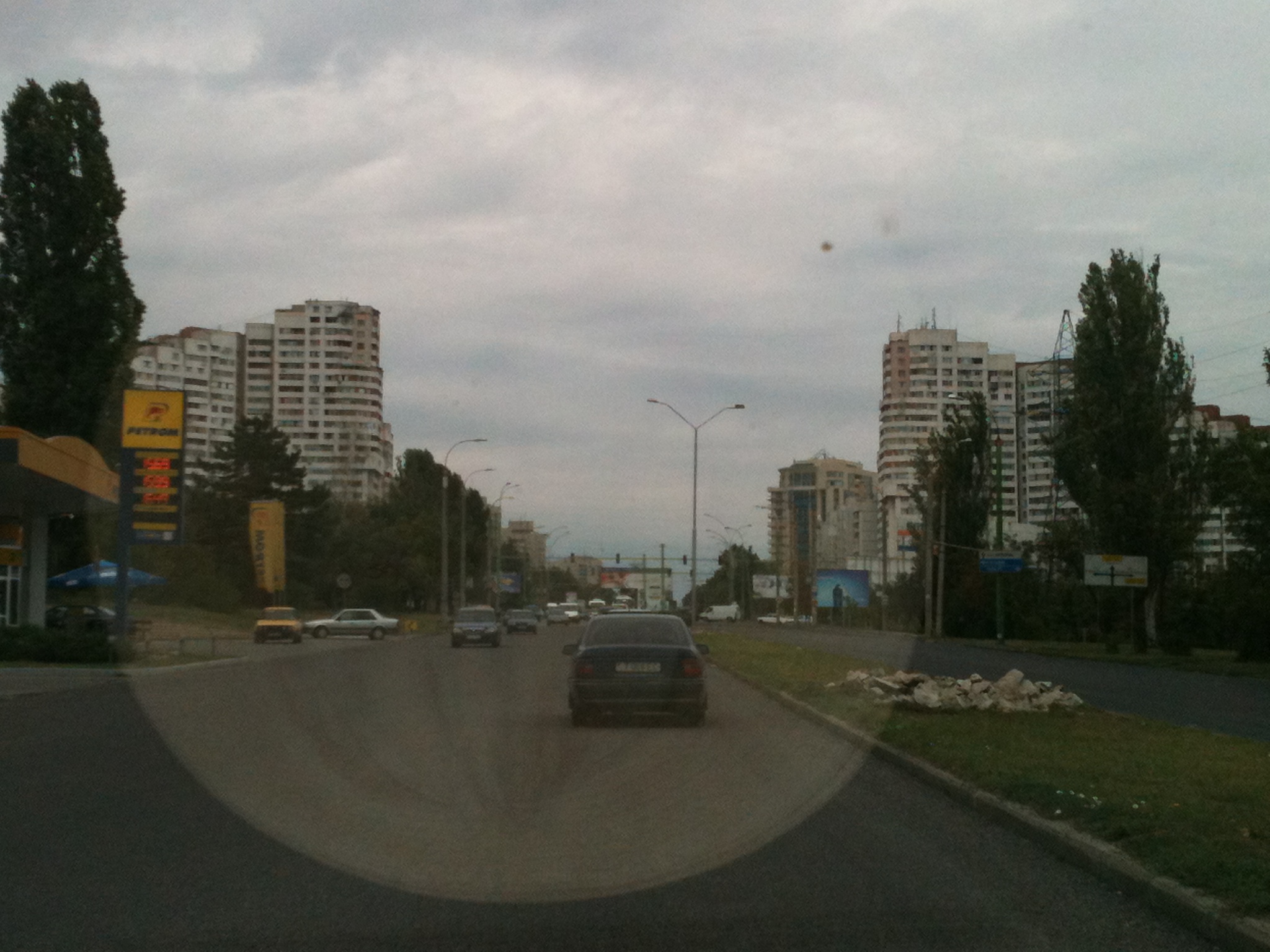
The Big City

Famous portal entering into Chisinau

Time has sped by the last 10 days…with PST over and all my M27 friends departed to site, I thought I was going to have an easy, quiet time in the TDY apartment in Chișinău while I received daily treatment for my knee.  Not so.  It was probably the most busy (and entertained) that I have been since arriving in Moldova.

Let’s begin with the diva knee.  So, I am sent to this NICE apartment right next door to the Peace Corps office with all my bags (suddenly I have even more stuff than I came to Moldova with) after the swearing in ceremony.  There are three bedrooms there, all empty, and a great big kitchen with a microwave, even.  So I’m excited.  I trot off to the market and buy some groceries and cook my very first meal since leaving home.  Then I spend some time reading and I take a bath and I make up a bed and settle in and soon am fast asleep.  RRIIIIINNGGGGG….ring…it’s the telephone.  9:30pm the PC doctor is calling, not to check up on me but to announce the impending arrival of another volunteer.  (I guess she didn’t want me to freak out when the front door opened.)

Well, this volunteer’s arrival marked the start of the week of the revolving door.  In seven days there were eight other people in and out of the apartment for various reasons.  They all stayed for at least a day or two and somewhere in there I heard every single one of their stories, all of which fleshed out for me a more complete picture of Peace Corps Moldova.  It’s complicated.  Just like most other things in life, I guess.  It made me appreciate how unique each person’s service ends up being: even though we‘re all in the same country, we are not having the experience.  Which means that it is impossible to judge anyone else’s outcome or decisions – whether they ET (early terminate) or extend for an extra year or do their proscribed two years and flee back home.  There are a million different reasons for walking many different roads here.  I suppose that’s true of all the PCVs around the world.  But here is a video of my new friends Maria and Katie playing on the teeter totter outside our apartment:

This is the one of the main reasons PCVs say that they love their experience.   We know how to make fun happen with whatever comes along…

My other new friend Maria – in traditional Moldveneasca costume!

Back to the knee: every day I would walk over to PC offices and my own driver would whisk me off to a state-of-the-art medical center (called MedPark – looks exactly like Kaiser in the US) where a lovely aide would spend half an hour giving me various treatments involving magnets, electricity , and sonar.  Another volunteer was getting the same treatments, so we had a chance to chat everyday for an hour or two as we rode there and back and underwent our treatments.  She related a lot of useful info about her year’s worth of time here and she was very funny and entertaining.  My knee felt better and better every day. Life was lovely. (Then I screwed up my knee again my first day at site – more on that experience later…)

I was also invited by a group of the M26s for an evening at an American couple’s house in the outer limits of Chisinau.  He works as an IT specialist for the American Embassy and his wife loves to cook but has no one to eat it all.  So every Thursday they host a buffet meal in a varying theme for any American ex-pat who wants to attend.  The best part of all was their pets – a BIG Sharr Mountain Shepard (never heard of it before that night) and a cat that both craved attention.  And all of us animal-starved people were ready to slather it on.  I felt like I had received a mental health intervention just petting and cooing at them.  Man, I miss my dog.

On my last day in Chișinău my lovely friends Elsa and Carl, who are stationed in the city, took Darnell and I out for a day long excursion through the parks and museums and fashionable districts.  We had a lot of fun and I got to see a side of Chișinău that I hadn’t seen before.  There are stores – like Abercrombie and Salamander – that one would see in the US.  There are multi-storied, densely packed buildings that house a warren of vendors selling an eclectic variety of products: one floor will be shoes, one floor fabric, another bed linens and bath accessories, one all toys, etc.  It’s like having a whole mall, but packed into one building.  Very efficient.  There are lovely parks with giant chessboards where people stand around watching a game like it’s a tennis match or something.  There seem to be hundreds of couples getting married.  They speed by in cars decorated with masking tape and colored plastic bags and honk horns and scream madly to passersby.  More pictures of Chișinău:

Darnell and Elsa
One of hundreds of wedding limos driving through Chisinau on Saturday
Parliament Building
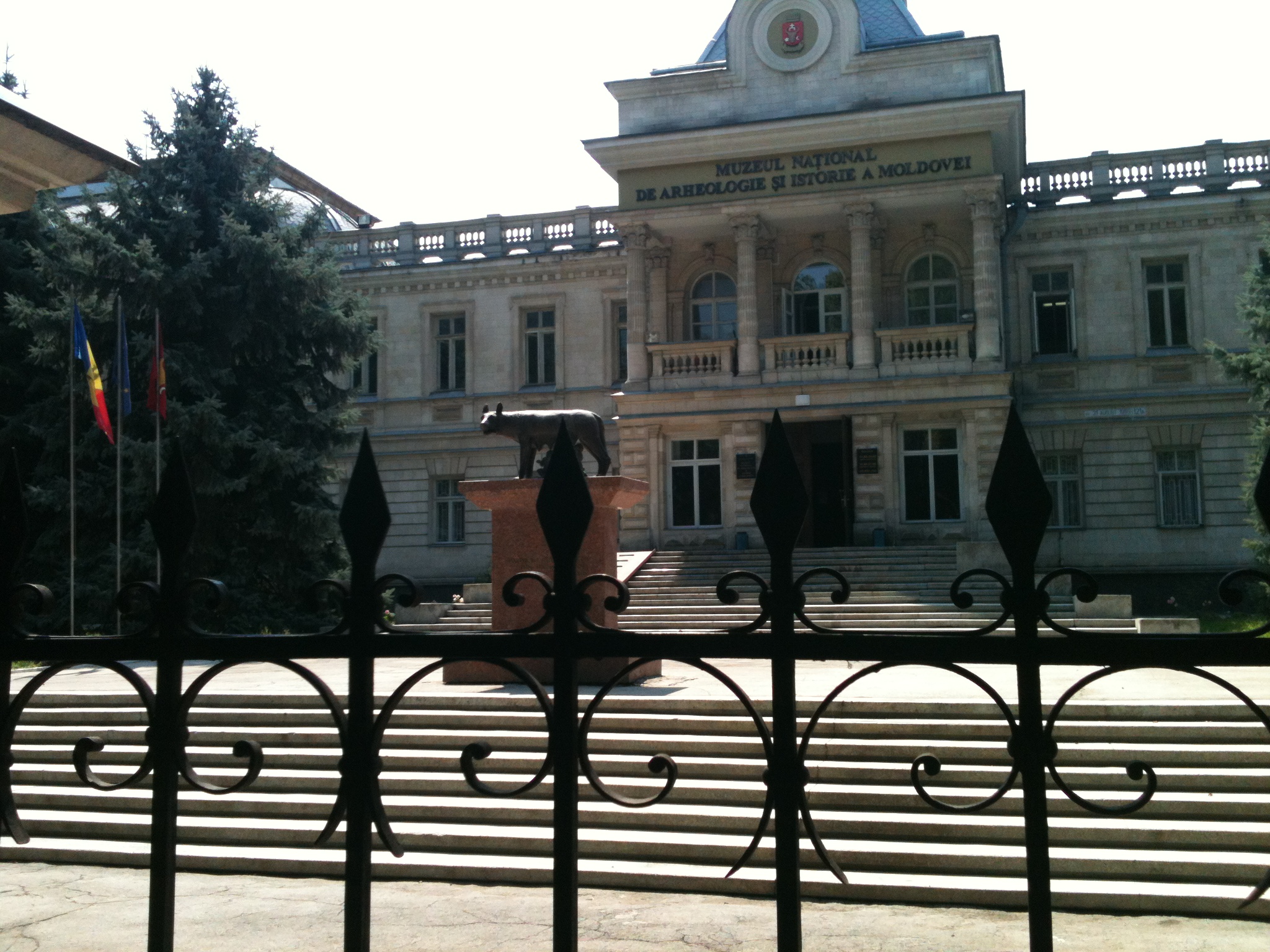
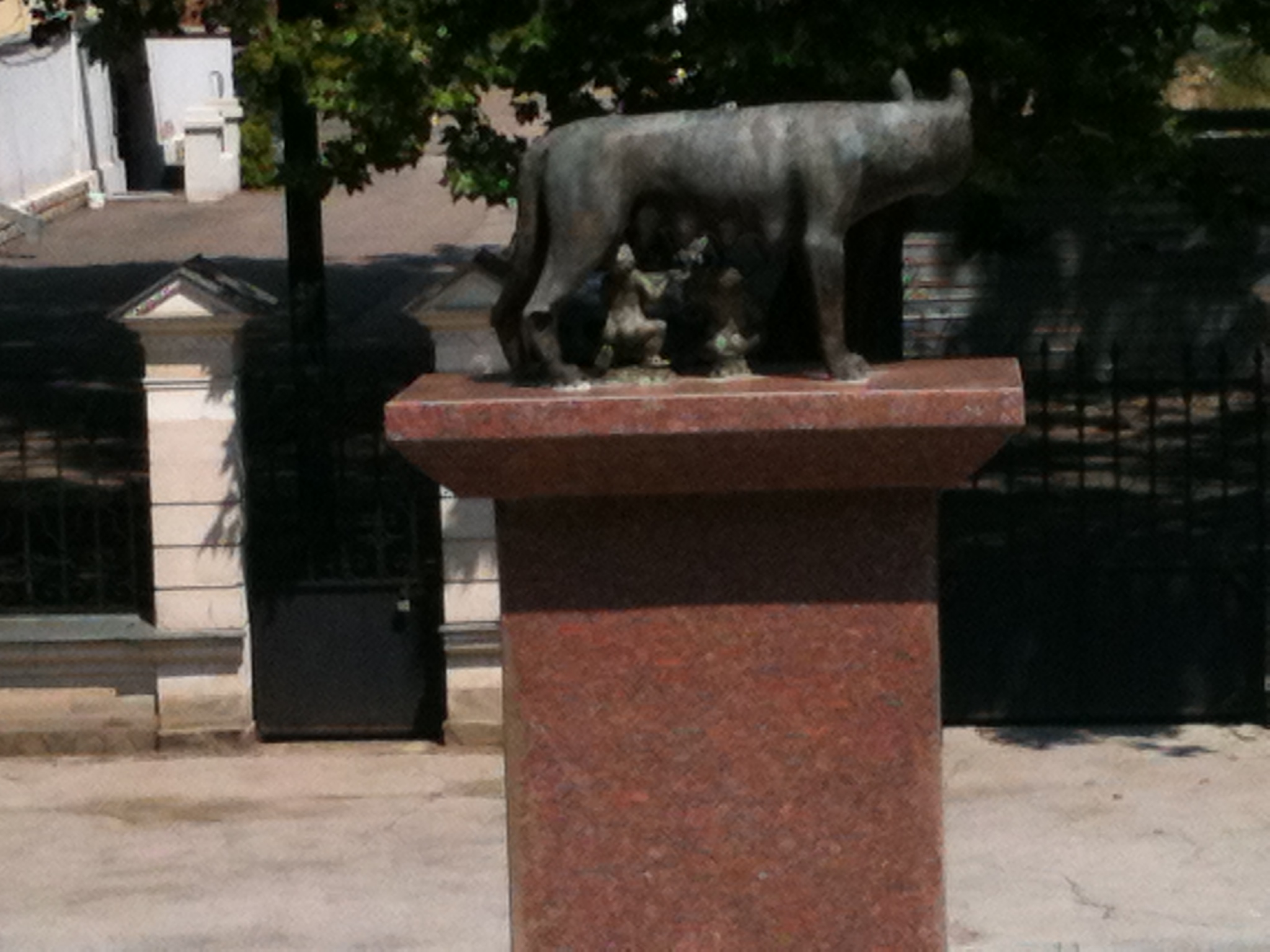
Romulus and Remus in front of the Museum of Archeology
Game of Chess anyone?
Cinema
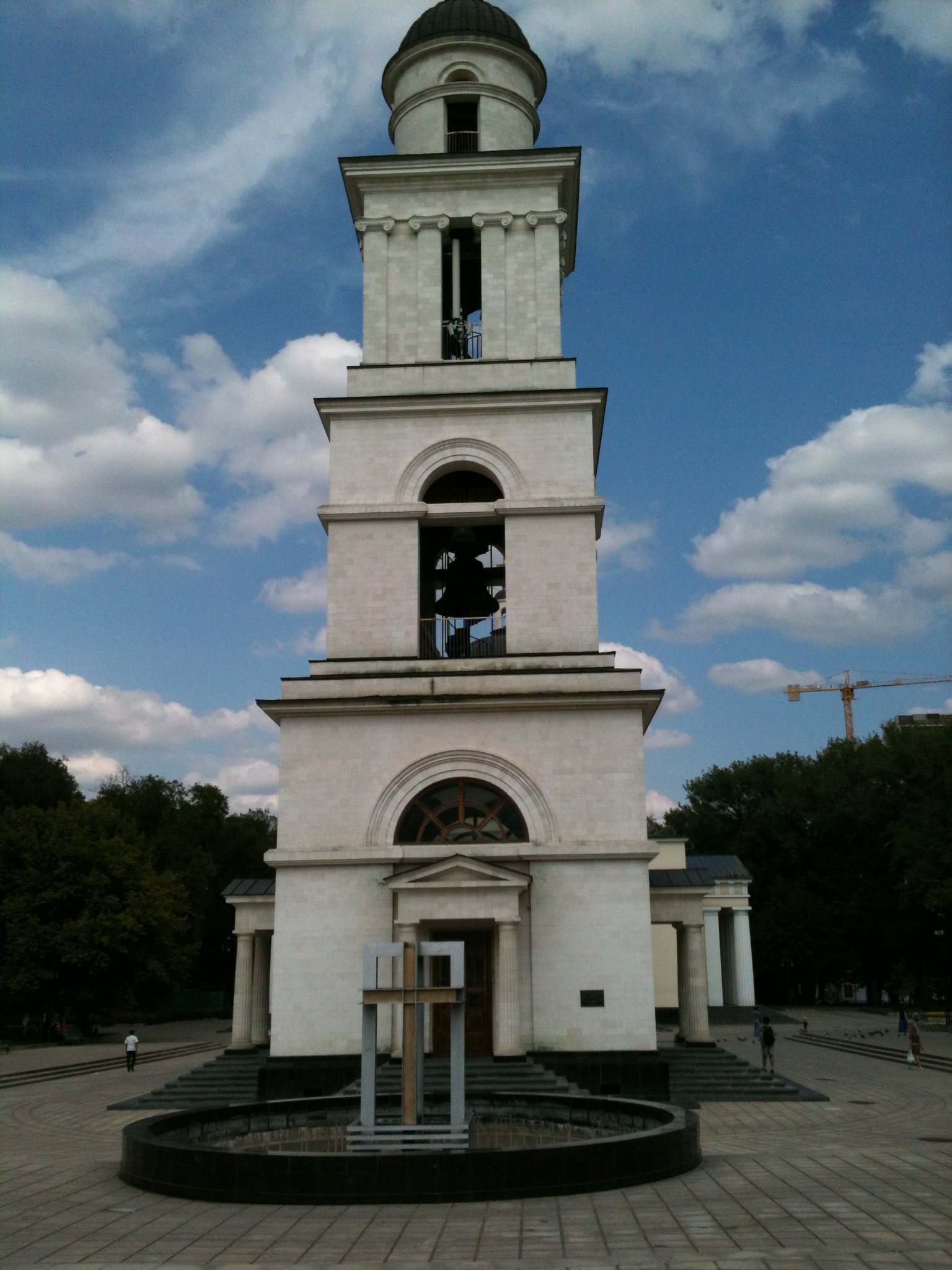
Biserica in the Park
See the tiny police car
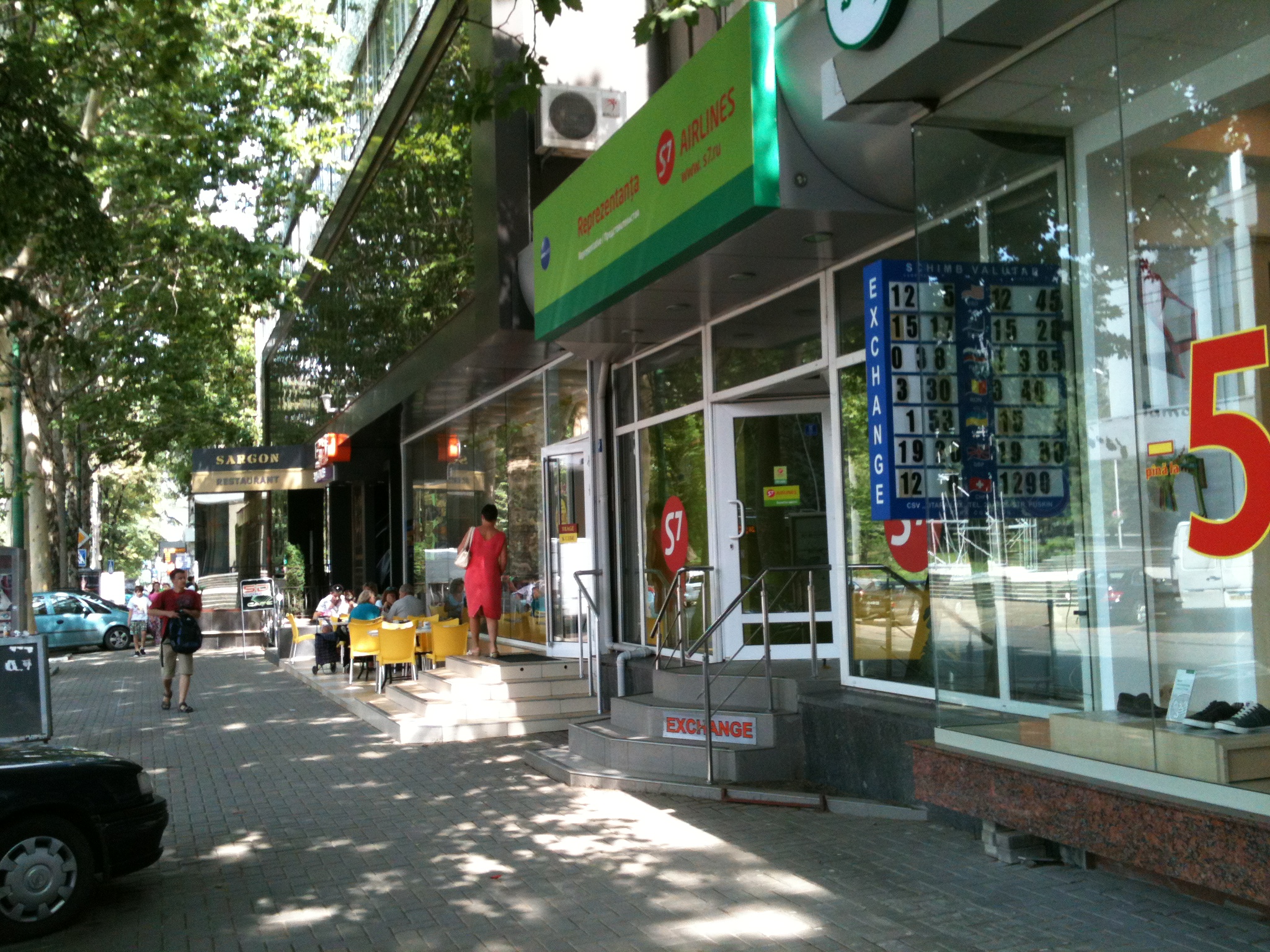
City street
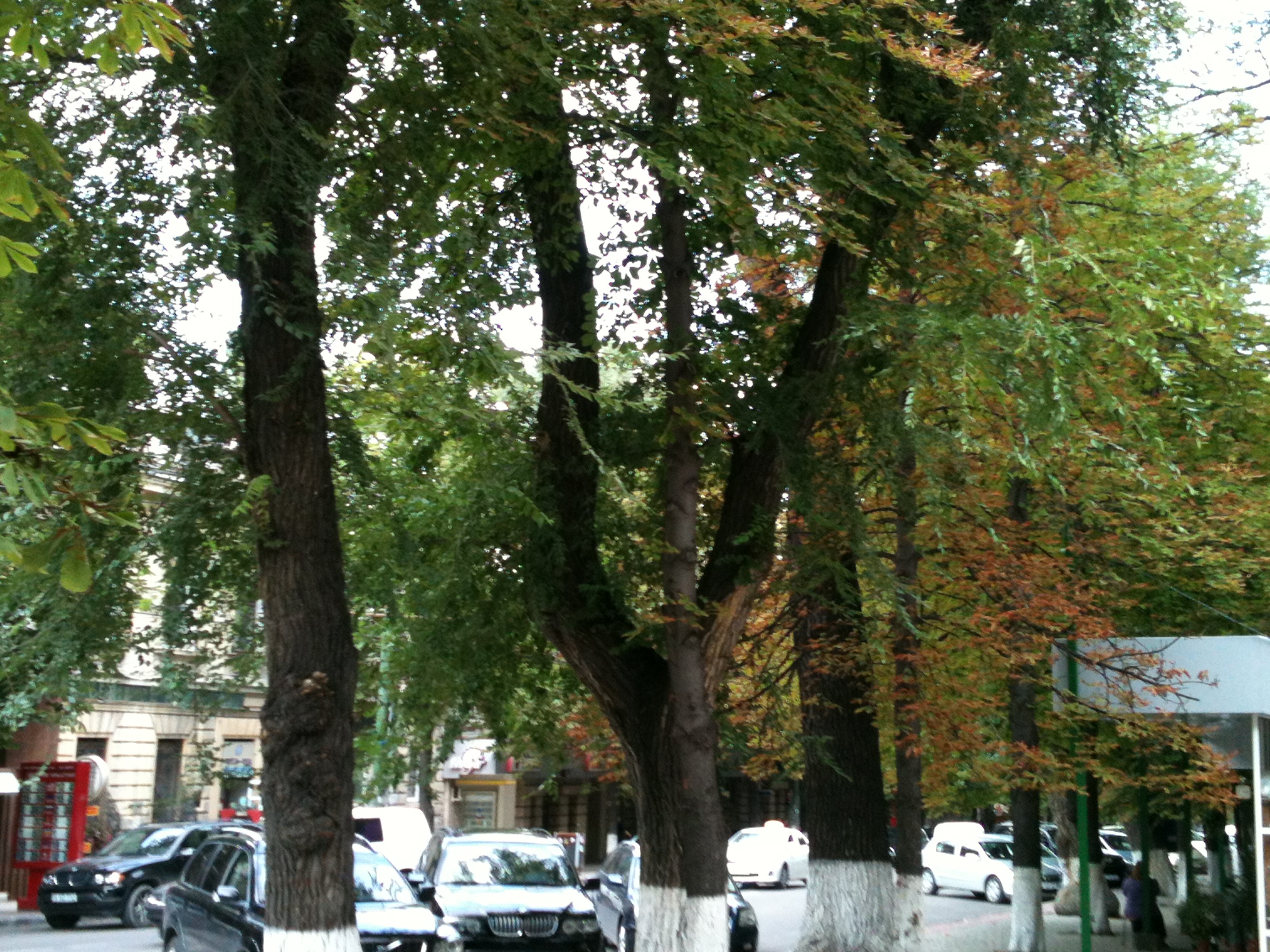
More city street – lovely trees

Moldova, Meet Circe: cultural question no. 2

Little Circe, winking for the camera..

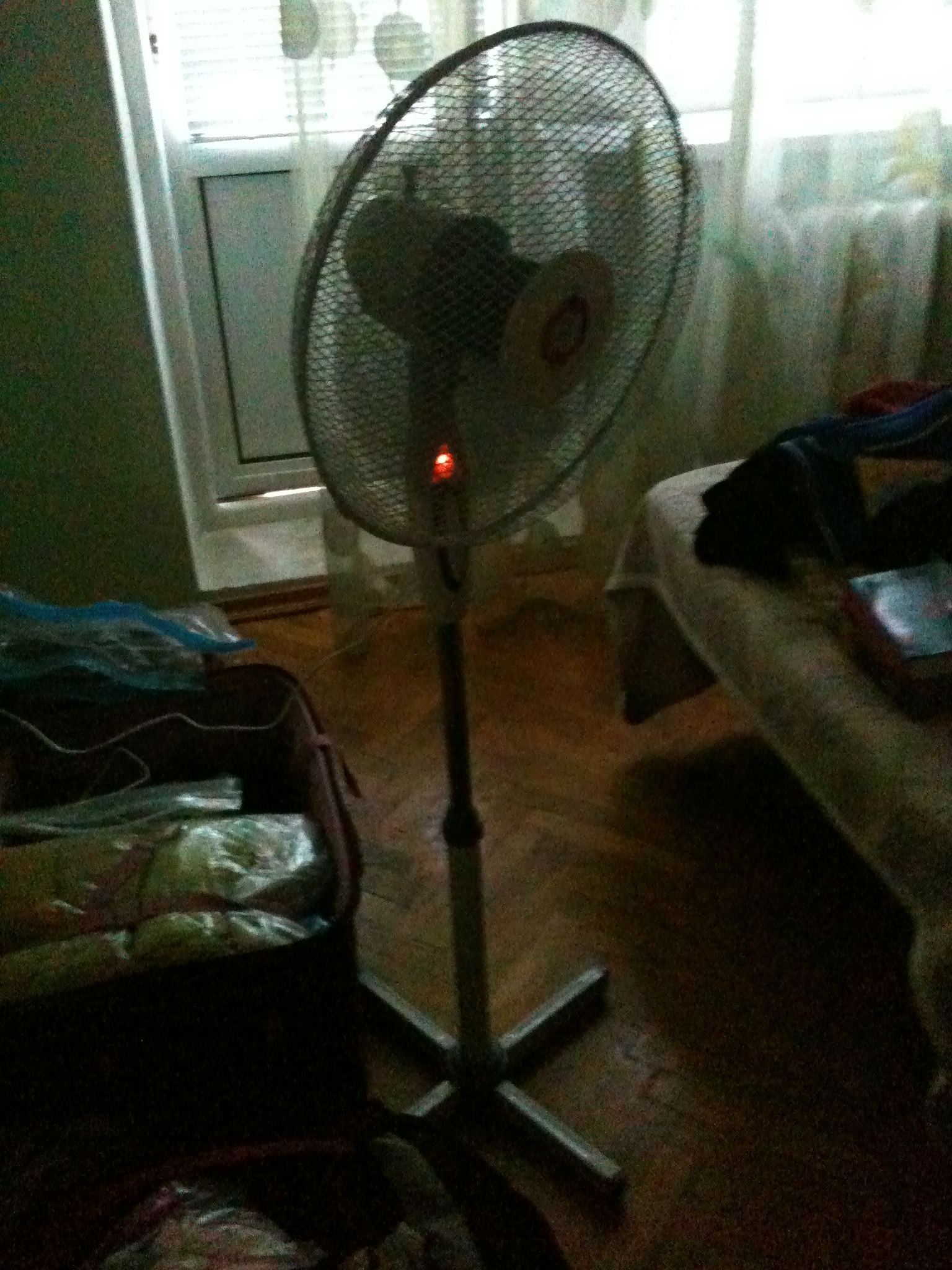
Well, today I did it.  I bought a fan. For the merest outlay of 160 lei (just under $13) I now sit blissful before it while it blows upon me with all of its third button, top speed, non-rotating, full blast force.  I am not sweating.  There is no sticky film upon my skin.  Hair, no longer weighed down by leaden droplets of perspiration, wafts pleasantly about my head.  I need not hold at bay the physical exhaustion that comes of plying one’s limbs through a thick batter of humid, heavy air.  My tee-shirt is dry, not glued to my back, stomach, and chest with an amalgam of water, salt, and the body lotion I habitually (stupidly) apply after showering.  And unlike the only other fan I have met in Moldova – in the school room where five of us studied Romanian all day – I don’t have to share it.  It is my personal fan,  all mine, blowing solely upon me.

One would imagine – erroneously, of course, but then I would venture to say that one’s imagination has not had the opportunity to visit Moldova – that Moldovans would be eager consumers of those cheap-ass wire mesh rotating fans that grace every college dorm room, strip mall retail establishment, Chinese food take-out, double-wide trailer living room, and even some outdoor campsites (in Texas) across America.  After all, their inexpensive and great at performing the function they’re specifically designed for – COOLING PEOPLE OFF IN HOT WEATHER, PEOPLE!!!

One might imagine that there would be lines of stalls in the piața selling fans – small fans for your table, hand held, battery-powered fans for the microbus, monster fans for the kitchen, ceiling fans for the bedroom, perhaps even weather-proof fans for the garden.  Canny vendors would set up shop at the rutiera stop, capitalizing on the freshly boiled meat continuously exiting those stewpot infernos.  Fans would beckon forth from the ubiquitous corner alimentare: Come within, get cool (and buy some bere while you’re here!)

But no.  No fans.  There are a few for sale – maybe four or five vendors in the entire piața offer them, the piața being a swap meet, trading post derivative which surely boasts several hundred thousand types of product, at the very least.  The vendors that do sell them have only one or two on hand.  They don’t sell very many to Moldovans, you see.

Perhaps they only think to stock them when the newest batch of Peace Corps Volunteers wanders through mid-summer, wilting and pitiful, mopping their faces with baby wipes and bleating out “Ventilator, vreau sa cumpar ventilator, va rog!”  The sweet gentleman who sold mine to me was careful to  demonstrate all of her features, depressing each of her three buttons, pulling up  the lever that set her head a wagging, turning the one that tilted her head up and down.  He wasn’t quite sure I had ever encountered one of these odd contraptions which manufactured its own breeze.   It wasn’t a popular item in his inventory, I guess.  And why not, you might logically cry? Why don’t they sell a million ventilators when Moldovan summers simulate the conditions inside a wool sweater worn over a wet suit wrapped in a down parka baked in a pizza oven somewhere in Death Valley in the middle of August?

Because of The Current, they will answer.

The Current.  That mysterious force that inhabits any flow of air, most particularly as it passes over and around the human form.  The Current. Responsible for aching backs, stiff joints, raspy lungs, sore throats, throbbing heads, and achy eardrums.  The Current.  A viral laden beast that permeates one’s orifices with its sly wisps, seeding the body with illness, debilitating one’s muscles and sapping one’s strength. (Perhaps it was The Current that made ill my knee.)

Once, in July, my LTI walked into class with saggy bags weighing down her eyes, her arms drooping listlessly, her feet dragging invisible anchors behind her.  “What’s wrong?” I queried.  “You look so tired.”  She told me that she and her husband had been up all night with their 18-month old baby, who was so sweaty and miserable and tormented by heat that she spent the entire night thrashing and sobbing.  They had opened all the windows and doors, removed their clothing, and laid down on the floor with her seeking some relief.  “Don’t you have a fan?” I asked, dumbly.  Well, yes, she said, somewhat puzzled, but you could never expose a baby that young to The Current, you know.  She then dragged herself from the room, oblivous to my stupification.

Well, all I can say at this moment is The Current is a seductive little Circe, her silky arms slipping mistily about me, whispering dreams of air-conditioned lobbies leading to refrigerated rooms stocked with cool tubs of ice where winter maidens brush frost crystals from their hair.   We have all the curtains pulled, she and I.  The room is a cool cave, hovering just outside a glacier.  Her whirring blades mesmerize me, spinning my head and swirling the memory of weeks of blazing heat until they evaporate into nothingness.  The Current carries me into thinness and lilting steps and clarified air and breezy sighs.

The Current is my friend and my little Circe is her medium. To hell with my knee.

Back in the kitchen again…

Borscht verde, otherwise known as fresh from the garden veggie soup

So here I sit in sick bay while all the rest of my compatriots travel on to their new sites and volunteer service, taking their first steps into their new lives.  I have been watching FB all day, tracing their footsteps through their new villages, comparing the size of their bedrooms with my own, lusting after the masa (feasts) wherein their new host families celebrate their coming by spreading a multitude of wonderful dishes across the table.  Hey wait a minute, I think.  I have a kitchen…and some veggies from Nina’s garden…and some odds and ends in the cupboards left by former inhabitants of this den.  I can cook something…

One of the less positive effects of Pre-Service Training and living with a host family is that it slammed the trainee back into the experience of childhood again.  We relied on the Peace Corps staff or our host mother or our Language Training Instructors or even the M26’s and M25’s to script our lives for us.  Almost every waking moment was defined by language lessons, tech training, homework, studying, self-directed activities or field trips or traveling back and forth to hub site or cluster site.

When I knew I would be here, on my own, at TDY for a week or so, I actually felt a bit of trepidation.  No Nina to prepare my healthy meals?  How will I eat?  On Friday, I ventured into Everest, a pseudo-supermarket (everything is almost, in Moldova,) like a 10 year old given the responsibility of cooking some dinner for her siblings while mom worked late. All the labels are in Russian, so one must have a pretty good sense of what the picture on the packet might be in order to feel confident in making a purchase decision.  The produce section was sad and empty (most everyone grows their own or buys in the piața.) There was an entire shelf of white rice (no brown) and pasta (all semolina,) supplemented by hrisca and lentils.  They do like their carbs here.  I ended up with a carton of mushrooms (haven’t had those since I left the States,) some Activa yogurt (same label as the States,) a miniature loaf of black bread and some carbonated water.  Yea for me.

Today, after seeing all those masa spreads, I remembered the bag of veggies that Nina pressed on me as I was leaving Friday morning. Well damn, I don’t want another yogurt and I polished off the jar of peanut butter someone left in the cupboard (sweet!) for breakfast.  It was strange at first, peeling the onions, mincing the garlic, chopping the dovlece (like a squash, only seedless…even sweeter!)  Like maybe I wasn’t old enough to be handling sharp knives. I felt Nina hovering over my left shoulder, clucking disapprovingly. While she made some good, healthy soups, they tended to taste very much the same.  She had a limited repertoire of herbs – parsley and dill – and used only salt and pepper to flavor.  And, in characteristic Moldovan style, one did things the same each and every time.  She cooks the way her mother taught her, the way her mother taught her before that.  Nothing changes. Tradition holds.

Now that I was on my own, I went through the cupboards and pulled out mysterious packets of Russian-labeled spices and had at it with impulsive America style.  Then I threw in some habanero sauce I brought from home – this was verboten in Nina’s house as it was way too hot for any Moldovan who tried it (mild by our standards, mild!)  With a small handful of egg noodles to thicken it up, I had myself an aromatic concoction burbling on the burner in no time.

Let me tell you, the succulence of vine-ripened tomatoes and the sharpness of fresh plucked garlic make for amazing soups – I surprised myself!  I had two bowls.  But it wasn’t just my body being nourished: I felt like I had slipped right back into my age-old soul, wielding that knife on the chopping board.  I’m back in the kitchen again, self-sufficient, creative, and all grown up again!  Thank you, dear Hestia! And let me keep enjoying while the vegetables are ripening…

I am a Peace Corps Volunteer

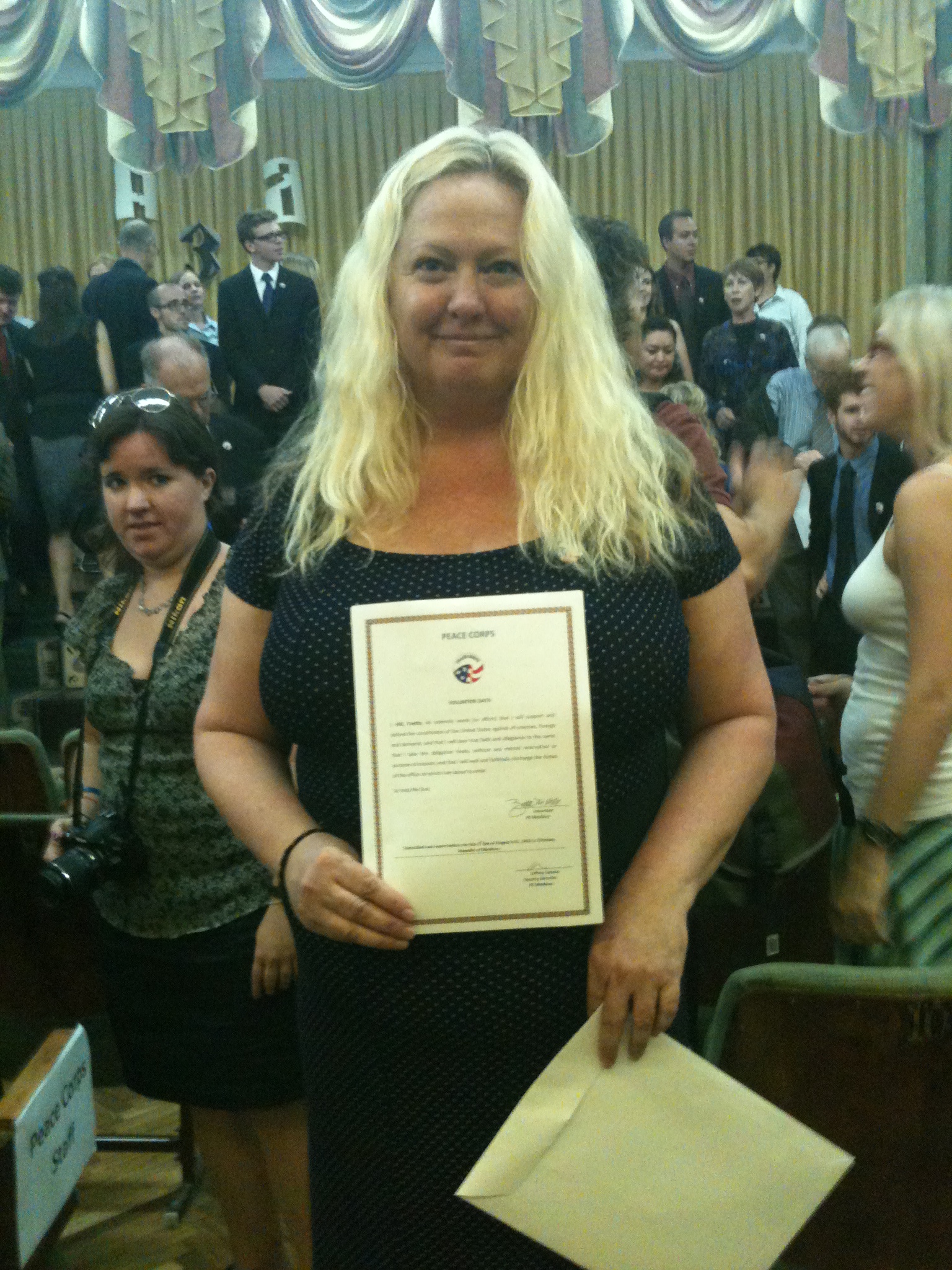
Holding my Oath of Office – I am a Peace Corps Volunteer!
Today, in a suitably serious and solemn ceremony, I and 37 members of my colleagues in the M27 Moldova group were sworn in as Peace Corps Volunteers.  (The rest of our group, Health and English Education Trainees, have 7 more days of “practice teaching” sessions remaining in their training.)

I confess that, as we repeated the same oath that – in various permutations –  thousands of other Americans serving in the military, diplomatic service, political office and other agencies of government have taken, I did tear up.  Being an American is a insoluble paradox for me.  I left the country partly because I am so tired of its politics, its materialism, its narcissistic patriotism, its inability to transcend its own mythos.  Yet it is America that brought me here, that sustains my work and the Peace Corps mission throughout the world, that continues to believe in “promoting peace and friendship” abroad through the voluntary service of over 200,000 of its citizens to date.  As the Ambassador to Moldova William H. Moser said in addressing our group, we are the most effective ambassadors of the American people in 137 countries around the world.

In searching for a YouTube video of my new site, Hîncești, I came across the following video.  Made, of course, by a Peace Corps volunteer.  Because I challenge you to search YouTube for a video made of ANY country in the last five years and not come up with one made by a PCV.  This is what we do.  We bring laughter, creativity, camraderie, esprit de corps, hope, friendship, diplomacy, and good will wherever we have been.  And we share it with the world.

Today, I am proud to be American.

http://www.youtube.com/watch?v=Xyk2qJjPQwE&feature=related


Fast Friends really fast

Community Development PSTs in Stauceni

From left to right: Warren, Leslie, Jan, Yvette, Roberto, Georgia, Patty, Quinn (Robyn taking photo.)

It’s amazing how close you get in just eight weeks. We will all be departing to different locations spread across Moldova on Friday.  I am going to miss having them around.  The worries, anxieties, complaining, support, laughter, tears and beers we’ve shared will stay with me for a long, long time.

Thanks you guys!

Roberto, Robyn, Warren, Leslie, Yvette, Jan, Olga, Diana, Quinn, Rodica, Georgia, Patty

Celebrating Georgia’s mama gazda ei zi de nastere (Olga’s birthday) last week.


My Peace Corps challenge, still unidentified…

[Disclaimer: I apologize in advance for the inexcusable length of this posting.  I pretty much vomited up a week’s worth of internal angst here.  Feel free to subdivide into chapters if necessary.]

Insert funny picture to entice potential reader…

You’ve probably noticed that the fountain of blogging clogged up somewhere last week.  We were warned by the M26s (the group of PCVs who have been here for a year now) that these last couple of weeks of PST could prove to be difficult and tedious and we shouldn’t be surprised if we felt “depressed” or “homesick” or “disappointed” right before our actual Peace Corps journey is set to  commence; I heretofore acknowledge their wisdom and experience in identifying the precise time period when exactly this would occur for me.   I am not adept at recognizing some of the less desirable emotions I experience; I tend to paint every self-portrait in happy colors, populate the background with balloons and sunshine, and frame it all in gold stars and smiley faces.  That I can’t manage this all the time now is one of the (unplanned) lessons I have been given to learn.

I have been considering why this is so (the lack of sunshine and balloons) for a couple of days now: is it just me or is there something in my environment that I am reacting to?  Is it this big change, in general, that has thrown me off balance or is Moldova a unique impetus for eliciting a certain, complex set of emotions within me? Or is it merely just the end of PST, when I will depart from my established routine in Stauceni and all my American cohorts?  So, given my propensity for over-thinking every last detail of my life and experience, my analysis traced the following path:

  1. Is this the scariest/most challenging/potentially life altering experience that I have ever had?

The short answer to this, I believe, is no.  It is a ‘short’ answer because the other experiences that I might consider to be relatively scarier, more challenging, or life-altering lasted for 15 hours and about 5 minutes, respectively.  The first was the time that my friend and I were lost in the Angeles National Forest overnight and were ultimately rescued by a Marine Search and Rescue helicopter.  The second was a personal epiphany that I had while speeding along the edge of an escarpment in a rickety bus through the Andes. (Though it was a life altering experience for me, I have never effectively conveyed its mind-blowing impact to anyone else who’s suffered through the details, which I will omit here.)

At this juncture I am forced to acknowledge that – duh – the scariest, most challenging, potentially (and actually) life altering experience I have had was becoming (accidentally) pregnant at 23 and choosing to go through with it, keep my beautiful child, and raise her – if I had to – alone.  Thankfully, the abundance of life provided us with everything we could ever have wanted or needed.   But my life DEFINITELY followed a different path than I would have tread had I not encountered this fork in the road.  And I was terrified, often and thoroughly, during her first two or three years of life.

  1. Is there something about Moldova that is eliciting these feelings in me?

The answer here is a (qualified) yes, though truly this question requires a book-length explication to actually do it justice. In fact, I did just read a book – The Lost Province: Adventures in a Moldovan Family by Stephen Henighan – that did much to clarify for me the tumultuous impressions I am juggling vis-à-vis Moldava, its denizens and the realities of twenty-first century trans-national capitalism.  Though I realized it has been a mere 21 years since Moldava gained its independence from Russia, I didn’t have an appreciation for the dregs of history that boil and ferment just beneath the surface of a culturally suppressed and economically-raped population.  Henighan came to Moldova to teach English in 1993-94; his experience of Moldovans was largely delineated by their seeming inability to cope with the catastrophic changes being forced upon them by the advent of a “democracy” and “freedom” heavily subsidized by rampant consumer materialism. The particular anxieties delineated by their ever-shifting borders, the complexity of their linguistic history and the historic artifacts it denies them, the tension that keeps them culturally, economically, and politically suspended between Western Europe and Russia are all integral to their national identity (or lack thereof) and make for an interesting read. (If you are lacking a good book for the beach this summer, I highly recommend Jonathan Sacks The Dignity of Diversity. He is much, much better than I at drawing out the intricacies of cultural identity and how it defines and shapes the human experience.)

Let me just excoriate here for a bit my favorite demon, transnational corporations: From 1991 on the Moldovans have been relentlessly saturated by the corrosive infiltration of first world media and products while trapped in a netherworld between the tantalizing but vagarious rewards of capitalism and the stultifying, pseudo-security promised by the communist state.   They can no longer rely on their agricultural products and the rural lifestyle it (more or less) supported for centuries to sustain them.  Embargos and tariffs are placed on their exports by various countries seeking their allegiance and/or to co-opt their borders.  Virtually their entire industrial sector has been cordoned off in the separatist, unrecognized “state” of Transnistra.  Their governmental ministries and officials struggle to integrate diametrically opposed political parties and philosophies. Meanwhile, the likes of Mercedes Benz and Apple and McDonalds tantalize them with seductive advertisements carefully calculated to whet their burgeoning appetites, You Tube proffers hypnotic music videos replete with heavy-lidded, long-legged beauty queens draped in gangsta bling, cinder block McMansions are sprouting in the suburbs Chișinău, and speaking a foreign language is de rigueur for any ambitious youth seeking gainful employment in an increasingly globalized economy.   They are not far enough removed, resource-depleted, nor education-deprived to be ignored by the ravenous maw of consumer-dependent corporations.  Yet they lack the political stability, economic base, and cultural cohesiveness to collectively harness the engine of capitalism and make it enrich, rather than drain, their bank accounts.

Most of the adults between the ages of twenty five and fifty are what is popularly referred to as “departe” – far away.  They work, usually far beyond their allotted visa period, in places like Italy, Germany, Moscow, and Canada, to be able to save and send money home for their families. They are forced to leave parents, children, spouses, and siblings for decades in order to earn the money needed to afford the necessities that life in the twenty-first century increasingly demands.   Families are torn asunder, children are orphaned, seniors work well past retirement age, half-built houses crouch in weedy lots, and an entire generation of Moldovans is denied the opportunity to influence or preserve their political system, cultural institutions, or dwindling national identity.

I think when I pictured the “Peace Corps,” I imagined a challenge that would involve enforced abstinence from common conveniences enriched by adventurous encounters within tribal enclaves: no running water or electricity, scarce or no access to conventional medicine or hygiene products or retail establishments, no Internet access, telephones, television, etc., all offset by a teeming social beehive of sustenance activity that would serve to distract me from the privation. That is far from the case here in Moldova.  All of those conveniences that were supposed to be inaccessible are here, relatively affordable (at least for me) and attainable.  Many Moldovans have them.  Yet they are, for the most part, so busy, distracted, anxiety-ridden, and stressed by attaining/retaining the ability to grasp and keep hold of these things that the social fabric that binds them is noticeably affected.  Kind of like America.

And so perhaps, I am disappointed at being ‘denied’ the opportunity to live out the atavistic fantasy I had built around my service within my head.  Instead, I am being asked to integrate into a community of people just embarking on a seemingly inevitable march into the consumer lifestyle the ultimate consequences of which I (and many others like me) am attempting to flee.  The causes, implications, ramifications, and veracity of this line of analysis are far too complex for me to explore here.  But I am consumed with these details all the time; I just can’t work my way out of the maze within which my nationality, economic status, education, opportunities, personal predilections and consumption patterns conspire to entrap me.

Anyway, enough of that.

Another funny picture to re-engage the bored reader

3. Is it the end of Pre-service Training, my imminent departure from the relative familiarity and comfort of my fellow American volunteers and the English language, esprit de corps, and common cultural referents  they represent, that is unsettling me(In other words, am I finally being forced to leave home?)

Undoubtedly, this is a loaded question, one that is not at all comfortable to contemplate.  After all, isn’t this one of the reasons I so doggedly spouted for joining the Peace Corps in the first place?  What does it mean if I don’t really want to leave America, after all?

It means that I am a product of my culture influences, like it or not.  And I now have a eminently valuable opportunity to truly see and appreciate the aspects of Americanism that are deeply embedded within me, that shape my perspective and way of being in the world, and that I don’t want to lose:

  •  Americans are preternaturally optimistic.  We believe, generally speaking, that we can do anything.   We are not subdued by the hand of fate, nor do we cede the trajectory of our biography to some unfathomable plotline drafted by forces outside our ken or influence.
  • We tend to believe that most people like us.  While this characteristic has had some unfortunate implications on a global scale, within neighborhoods, families, work environments, and public places it generates a great deal of shared laughter, social cohesion, and a predilection for including the people around us in our circle of perception.
  • We lean towards the adventurous and are more likely to embrace challenge and opt for change. We like to explore, question, debate, pinch, poke, and prod.  We can be (for the most part) persuaded to abandon traditions and historic influences in favor of scientifically-backed theories that have generated a wealth of technology and increased affluence for our country.

Granted the aforementioned constitute a gross generalization of what it is to be American.  And I don’t have the space nor my readers, most likely, the inclination to embark on a dialectic about what is accurate and bona fide about this generalization.  All I can say at this point is that I feel I am letting go of these qualities when I say goodbye to PST.  Of course, I can continue to nurture them within myself.  Many ex-pats are quite successful at maintaining their national/cultural integrity for years in foreign climes.  But I am going to feel the dearth of these characteristics in my day to day environment.

How and why Moldovans differ from Americans is part of what I am here to experience.  And, ultimately, to be able to understand, share, and celebrate.  The multi-faceted aspects of actualized cultural diversity are more complicated, potentially fractious and alienating than I was able to truly understand within my generative environment.  But it is an experience that we are being forced to grapple with, like it or not, comfortable or no, in our suddenly interconnected, transnational, globally networked world.  I feel like a baseball player on a soccer team; I keep using the wrong limbs and skills and all my moves are predicated by a different set of rules.  And I definitely don’t get the jargon.  I am a fish out water, flailing about, pining for contextual familiarities.  I miss being comfortably at home in my own head.  Above all else, I did not appreciate how much language defines the contours, dimensions, and palette of my reality.  It is like living in a science fiction story: this world shares much of the same surface characteristics as mine, but it is ineffably, maddeningly different.

Will I ever feel at home here?  And is that the challenge that will define my Peace Corps experience? Or just one of the many ahead of me that I can’t even hope to identify this early on?

And that’s what’s up with me this week….

My Peace Corps pause

A pair of lovely sisters- good friends of my daughter – posted/reposted this on Facebook.  It gave me pause:

the area of pause

you have to have it or the walls will close
in.
you have to give everything up, throw it
away, everything away.
you have to look at what you look at
or think what you think
or do what you do
or
don’t do
without considering personal
advantage
without accepting guidance.

people are worn away with
striving,
they hide in common
habits.
their concerns are herd
concerns.

few have the ability to stare
at an old shoe for
ten minutes
or to think of odd things
like who invented the
doorknob?

they become unalive
because they are unable to
pause
undo themselves
unkink
unsee
unlearn
roll clear.

listen to their untrue
laughter, then
walk
away.

Bukowski

I had never read this before, but it’s startling how clearly Bukowski pinpoints the underlying emotion of “what fifty feels like” for me.  I needed a “pause” from my life, a way to look at it from a distance, examine its contours and facets and weigh its true value on the scale of my soul.  My Peace Corps experience is a means for me to do this.  I have definitely taken a step back and out.


Beautiful Storm!

So last night I got to experience my first Moldovan thunder storm – boy was I impressed!  There are volunteers here from the north and mid-west that shrugged it off as nothing, but I am not used to such sky theatrics being from Southern California.  I went out on the second floor porch with Nina as the storm was gathering and tried to get video of the sound of the wind rushing through the trees – only partially successful.  But you can definitely hear the excitement in my voice at the prospect of rain and wind and cooler temperatures after enduring weeks of sweltering heat.  Towards the end of the video I follow Nina going down the stairs and perhaps you can get a sense of how insanely steep the descent is.  The steps are stone and I can’t imagine going down them in winter when they are covered in snow and ice (I guess it’s a good thing I won’t be here.)

So this video shows the actual storm itself.  Doesn’t come anywhere near capturing the intensity of the thunder and rain.  It was literally a deluge.  I woke up in the middle of the night thinking that Nina was switching the overhead light off and on for some wierd reason.  It was actually the lightenting, which was striking every two seconds and illuminating my whole room.  The thunder would roll from one side of the sky to another in huge, meladromatic crescendos that sounded as if heavenly horseman were pursuing their prey through the billowing clouds.  I couldn’t go back to sleep it was so exciting.  Unfortunately, I wasn’t able to get it on video.

The Little Things – cultural question No. 1

In my perusal of myriad Peace Corps volunteer blogs, I read many posts describing puzzling cultural differences people encounter that are not serious enough to be explained in tech classes but still reinforce the gaps in experience and practice that exist between Americans and everyone else.  I find them interesting – and many times entertaining – so I thought I would start a list of my own.

Just to put this in context, here are some examples of generic cultural differences that are explained to us in tech classes:

American   View

Moldovan   View

Time is valued. It should be used productively. Schedules are kept   and followed. It is rude to be late for an appointment. Deadlines are expected   to be met. Time is flexible.  Schedules   may be made but not followed.  Meetings   are often planned or canceled at the last minute. People often arrive late   for appointments.  Deadlines are a   suggestion.
Change is seen as a positive challenge.  Initiative and free enterprise are   encouraged.  Mobility is   commonplace.  People travel miles to work,   change jobs often.  Living or moving   a lengthy distance from one’s family is not unusual. Change is often seen as risky and stressful.  New things are regarded with suspicion and   uncertainty.  Traditions are positive   and celebrated.  Moving far from one’s   family is only done when required to obtain work.
The “American Dream” is defined by the ability to affect one’s   destiny. Events in one’s life are often linked to fate and superstition.
Social and business environments tend to be informal and   relaxed.  People usually address each   other by first name. Directness and informality are highly dependent on context and   familiarity.  In business and   educational environments, people are usually addressed by title.
Independence is highly regarded.    Most young adults and families establish their own households as soon   as they can afford to do so. Family is centralized when possible. Many young families live with parents   and the youngest child usually stays with them all of his or her life.
People’s sense of identity comes from their accomplishments. People’s sense of identity comes primarily from the group/s to which   they belong. (Ethnic, religious, class, education, economic, etc.)
Privacy is a positive condition and personal space is valued. Isolation indicates depression.    People prefer to spend time in one another’s company.

So the above is probably relatively self-evident to anyone with a passing knowledge of Soviet-era mentality and ethnic groups that have tended to live in agrarian communities.  But then there are things that one runs across that are not so easily understood or maybe they relate to the above attitudes and views but one must dig through the surface oddity to grasp the connection.

So here’s one:

Everyone uses these brooms in Moldova.  Both women and men use them in the city, in the villages, in their homes and offices and schools to sweep the floors, inside and out.  I watched a woman at the center I will be working at spend an hour – literally – hunched over like a peripatetic question mark sweeping the grounds where the children would play.  My question?  Why oh why wouldn’t one lengthen the stalk so it would be possible to sweep in an erect position?  Why bend over in a way that must become uncomfortable after 10 or 15 minutes when you sweep the floor every day?  I wanted to grab the damn thing and tie it to a branch or pole and show her how much easier the task could be.  Someone could make a fortune marketing American brooms here.

Or not.  Perhaps this fits in with their keeping with “tradition” and “change is suspicious” view.  This is the broom that their grandmothers (bunica) and grandfathers (bunici,) and theirs before them, used.  But I just can’t help but think that if I had an Aerican broom, I could SHOW them how pleasurable (relatively speaking) an activity sweeping could be.  And the job would get done much faster.  Leaving them more time to spend in each other’s company and perhaps the ability to get to the meeting on time…