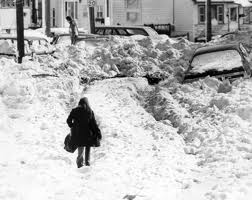
So it’s winter here. Not the fake winter we pretend to have in Southern California, decorating our mall windows with plastic snowflakes and our Escalades with reindeer antlers while maybe throwing on a windbreaker to travel from car into supermarket – but real winter, where treacherous roads winding through countryside have never seen a snowplow and cars that skid off the road have no tow trucks to help them dig out. Men laboriously shovel dirt from the beds of slowly moving trucks in a stalwart attempt to provide some measure of traction on hills and curves. Car wheels skid uselessly at the top of the hill on my street before slowly sliding down to the bottom again. Other cars sit idle and useless under mounds of snow in the hillier neighborhoods of Hîncești; their owners will not be able to use them until spring when the killer black ice fades away.
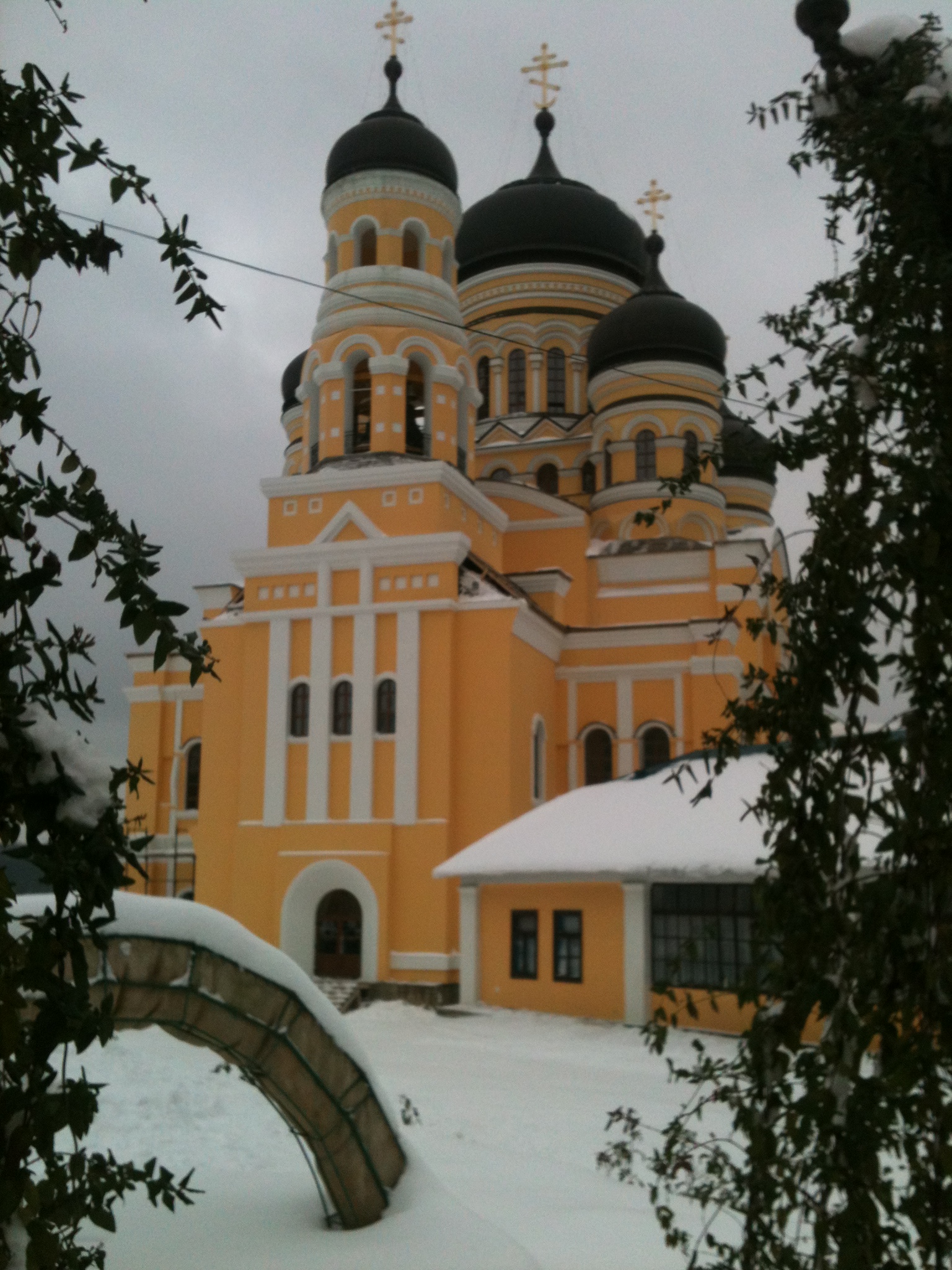
Yesterday some of the employees of the center where I work made a picnic lunch and we piled into the all-wheel drive van with the consultant visiting from Germany to show him the only “tourist” attractions Moldova has: two of some fifty Orthodox monasteries that sit in relative isolation throughout the country. My partner had checked the weather forecast which indicated cloudy skies but no snow, so I donned four layers of clothing and the steely determination that being California born and raised was not going to prevent me from avoiding excursions for a third of the time I am living in Moldova.
Me, outfitted, sweating
Now of course, those of you who know that I have “been going through the change” for the past two years or so must appreciate what wearing four layers of clothing means for me. It means that I can only apply the top three layers minutes before leaving the apartment or I will die from heat prostration and suffocation. It means time indoors is spent weighing the benefits of disrobing with the hassle of having to put everything back on again later. It means long car rides invariably result in me sweating profusely within my tights/long underwear/ body shirt/tee shirt/sweatshirt/wool scarf/down parka outfit while my feet and fingers slowly go numb and the portion of my face that is exposed feels as if needles are dancing across it. There is no happy medium here. The only place I am reasonably comfortable is at home. Consequently, I am getting more and more loathe to leave. This is not a good sign.
So I made myself go on this jaunt to Căpriana and Hincu. And once in the van and on the road, I actually enjoyed watching the scenery go by. All the trees are bearing heavy loads of snow; their gnarled and twisted branches seemed to reach out in supplication as I passed by behind my frosted pane of glass. The sky was a muted mix of shadowy pastels overlayed with a sheen of silver. Most of the dwellings we past were trailing ribbons of smoke from their chimneys, attesting to the warmth of families and friends huddled inside. My companions were in high spirits, telling jokes and commiserating over children and husbands and housework and life in the way that any group of women the world over is wont to do.
In between the two monasteries, we pulled over to the side of the road and ate our picnic in the van, a healthy masa of baked chicken, sarmales, meat patties on bread, and the unbiquitous sliced tomatoes. Someone had brought a small thermos of chai that was still piping hot; I don’t know if it was better to hold or sip, but both proved satisfying. And of course bags of sweet treats were passed around at the end.
This is the “summer” chapel. They have a winter one also.
As in so many developing countries, the monasteries proved to be much grander and better constructed than the surrounding villages. It was actually uncomfortably warm inside some of the buildings (me packed inside all my layers with a menopausal thermostat notwithstanding.) There were icons, blessed bottles of water, candles, incense, and small bottles of perfume labeled „Jerusalem” for sale, on which my companions did not stint. One of the ladies even made me a gift of a small portrait of three saints. All purchases were laboriously recorded by pen in triplicate; this took approximately five to ten minutes per person for each sale while the German and I stood around examining the intricacies of the painted walls. Of course, days are mere blips in the annals of these monasteries. And we didn’t see any other visitors in either place. What do they have but time?
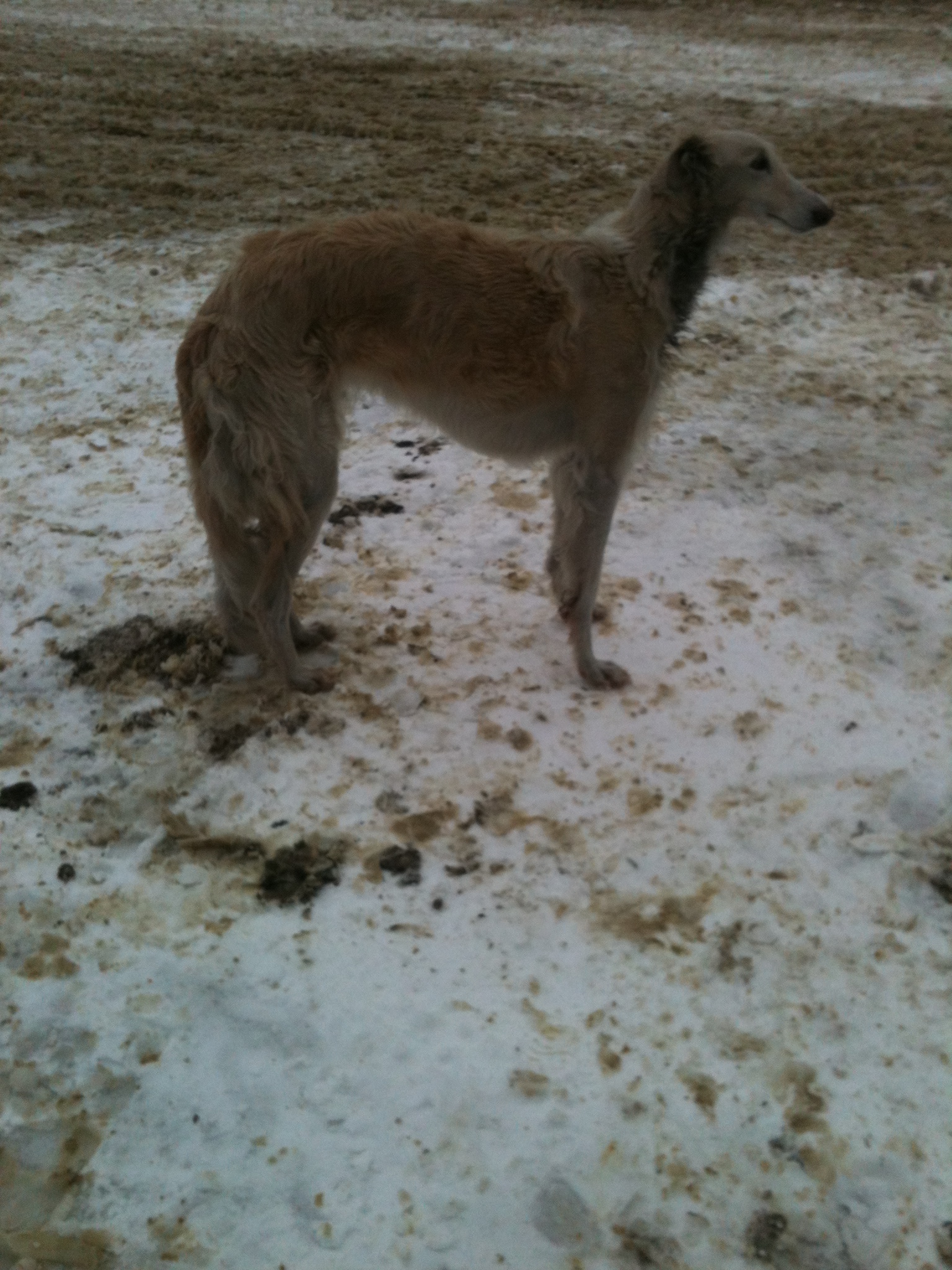
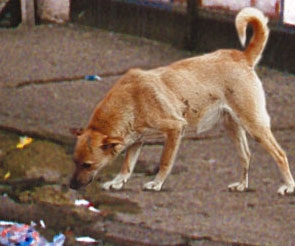
No expense sparedThe horses get jacketsThe dogs don’t. This one followed me until I climbed back in the van because I shared a bone left over from lunch.
As I write today, snow is falling relentlessly outside. A fellow volunteer who had spent the weekend with me – traveling for four and half hours in order to sit in her pajamas watching movies and trolling the internet with someone else rather than spending yet another day in her bedroom alone in her isolated village – departed the warmth of my apartment at 11am, only to get to Chișinău an hour and half later and discover that the buses aren’t running up to her village: too much snow and ice. She called me, dejected, facing a 20 minute walk down the side of a highway back to Peace Corps office to try to find a place to stay tonight. And maybe tomorrow. The forecast says snow all the way to Wednesday.
No handicap ramps or easy access in Moldova
Across and just down the street to the right, there is always a group of people waiting to catch a ride out of town. They huddle in small groups like articulated penguins, snow piling like heaps of scattered salt on their heads, shoulder, shoes. Sometimes they wait for an hour or more. I stand at my window and watch them, asking myself why the city doesn’t think to construct a simple shelter? Even a roof on four posts that would keep the snow and sleet from steadily burying people where they stand? How do Molodovans keep such stoic patience, never expecting more for themselves? I toy with the idea of going out and asking them: don’t you think you deserve better than this? rallying the troops, inciting a movement, marching on the raoin council with frost laden posters, clutching candle stubs to warm our hands.
But then the thought of donning all those layers is just too overwhelming and I return to my desk to compose my useless thoughts about their plight. Honestly, Peace Corps is tough in ways you just never imagine.
Today, in the course of a conversation between a German consultant visiting my center and my partner, the notion of a “Potemkin village” was used to illustrate those aspects of Moldova that can be so misleading for foreigners who try to understand how life works here. My partner had never heard this term, so we related the story (which experts now claim to be myth) of Potemkin erecting only the facades of settlements along the banks of the Dnieper River in order to fool Catherine II during her visit to Crimea in 1787; Potemkin wanted her to experience the area as more densely populated, flourishing and productive than it actually was. Oddly enough, my partner seemed to have trouble understanding the point of the story, almost as if it was perfectly natural for a government official to perform this sort of manipulative trick to impress a powerful benefactor. Such is life in Moldova.
Earlier this week, I received a request to relate the more mundane details of my weekly routine: what do I actually do here from day to day, what is my environment like, who do I encounter and where do I go? And as I thought about responding to this query, it occurred to me that my days are full of these Potemkin villages – the contrast between what is available to me as a Peace Corps volunteer versus what ordinary Moldovans can access; the wide range of locales that I visit and the varied people that I meet in my work and through the Peace Corps. Nothing is really as it seems, and all it takes is a scratch to the gleaming, brightly hued plastic surface to see the iron and rust lurking beneath.
Five Days in the Life of a Potemkin villager
Day 1:
I awake. Lindsey, a fellow volunteer now living in another village, has spent the night for convenience sake. She and I do a language lesson together on Wednesday mornings from 9-11 with our tutor, using the opportunity to converse with each other and receive immediate feedback on grammar and pronunciation. Peace Corps will pay for any volunteer to receive up to 12 hours per month of professional tutoring in Romanian or Russian, depending on the language needed for his or her assignment. I take full advantage of this and it is definitely one important way that Peace Corps invests in local economies throughout the country.
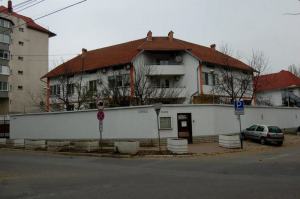
My tutor’s apartment building behind the billboard.
After my language lesson, I literally cross the street from my tutor’s third story apartment to my center. My partner, the center driver and I depart immediately for the Chișinău airport to pick up a consultant flying in from Frankfort, Germany. We negotiate the snow and ice and arrive at the airport prior to his plane landing, so we wander through the shops and restaurants in the small but modern airport that I barely remember seeing when I arrived in a stupor at the end of a 36 hour journey last June. There are many officials going in and out of various doors in full fur coats and leather boots, looking important and fully occupied. There is large Christmas tree decked in splendid regalia on the second
Chisinau airport – exterior
floor and the aroma of brewing coffee and yeasty breads fills the air. Puffy children in pastel hats, mittens, snow boots, and parkas waddle about like mini-marshmallows. (No one wants to peel off layers of buttoned, zipped, velcroed and snapped clothing for such a short amount of time. They are so adorable I want to eat them.)
Chisinau airport – interior
I use the notepad on my iPad to write the German consultant’s name in big letters. My partner and the driver are entranced by the invisible mechanics of such a thing, fascinated that my finger can bring forth words on a screen. They peer at the letters closely and giggle.
Once having obtained our German, we depart the airport and are soon winding through a maze of twisted, pot-holed streets in the outskirts of the city. I realize that this is not the direction home: “Unde mergem?” Where we are going, I ask. “Scuzați, Yvette! Mergem să cautem brad am vazut pe internet ieri.” We’re going to find a Christmas tree my partner saw on the internet yesterday. Not at a store, mind you. Somewhere in this nest of crumbling apartment buildings someone has offered a tree for sale. So the German and I are left in the van to become buddies while my partner and the driver begin a lengthy search on foot for the tree. I try to explain to him that this is normal in Moldova – one maximizes trips into the city by performing a multitude of tasks when there. He nods sagely and relates that much the same is true in India, Afghanistan, and Kazakhstan, places he has visited for work on a multitude of occasions. I am oddly excited to have Moldova lumped in with such exotic locales.
My partner and the driver eventually emerge with a green stick that, upon closer inspection, proves to be an artificial Christmas tree. It possesses four or five bent, sparsely-leafed branches and has definitely weathered its share of holidays. Sigh. Even developing countries have fallen prey to Christmas plastic.
Day 2:
I spend the day attempting to negotiate the niceties for our German guest. He needs to change money, so we drive him to the nearest ATM (which is literally a block away, but no one walks in Moldova if the luxury of a “mașina” is accessible.) It takes three attempts for him to understand how to operate the machine. Meanwhile, it has begun to snow. He wants to stop every few steps as we head back to the car to finish telling me a story – his wife has admonished him not to walk and talk simultaneously when it’s icy. I am freezing and I can see my partner sitting in the front seat of the van wondering what in the heck we’re doing.
After retrieving money from this thoroughly modern convenience (accessible in Russian, English, Romanian, and French,) we drive to the local indoor piața to buy food for the dinner we are hosting at the center to celebrate its year anniversary and search for the cinnamon that the German wants for his breakfast toast. There we encounter entire sides of beef, legs of lamb, livers, tongues, chickens with feet attached, and fish complete with heads, scales and fins. Mounds of homemade cheese (called “brinza”) balance atop rickety wooden tables next to recycled plastic bags replete with unshelled walnuts, dried fruit, wrapped candy (manufactured in Moldova), and two liter water bottles refilled with milk. Bare, bloody hands transfer meat from table to scale to bag. Nothing is sanitized, inspected, or refrigerated, but – since it’s probably only 30 degrees – I tell myself I will not be concerned. Vagabond dogs wend through the table legs nose to concrete sniffing for scraps. Men are smoking in clusters around the meat and fish; their ashes pepper the swirling currents of air. At least its winter so there are no flies. Needless to say, there is no cinnamon.
Day 3:
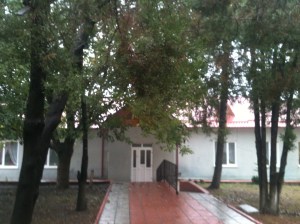
My center
During a feedback meeting with the German in the afternoon, my partner begins to cry. The beautiful façade of our center with its brightly colored murals, ergonomically-correct high chairs, handicap friendly bathroom, frothy curtains, and cartoon stencils is suddenly peeled back to reveal the seething cauldron of problems that sources her daily tears. After listening for an hour or two as I attempt to translate and summarize the various administrative and funding dysfunctions besetting the center, the German proposes the very same list of solutions that I so eagerly proffered mere months ago. He is met with the very same stubborn rebuttals and intractable arguments that were shoved back to me.
I explain to him that this Moldova; we are both liberally-educated, professionally-networked, culturally
Lyrical ode (in Romanian) to the hope and joy that children bring
privileged, westernized people using our analytical skills and inherent activism to tackle issues that have arisen in a foreign environment, that were born of a much different experience and informed by perspectives we don’t share and will most likely never understand. I see his shoulder sag subtly as he begins twisting his hands in his lap. God, I know the frustration he is feeling, mind scurrying from scenario to scenario, trying to find the invisible thread leading out of this tangled web back to sanity. I want so badly for him to find it where I’ve failed. Sadly, at this point I don’t hold out much hope.
In the evening I am invited to a masa at the lovely home of the second Angela – friend of the first Angela whose house I went to two weeks ago. I am amazed at the architecture: one enters into an intimate, cozy kitchen/dining/living room combination – a miniaturized version of the “great rooms” now so popular in American homes. The center is stabilized by the highly polished trunk of a tree that was culled from their property. The cabinets are all fashioned of a reddish, blond wood with glazed glass inlays and ornate handles that could have come from Restoration Hardware. Other smaller, sturdy trunks support the plastered ceilings of her and her husband’s bedroom, which they share with their 7 year old daughter until the time when their son, 18, is ready to move out and free the second bedroom for her. The bathroom sink is a shallow, smoky glass bowl, the shower fashioned from rough stones also plucked from their property. Angela is pleased that I shower praise on their creation that they designed and built themselves; “Most Moldovans just don’t get it,” she tells me, wryly.
The meal is hearty, the wine plentiful, and the conversation lively. I don’t get home and tucked into bed until well after midnight.
Day 4:
I arise at 5:30am, having lain awake for an hour already dreading the task ahead. I have to dress and ready my baggage for an overnight stay in Chișinău. I am attending the International Women’s Club of Moldova’s annual Winter Bazaar in order to sell Christmas cards, candles, and velvet bags fashioned by my center’s staff to supplement the meager cash they have set aside for the children’s holiday party. While I enjoy being in the capital once I’m there, the journey is fairly long and tedious. It is still dark and very cold when I leave the warmth of the apartment at 6:50am. Negotiating the steep, ice slicked asphalt of the driveway leading to the street, my feet slip out from beneath me and I land forcefully on my butt, driving the wind from my lungs.
At 6:55 I board the waiting rutiera that is scheduled to depart at 7:00 as I have planned to meet another PCV at 8:00am. I am the sole passenger. The driver and I converse about the difficulties of learning languages; he commiserates with me about the mishmash tongue that is loosely termed ‘moldovanești’ – an amalgam of Romanian, Russian, and Ukraine words that is variously spoken in the majority of the small villages. Peace Corps teaches us the proper version of Romanian, but this does not often match up with what we encounter at our sites. The further you travel from Chișinău, the greater the deviation from textbook style.
Many weeks ago, I discovered a well-organized (by Moldovan standards) website, autogara.md, which provides a comprehensive list of the departure and arrival times for buses traveling throughout the country and into Romania and Ukraine. I was so pleased – a schedule! I didn’t have to wander aimlessly up and down the street waiting for the right bus to appear. Instead, I can tear myself from the comfort of the apartment mere minutes prior to departure. The rutiera I have boarded, however, does not end up pulling out until 7:25, five minutes later than the scheduled time for the next departure of the day; only two more passengers have boarded in the interim. I know that I won’t make it by 8:00, but we Americans are smart by now: we pad in extra time to all appointments to account for the vagaries of Moldovan public transportation.
MoldExpo
The Winter Bazaar is held at Moldexpo, a thoroughly modern exposition complex on the outskirts of the city. There are over a hundred booths, mostly embassies – Chinese, Turkish, Polish, Italian, German, English, American – along with the United Nations, various Moldovan NGOs, and the Peace Corps. Experienced participants know to mob the American Embassy booth early, buying up all the cans of Campbell’s mushroom soup, gallon bottles of Log Cabin syrup, one pound jars of Skippy Omega+ Creamy Peanut Butter and containers of Kraft Country BBQ Sauce before the front doors have even opened for business. Ahhh, American manufactured food – don’t we all just crave it, in spite of ourselves.
This day proves to be one of those disorienting experiences wherein I feel as if Scotty has beamed me up to the Starship America: ten or fifteen PCVs of various ethnicities, genders, and sexual identities are milling about inside the small PCV booth and spilling out into the pathway, transitioning smoothly from Romanian to
Last year’s Christmas Bazaar in MoldExpo
Russian to English while sharing plastic plates of Ethiopan and Italian cuisine, laughing at each other’s jokes, discussing the merits of Northface versus Marmot parkas, and comparing itineraries for upcoming vacations.
In the evening, my fellow PCV, Elsa, and I prepare a luscious dinner of oven-baked chicken basted with Kraft BBQ sauce, accompanied by the left-over Spanish rice she served for Moldovan guests a couple of nights before, and a side of fresh (!!!!) Swiss Chard grown by another PCV as part of his greenhouse project. While we are cooking, her Moldovan landlady stops by to pick up the payment for the electricity. She spends a good 20 minutes parsing out the details of the bill, seemingly striving for a rare transparency in a largely opaque cash economy. The Peace Corps allots hugely generous, mandatory, non-negotiable amounts for utilities and rent within our monthly stipends. Moldovans who are selected as host families or who are fortunate enough to land a PCV tenant most times do their very best to provide a pleasing experience, anxious to retain this steady boon to their monthly incomes.
Day 5:
I arise at 6:40am from the bed Elsa generously shared with me, trying not to wake her. She has slept restlessly for most of the night, waiting for two other PCVs whom she has told can sleep on her floor to arrive. Like most PCVs from small villages let loose in Chișinău on a weekend night, they want to maximize their time and don’t show up until the wee hours. That is the bane of being assigned to a project in the big city. The coveted ability to access a variety of perceived luxuries like bars, restaurants, bookstores, malls, operas, ballets, concerts, and well-stocked grocery stores is balanced with the need to build and maintain boundaries of privacy and quiet time. Having an apartment in Chișinău means constantly fielding requests from fellow PCVs to crash for the night when they trek into the city from far-flung locales. When you have a generous, nurturing soul like Elsa’s, the ability to say “no” is one that must be practiced over and over, despite the discomfort it brings.
Dawn is breaking as I spend a good twenty minutes enveloping myself in tights, body shirt, long underwear, sturdy canvas hiking pants, woolen sweater, scarf, hat, mittens under gloves, and water proof UGGs to brave the outdoors. I heave my pack onto my back and decide to take the stairs, as I doubt that me in all my layers plus back pack will fit inside the minute steel box that masquerades as an elevator. Plus, I just don’t trust the damn things.
I trudge through the peripheries of the city’s bustling center, dodging through smoking pedestrians; packs of skeletal, shivering dogs; broken manhole covers that plunge into murky abysses; empty plastic bags of various hues skittering in the wind; careening automobiles with horns that blare at the briefest obstacle; and bundled bunicas selling potatos, beets and cabbage at the crumbling pavement’s edge. Neon signs for gambling dens fight for air space with satellite dishes, trolleybus cables, and billboards advertising European label clothing and airline tickets to Turkey. The women, as always, are minutely coordinated, stylish bags match boots which match scarves which match parka trim which matches lipstick, blush, and eye shadow. I look like a misplaced hobo; I can see their eyes twitching disapprovingly from my shoes to my bulky jacket to the lumpish backpack that causes me to walk in a slightly hunched manner. I couldn’t care less.
Peace Corps Office
I arrive at Peace Corps office, sign in, check the log for a stray package I might have overlooked, then trudge up three flights of stairs to the PCV lounge. By the time I get there I am sweating like it’s mid-July and must frantically discard my top two layers of clothing as quickly as possible. Various volunteers wander in and out, draping themselves about the second-hand furniture, dropping their belongings on the floor, mixing cups of instant coffee with plastic spoons retrieved from the trash, complaining of hangovers and the monumental journeys back to site. It reminds me of nothing so much as a college dorm room; disheveled youths far from home, parked behind iMacs blaring iTune playlists, exclaiming in delight when ripped open boxes from home spill out Cheetos, Kraft Mac N Cheese, deodorant, and warm winter clothing. People emerge from the shower with wet hair, wrapped in towels and proceed to dress with their backs oh-so modestly turned. Talk of projects, families back home, countdown until COS (Close of Service,) and the previous night’s escapades drift through the musty air. Me and two other PCVs, Sue and Tori, retreat to a back office to concentrate on plans for today’s effort to plug Turul Moldovei 2013 (more on this later.)
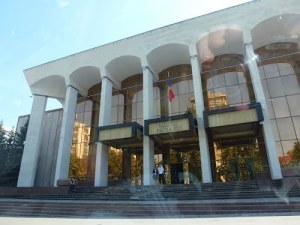
We emerge hours later into biting wind and mud spattered snow, facing a 35 minute walk to the Palațul de Republica where a formal event honoring volunteerism is set to occur. It takes us only moments to decide to hail a cab. Tori sticks her head in the window and begins negotiating a price. Sue and I stand alert at the back doors, hands on door handles, ready to dive in. Cars line up, honking impatiently, behind us. Though the price is 5 lei more than we originally decided to pay, we pile in hurriedly, willing to cede bargaining efforts for comfort. We inch our way between belching buses and shiny Mercedes only to catapult to 50 miles an hour through the open stretches of icy roadway, suffering whiplash on the sudden turns. Pedestrians scatter before us. Balalaikas blare tinnily from the radio.
We disembark before an imposing, pillared facade that has – no kidding – unfurled an actual red carpet atop the slushy, dirt-laced snow. Depositing purses, keys, and mobile phones on a table, we pass through a security detector which beeps loudly and blinks red for every person, leaving me to ponder the efficacy of its abilities. We enter a magnificent three-story hall, encrusted with chandeliers, burbling fountains, and galactic gold balls hanging from the ceiling like a retro-modernistic installation conceived in 1954. We check our coats with an actual coat check girl who hands us each a carved wooden tag embossed with a glittering number. We are ushered up to the second tier and encouraged to take our seats in the cavernous auditorium in preparation for the festivities to come; ah, but we are smarter than that now. We know that the performance will stretch into the evening hours, with no intermission or refreshments available. We surreptiously slink back down the grand staircase and proceed to effeciently accomplish our mission, nabbing the people we wish to meet as they walk through the detectors (beeping, flashing) in order to introduce ourselves and our future event. (Again, future blog post.) Within 30 minutes, we are hailing another cab back to Peace Corps.
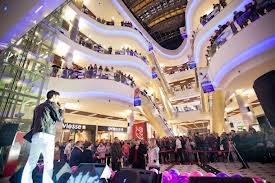
Malldova (I’m not joking)
A couple of hours later I am sitting in a swank coffee shop in a mall that could have been built in any California city, waiting to meet with an Irish woman who runs a large orphanage in Hîncești. Suzanne is an amazing force of nature, who emits energy and cheer throughout any space she enters. I find myself craving her company in these dour days of winter. She has generously offered to let us hitch a ride back in the van that transports the medical personnel working at the orphanage back to their homes in Chișinău every evening. Thank the sweet lord for this, as a blizzard is bearing down and the thought of negotiating the street corner wait and the various bus changes back to site is just overwhelming me at the moment. I have never appreciated personal vehicles – as environmentally depleting as I know them to be – as I have since winter has descended in full force upon Moldova.
Malldova – interior
I spend a few minutes in delightful conversation with Suzanne’s father, who is urbane and thoughtful, remarking to me about the bitter irony of this „Malldova” – an architectural showcase of shops which 95% of Moldovans cannot afford to patronize. (Just like South Coast Plaza, I think.) The coffee here is the same price it is in the States. Men finger their iPhones at the table adjacent to me, while brusquely barking at each other in a language I cannot identify. Heavily made up young women lounge next to them in real furs, feet encased in six inch stilettos. (How do they walk through the ice in those things? I think.)
The ride home is spent in silent, repetitive prayer to a Father God I don’t believe in – please don’t let me die on a highway in Moldova, please don’t let me die on a highway in Moldova. The driver is good, but the road is icy and sleet is blanketing the windshield with frost. There are no street lights or municipal trucks to salt the roads. We slide perceptibly on the curves, hydroplaning three or four times. When we finally turn onto the road leading into Hîncești, I feel the muscles in my neck and back I didn’t realize were clenched subtly relax.
It has been dark for 3 hours by 7:00pm when I shed all my layers, wash my weary face, and sink gratefully into
Winter window view looking out from my bedroom
the easy chair bathed in the warm light of a table lamp in my room. Tomorrow, language lessons, 9:00am. I have not studied a word of Romanian (though granted I have been speaking it at various times throughout the past five days.) I am too tired to care. I am too tired to check email, Facebook, or the days news. I am too tired to eat. The book I am readying on my iPad sits heavily in my lap. Outside, snow is swirling and the wind is whistling through the twisted limbs of the tree just outside my window. An occasional truck thunders by.
Using my Google voice number, I call my husband. He is just waking up, contemplating a choice of cafes for breakfast and a leisurely perusal of the New York Times. Life is moving on at the same pace, in the same grooves, 6000 miles away. It is not snowing there. I hear Zoe bark once, sharply, in the background and picture the person she is warning walking past outside the window. His voice is so clear I could swear he was in the next room. I laugh at one of his jokes and my eyes suddenly fill with tears.
Happiness masking melancholy; plastic coating rust; glitter over darkness; facades hiding emptiness – it all rolls through me in a wave that crests, breaks, and then recedes again. I’m learning to negotiate the currents and swim with the tide. And actually, its really not that bad.
I took my love and I took it down
I climbed a mountain and I turned around And I saw my reflection in the snow covered hills
‘Till the landslide brought me down
Hum along now, you know the tune…..
Oh, mirror in the sky
What is love?
Can the child within my heart rise above?
Can I sail thru the changing ocean tides?
Can I handle the seasons of my life?
Winter is coming to Moldova. I can feel the change in the air – even though the sun breaks through the clouds most days to shine bright and strong, it never manages to warm the air sufficiently to forget what month we’re in. While it is within October’s purview to don a breezy cloak of warmth on occasion, November is too busy kissing up to December’s gray foreboding locks; it brooks no tolerance for wistful memories of summer.
I would embrace wholeheartedly this opportunity to experience – for the first time in my five decade plus life – this inevitable cycling of the seasons, the turning of life from bounty to harvest to dormancy to regeneration – all of the blessed profundity of it- if it wasn’t for the damn dogs: Canis lupus familiaris. Those ubiquitous roadies trolling behind the human bandwagon, an animal most thoroughly doomed to trace an endless feedback loop that grants it no reprieve from the vagarious impulses of a far more intelligent, yet somehow (usually) less sympathetic species.
Vagabonds, they’re called here. Strains of German Sheppard, mixed with a bow-legged, furrier, terrier type: they’re everywhere in Moldova. (Though one occasionally glimpses an odd-man-out; the other day I ran across a perfect Chinese pug, shivering in the cold, reminiscent of the little prince my grandmother cherished for some 15 years.) A few appear to be well-fed; I have come to realize that many Moldovans “own” dogs which they permit to roam freely about the village, opening the gate for them in the morning then granting them safe harbor when they return in the evening with the setting sun. But most are not so lucky.
Fending for themselves at the outskirts of attention, they regularly ravage the few trash bins placed around town, strewing wrappers, bottles, plastic, paper, and other non-edible waste about the streets and making an already degraded environment appear even more disheveled and unkempt. You see them sitting alert in front of a child eating an apple curbside, waiting for the core that might be carelessly tossed their way; or following the kerchiefed bunica hauling a load of produce from the piața, sure that an onion skin or leaf of cabbage will stray from the bag; or trailing the busy man chatting on his cell phone while munching a placinta, lapping up the brinza crumbles falling from his mouth.
They are alert, always, attuned to the environment in a way that Zoe – my dog at home – has never had need to be. I watch them wait at the edge of the highway, tail tucked between their legs, watching, knowing what’s dangerous, shying back at just the split second necessary to avoid being hit. No one (but me) it seems notices; they are invisible, skirting the edges, immensely disposable. No one pets them, feeds them, names them, buckles a collar about their bony necks. Their coats are matted, their eyes wary. As the cold deepens, setting in its claws, they coalesce into packs, finding warmth in numbers. And soon enough the guns will come; many will be shot. One is safer in the middle of the herd, by the far. Dogs are not dumb.
I must keep reminding myself that their genes betray them, though: these are animals doomed to the periphery, dim notions of warmth and camaraderie suffusing their bones, with scarce few – if any – opportunities to realize them. I do not venture to connect with them; though I carry bones always, when dinner has provided them, I throw them several yards and walk quickly away, not wanting to attract the pack.
One can know a country by the way it treats its dogs….
My personal, unofficial transition into fall happened today (the ‘official’ one being tomorrow, the autumnal equinox.) It has rained on and off all day – not the kind of blustery squall that would blow through like a manic cleaning woman in the scorch of mid-afternoon in July, trailing a host of billowing white clouds like freshly cleaned sheets snapping on a summer clothesline. This was a desultory but persistent rain, brought in by a sodden heap of wet gray blanket flung across the sky and left to leak its grey water upon everything below. By afternoon a stiff wind was throwing its weight around and umbrellas were trudging along the streets at an angle. Summer disappeared overnight, sweeping her dusty skirts behind her.
Now it’s 5:30 and the sun has slid behind the huddled row of derelict buildings lurking curbside across the street outside my window. This weather fits Moldova, kind of like a well worn hoodie. It doesn’t bear up well under the harsh glare of sunlight. This country needs some weathery camouflage to bury its dust in mud and drape its crumbling facades under a lacy veil of mist. It almost looks good in steely gray, like it’s finally taken off the summer togs that were just not appropriate and frankly looked rather ridiculous and gotten down to the business of revealing its true character. Gloom and doom.
In fact, the looming portent of winter crops up in many of our conversations lately. There are no snow plows here. No municipal trucks to spread salt on the road. We will be contending with ice-shellacked crooked, concrete stairways with no handrails. Frosted roads with no sidewalks. And branch loads of snow dropping from the trees that surround the buildings and line the streets. And mud. Where there was once dirt there will be mud. Lots and lots and lots of mud.
My parents sent me two large packages containing all my winter gear on August 27. The packages cleared Moldovan customs on September 7. Then they apparently went undercover. No sign of them at Peace Corps office. A forlorn email inquiry to the PC office manager, who handles all the mail, has thus far gone unanswered. (Luckily, I brought a raincoat with a fur lining and some rain boots with me.) The chill here is decidedly different than the cool and breezy, sun dappled relief of Southern California’s ”winters.” (I use that term oh so loosely.) Last week it was in the high 70’s here; today it didn’t get above 54 degrees. I have a feeling I’m about to discover what winter really means.
This last Sunday I arose with some little trepidation (I’ll admit it) and put the last stray items into my luggage in readiness to move to my final destination. It has been a long journey that brought me to this point, all the way from my sallying cry in the dark so many years ago. It was not registering completely that this trip in Terry’s van would probably be my last ride in a personal vehicle with all my luggage in tow while I’m in Moldova. (When you leave the country at the end of your service, for some reason you have to find your own way back to the Peace Corps offices and the airport. Hence, most people leave most of their things here, only taking back the REALLY important stuff….)
When they arrived – Ana, my work partner, and Eduard, her husband, and Terry, the driver – we had to haul my luggage out from the apartment all the way around the building to the front to the car, because of course I couldn’t manage to open the gate into the parking lot. (This was the beginning of the end of my ‘healed’ knee.) On the way to Hîncești we stopped at a store called Metro, which I heard about but didn’t quite believe existed. I was wrong. Costco has married WalMart and moved to Moldova. Here is a huge warehouse store with everything from dish soap, to washing machines, to socks, to watermelon and cheese. All under one tin roof. For a nation of bus riders. That’s right. You know how much you buy when you visit a warehouse store….well imagine transporting all of that home on a jam-packed rutiera. I don’t get how this works. But Moldovans are diligent and proficient at getting done what needs to get done, with very little technology most times. It makes me yet again realize how much consumption we take for granted in the USA. Ana and I have hesitant conversations, comparing the price of laundry detergent. We find a bag for 20 lei cheaper and send her husband to put back the more expensive versions we had just picked up. Terry careens madly through the store, flirting with every woman he sees. (More on Terry at later time – he really deserves his own post.) I am feeling vaguely comfortable with Moldovans, not an American in site. We stuff all our purchases in the van with all my bags and climg aboard for the wild toad ride to Hîncesti. Terry pilots the van somewhat like a flying carpet. We seem to be zipping a couple of inches over the actual road. Is this better than a rutiera? I think.
I had barely set my bags down and hadn’t even unzipped a suitcase before Nina, my new host sister (I have to call her that as she is my own age – it feels too weird to call her my “host mom”) tells me that we are going to a masa in the small village of Boghaceni in celebration of a four month old baby boy born to a couple for whom she is the “Nona.”
Culture break: A Nona is sort of like a godparent for married couples. It is a non-relative whom a couple asks to serve as a guide and mentor for them during their married life. It can be a couple or a single man or woman. Generally, the person or couple is quite a bit older with some life experience under their belt. They will help the new couple make big decisions, teach them about parenting, offer advice and comfort during difficult times, etc. I find this especially perceptive in NOT having it be a relative, as many times married couples can encounter difficulties with parents and in-laws that require some sound guidance to help them through so they don’t make a mess of things.
So we cross the street in front of our apartment building and begin waiting for a ride to this village. Now ruteiras come by every ten-fifteen minutes or so, but most folks are impatient and try to flag down passing cars that are going the same way. Of course, Peace Corps advises volunteers against this practice, but everyone does it anyway. It is a good way to meet Moldovans and practice your language, I guess, but I haven’t tried it on my own. Now that I’m with Nina, I guess I’m ready to hitch hike (I actually don’t have a choice. She’s madly flagging down every car that whizzes by.) A couple of cars stop but they’re either going a different way or they can only fit one person. We end up in a rutiera just as it starts to rain.
And then it’s pouring. (Luckily at this point I had not learned of the horrible accident that just claimed the lives of ten people in a 17-seat rutiera that was carrying fifty persons. It’s brakes failed on a curve and the mayor of a town and his wife were among the fatalities.) I am not looking forward to the walk from the rutiera to this masa, as I left in such a hurry I didn’t grab an umbrella and hadn’t changed out of my sandals. After about an hour, I hear Nina yell for the driver to stop. We’re out in the middle of nowhere. I am confused. After we disembark, a young man comes up to greet us. His car is parked right there where the bus stopped. Oh thank the lord, I don’t have to walk. We get in his car and proceed down a dirt road that is quickly melting into mud. He is driving fast, trying to beat the disintegration of traction. A couple of times I find myself wondering if walking would’ve been better, but the road turns out to be miles long. The house that we’re going to comes into view ahead – it’s way up on a hill to the right of us and as we slowly drive by it is apparent that the car is not going to make it up the slippery slope of mud flowing down that is probably a road in dryer times. We exit the vehicle and ponder the slope. Nina is in high heels, I am in sandals. The young man grins, grabs my arm, and says: Sos! (UP!) Here we go.
Well, this is the second stage of total knee failure. I am slipping and sliding and clutching at the branches of bushes to my left with my free arm. Up ahead of me, Nina is slogging on galliantly alone with her umbrella held high and her wedgies sinking inches deep into the mud. Up and up and up. We finally attain the summit and walk for another few minutes through flat muddy soup and stop in front of a locked gate. The young man – his name is Sergio, I’ve learned during our little ambling duet – pulls out his cell phone and calls his parents, the people we’re visiting. Are they not here? Are they still miles away in a rutiera? If they’re home and they know we’re coming, why is the gate locked? We wait. And we wait. And we wait. Recall that it’s raining. Pretty hard. Me without umbrella. In sandals. In mud. After about 10 minutes, we hear the hearty hey ho of a man approaching the gate. He is laughing and chattering away in Romanian as he unlocks the gate. I learn soon enough why it took him so long. We have another half mile climb up yet another muddly slope to the house above.
We pass through orchards full of pear trees and grapes hanging off the vine. There are more tomatoes (roșii) and watermelon (harbuz) than we saw at Metro. Another orchard with plum trees, the fruit being the actual size of the prunes that they will become later upon drying in the sun (pruna.) Some corn that looks sere, droopy and tattered from the (former) lack of rain. Finally we pass what smells like the outhouse. Good, we must be getting close, I think.
Why am I here again, when I could be back at Nina’s place, dry and unpacking? Oh yes – the all important „integration” (I didn’t mess up on the quotation marks, btw, that’s how they do it in Romanian.) Not soon enough, we arrive at the front door where three older woman, all wearing kerchiefs and aprons, one with missing teeth and a wandering eye, one small, anxious boy, and one lithe young woman holding a forty pound baby (no kidding) stand waiting to welcome us. We remove our shoes and enter into safe harbor. Thank the lord, we’ve made it, I think. Now I just have to get down again. I guess I’ll worry about that later.
There is a mass of food – a masa – spread out on the table before us. We are given some bread and wine and salt, the traditional Moldovan welcoming gesture and invited to sit. Nina gives the married couple (Sergio turns out to be the husband) some money and a gift for the baby. We begin to eat. For the next two hours it continues to rain outside while we repast indoors. Wine, food, talk. More wine, more food, more talk. Many toasts to America and my health. The people comment on how well I speak Romanian. The old man says Barak Obama’s name several times, as it is the only English words he knows. Nina pulls out her Avon catalogues and goes into a protracted sales pitch which, suprisingly, holds both the men and the women rapt. Even the little boy is held captive. Perfume samples are passed out to all. She’s good. After about an hour, I note that Sergio is trying to refuse more wine as he reminds them he has to drive us back to the bus stop. Thank the lord, I think. He’s only successful about half the time in not having his glass filled. Oh well, I think.
The masa
When it’s finally time to go, Sergio runs out ahead of time and returns with a nice pair of galoshes for both Nina and I. Thank you god, I think. Though there may be no tread on the bottom of these, at least my toes will stay clean and the cuts on my feet will not be infected with typhoid. We wash our own shoes in a bucket of rain water kindly provided by the clouds overhead. And then we ski down the hill. That is the best term for our meandering sliding progress. The old man is holding Nina’s arm and Sergio has mine. I am clutching him in the hopes of avoiding an embarassing face plant. This is the penultimate stage of knee damage. (I still have to walk to work tomorrow carrying 20 pounds of books and computer on my back. That did it in completely…)
The ride back to the highway is a testament to German autobuiders (I think we’re in an old Audi.) The car weaves wildly on torrents of mud from one side of the road to the other. Sergio hunches with great concentration over the wheel, smearing his left hand against the inside of the windshield every minute or so to clear the condensation. One windshield wiper is working valiantly. A car passes us on the left. Seriously? I think. Nina pats my knee and smiles winningly. I wonder if she’s going to pull out the Avon catalogue.
When we get to the road, Sergio stops at the bus shelter and leads us inside. Then he runs back out to the highway. What a gentleman, I think, waiting to signal the passing rutiera for us. Within seconds he has flagged down a late model Taurus (compete with leather seats and Dolby sound) and he gestures us to climb in with the three burly, bald Russian occupants. Great. Everything the Peace Corps warned me about. Gangsters, I think. Note the gold chains and silence. Completely unconcerned, Nina pulls out her phone and checks her voice mails. The entire way no one talks. The driver dials a number but gets no answer. Apparently the human trafficer connection has taken the day off, I think. When we arrive at our apartment, Nina tries to give the driver 20 lei. He refuses gruffly. Well how about that, I think.
The grandparents (bunicii)
Later that night, I put brand new sheets on my bed. I unpack all my bags for the first time since I loaded them up in Fullerton so many eons ago. I find things I forgot I brought. I Skype with Rhiannon and Nicole back in the States. I take a shower and get into my jammies. It’s still raining outside. Nina is already sacked out, fast asleep. The winds whistles and a steady patter of rain drops is like a metronome tick-tocking right outside my window. A smile spreads slowly cross my face.
My first day in Hîncești, I think. This might turn out to be a bit of the adventure I’d hoped it would be…
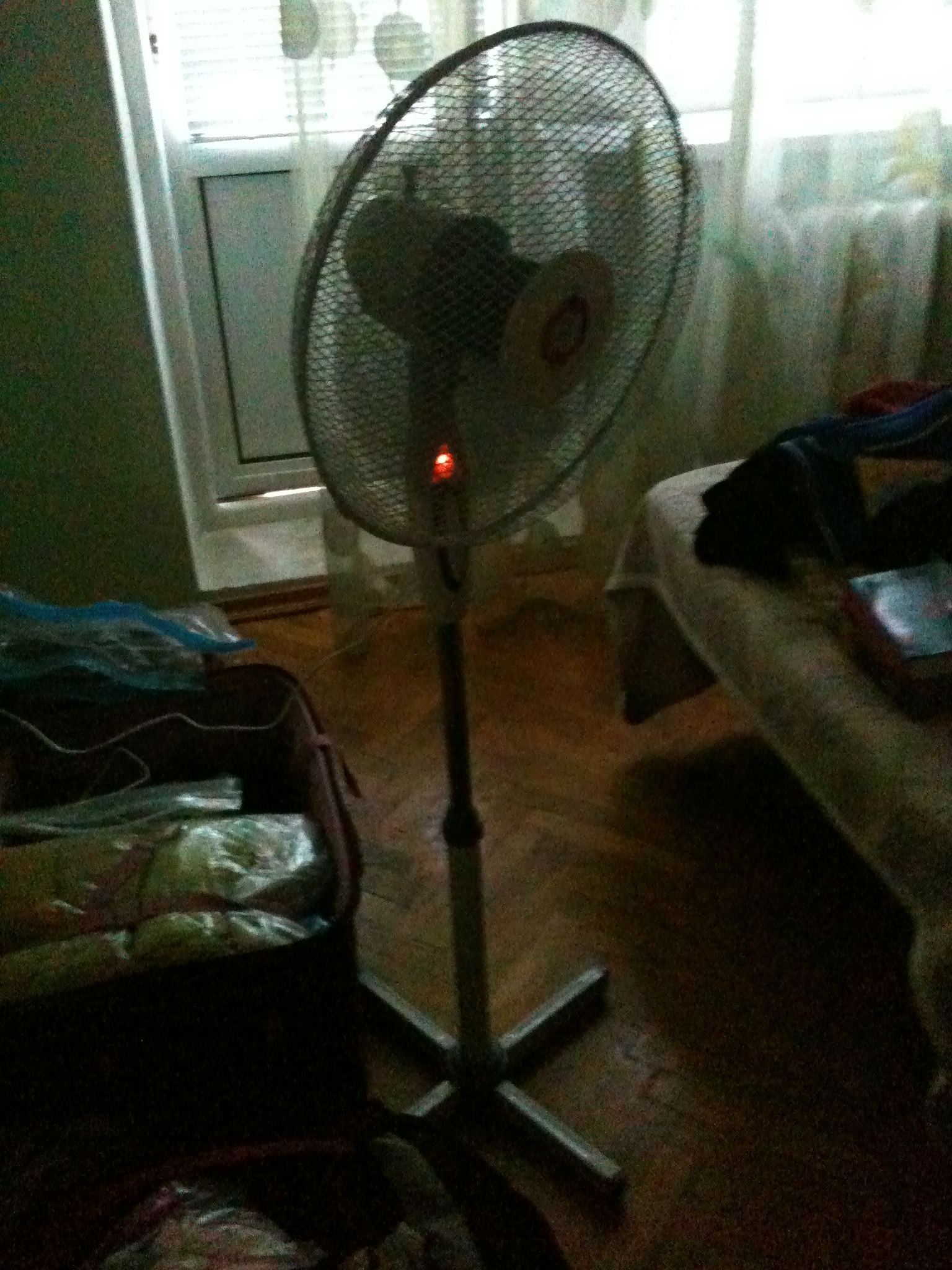
Well, today I did it. I bought a fan. For the merest outlay of 160 lei (just under $13) I now sit blissful before it while it blows upon me with all of its third button, top speed, non-rotating, full blast force. I am not sweating. There is no sticky film upon my skin. Hair, no longer weighed down by leaden droplets of perspiration, wafts pleasantly about my head. I need not hold at bay the physical exhaustion that comes of plying one’s limbs through a thick batter of humid, heavy air. My tee-shirt is dry, not glued to my back, stomach, and chest with an amalgam of water, salt, and the body lotion I habitually (stupidly) apply after showering. And unlike the only other fan I have met in Moldova – in the school room where five of us studied Romanian all day – I don’t have to share it. It is my personal fan, all mine, blowing solely upon me.
One would imagine – erroneously, of course, but then I would venture to say that one’s imagination has not had the opportunity to visit Moldova – that Moldovans would be eager consumers of those cheap-ass wire mesh rotating fans that grace every college dorm room, strip mall retail establishment, Chinese food take-out, double-wide trailer living room, and even some outdoor campsites (in Texas) across America. After all, their inexpensive and great at performing the function they’re specifically designed for – COOLING PEOPLE OFF IN HOT WEATHER, PEOPLE!!!
One might imagine that there would be lines of stalls in the piața selling fans – small fans for your table, hand held, battery-powered fans for the microbus, monster fans for the kitchen, ceiling fans for the bedroom, perhaps even weather-proof fans for the garden. Canny vendors would set up shop at the rutiera stop, capitalizing on the freshly boiled meat continuously exiting those stewpot infernos. Fans would beckon forth from the ubiquitous corner alimentare: Come within, get cool (and buy some bere while you’re here!)
But no. No fans. There are a few for sale – maybe four or five vendors in the entire piața offer them, the piața being a swap meet, trading post derivative which surely boasts several hundred thousand types of product, at the very least. The vendors that do sell them have only one or two on hand. They don’t sell very many to Moldovans, you see.
Perhaps they only think to stock them when the newest batch of Peace Corps Volunteers wanders through mid-summer, wilting and pitiful, mopping their faces with baby wipes and bleating out “Ventilator, vreau sa cumpar ventilator, va rog!” The sweet gentleman who sold mine to me was careful to demonstrate all of her features, depressing each of her three buttons, pulling up the lever that set her head a wagging, turning the one that tilted her head up and down. He wasn’t quite sure I had ever encountered one of these odd contraptions which manufactured its own breeze. It wasn’t a popular item in his inventory, I guess. And why not, you might logically cry? Why don’t they sell a million ventilators when Moldovan summers simulate the conditions inside a wool sweater worn over a wet suit wrapped in a down parka baked in a pizza oven somewhere in Death Valley in the middle of August?
Because of The Current, they will answer.
The Current. That mysterious force that inhabits any flow of air, most particularly as it passes over and around the human form. The Current. Responsible for aching backs, stiff joints, raspy lungs, sore throats, throbbing heads, and achy eardrums. The Current. A viral laden beast that permeates one’s orifices with its sly wisps, seeding the body with illness, debilitating one’s muscles and sapping one’s strength. (Perhaps it was The Current that made ill my knee.)
Once, in July, my LTI walked into class with saggy bags weighing down her eyes, her arms drooping listlessly, her feet dragging invisible anchors behind her. “What’s wrong?” I queried. “You look so tired.” She told me that she and her husband had been up all night with their 18-month old baby, who was so sweaty and miserable and tormented by heat that she spent the entire night thrashing and sobbing. They had opened all the windows and doors, removed their clothing, and laid down on the floor with her seeking some relief. “Don’t you have a fan?” I asked, dumbly. Well, yes, she said, somewhat puzzled, but you could never expose a baby that young to The Current, you know. She then dragged herself from the room, oblivous to my stupification.
Well, all I can say at this moment is The Current is a seductive little Circe, her silky arms slipping mistily about me, whispering dreams of air-conditioned lobbies leading to refrigerated rooms stocked with cool tubs of ice where winter maidens brush frost crystals from their hair. We have all the curtains pulled, she and I. The room is a cool cave, hovering just outside a glacier. Her whirring blades mesmerize me, spinning my head and swirling the memory of weeks of blazing heat until they evaporate into nothingness. The Current carries me into thinness and lilting steps and clarified air and breezy sighs.
The Current is my friend and my little Circe is her medium. To hell with my knee.
So last night I got to experience my first Moldovan thunder storm – boy was I impressed! There are volunteers here from the north and mid-west that shrugged it off as nothing, but I am not used to such sky theatrics being from Southern California. I went out on the second floor porch with Nina as the storm was gathering and tried to get video of the sound of the wind rushing through the trees – only partially successful. But you can definitely hear the excitement in my voice at the prospect of rain and wind and cooler temperatures after enduring weeks of sweltering heat. Towards the end of the video I follow Nina going down the stairs and perhaps you can get a sense of how insanely steep the descent is. The steps are stone and I can’t imagine going down them in winter when they are covered in snow and ice (I guess it’s a good thing I won’t be here.)
So this video shows the actual storm itself. Doesn’t come anywhere near capturing the intensity of the thunder and rain. It was literally a deluge. I woke up in the middle of the night thinking that Nina was switching the overhead light off and on for some wierd reason. It was actually the lightenting, which was striking every two seconds and illuminating my whole room. The thunder would roll from one side of the sky to another in huge, meladromatic crescendos that sounded as if heavenly horseman were pursuing their prey through the billowing clouds. I couldn’t go back to sleep it was so exciting. Unfortunately, I wasn’t able to get it on video.


 road, I actually enjoyed watching the scenery go by. All the trees are bearing heavy loads of snow; their gnarled and twisted branches seemed to reach out in supplication as I passed by behind my frosted pane of glass. The sky was a muted mix of shadowy pastels overlayed with a sheen of silver. Most of the dwellings we past were trailing ribbons of smoke from their chimneys, attesting to the warmth of families and friends huddled inside. My companions were in high spirits, telling jokes and commiserating over children and husbands and housework and life in the way that any group of women the world over is wont to do.















 From Now On I Live Mad