I’ve been so busy (and anxious) this week waiting for site announcements and preparing for our language check-in today, that I have not posted any pictures from my recent excursion to Orhei with Warren and Georgia. They both attend the Catholic Church (Biserica Catolica) in Stauceni on Sundays and have made good friends with the young Fijian priest who is serving there. In fact, our COD group will be conducting a youth activity with some kids from the church at the end of July (more on that later.)
Sunflower field
The priest is having to fill in for the father in Orhei who is off on vacation. So we all three, along with Georgia’s host mom Olga, drove into Orhei last Sunday for services. It was quite beautiful listening to the mass in Romanian. I could just sit back and enjoy the musicality of it without analyzing the message. We passed the sunflower field on the way and pulled over to take pictures.
I don’t know what songs they might sing for Christmas around here, but there is no such thing as a silent night in Stauceni. First of all, let me say that there isn’t much night to speak of anyway: it doesn’t get dark-dark until after 10pm and the sky is light enough to read by at 4:15am (I know, because I’ve done it.) Because I don’t sleep very well unless it’s really dark (I can’t even stand a light on in the next room,) I’d really like to sleep through the relatively short period of night that occurs here in Moldova during the summertime.
Not so, I’m afraid, because each night the dogs must sing their opera.
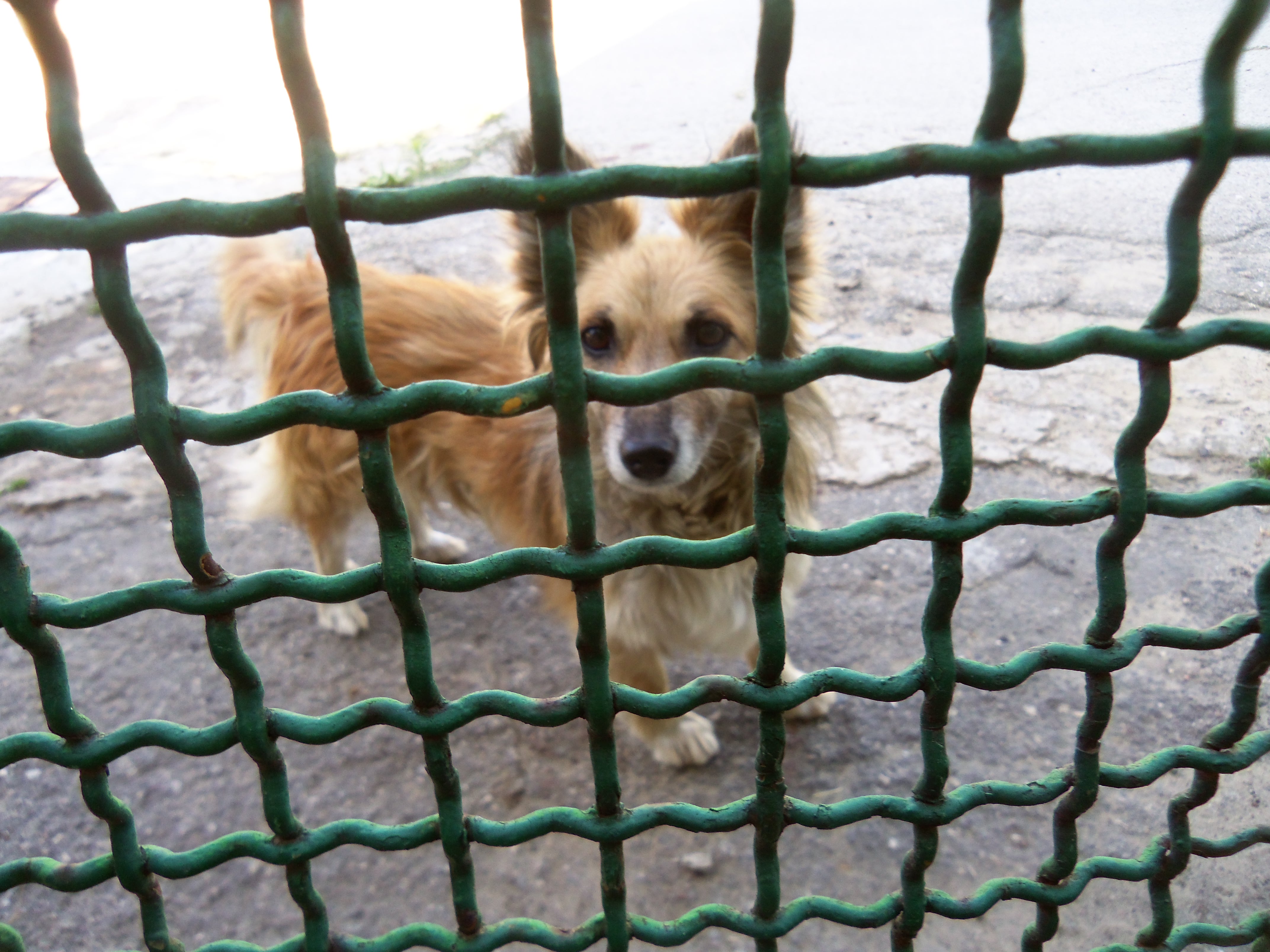
I have not mentioned the dogs here yet, mostly because their living conditions really sadden me. Though it isn’t as bad as other countries I’ve visited, there is still a profound difference in the way they are treated compared to dogs in the US. Basically, there are a multitude of strays everywhere that forage the trash, streets, and fields for food and then there are those kept chained up in people’s yards and fed disparately according to their owners’ temperaments. There are a few that seem to be kept as pets, i.e., allowed to roam their owners’ yards freely (NEVER inside the house) but amongst us volunteers only two out of nine of our families have one like that. Almost every house in the village, though, has a dog chained up near the front door. Ostensibly, they are supposed to serve as sentries. But when they bark at every person that passes by, I’m not sure how effective they could be, as one becomes inured quickly to their warnings during the day time.
Note “during the daytime.” Now let’s talk about night time:
Every night I’ve been in Moldova, I am invariably woken up sometime between 2:00 and 3:00am by the dogs (sometimes it’s the roosters, too, but I’ll leave that for another day.) Sometimes it’s just one dog, sometimes it’s two or three, at times it seems to be all the dogs in Stauceni. They bark in tandem, they bark duets, they crescendo, they solo, they bark a call and bark in response. I lie awake until dawn at times waiting for them to shut the fuck up – or for some irritated owner to yell at their own dog, at the very least. No. No one else seems to mind. Or perhaps they sleep through it, I don’t know. I know most of us volunteers don’t. We’ll meet up in class bleary eyed and nod at each other knowingly: “The dogs again…did you hear them…oh I heard them…damn dogs….I hate dogs.”
Except I don’t. I really love dogs and am missing my own more than I expected. (I spent a lot of time with her the past six months or so when she was my only company most days.) So last night as I lay there again listening to the chorus and trying not to let evil thoughts of slaughter creep into mind, suddenly an awareness sifted softly into my sleepy brain: they are singing to each other, I thought. These dogs that spend their whole lives chained up in yards, never allowed to roam, cavort, or run, always circling the same four foot enclosure, never able to sniff or greet or play with their own kind, they are lonely. In the silence of the night they call out to each other, sing for each other, tell stories amongst themselves about the meager contents of their days. Perhaps the strays join in and relate the vagaries of their existence – the difficulty of finding food, the discomfort of the hot sun and cold rain and blustering wind when there is no shelter to be found. Their songs are permeated with frustration and yearning and sadness and grief. At least that’s what I was hearing at 3:30am in the never-silent night.
This is the first time I’ve seen Nina pet Pirate. It made me so happy. Though he has been chained up in a corner of the yard during my stay, she does feed him regularly and well. (I give him meat from my lunch sometimes, when Nina isn’t home.) But this is not always the case for some dogs. Other volunteers have related stories of dogs chained up at houses under construction where they sometimes have no water and appear to be starving, like the owners are trying to make them fierce and dangerous. (And who is stupid enough to come near a chained up, starving German Sheppard??? Really, I just don’t see the point.)
On a happier note, Nina and her male suitor (she refuses to even CONSIDER his persistent proposals) sing often for me. This is one thing that’s very different about Moldovans. After our meal is finished, very often we’ll sit in silence (finally – silence!) for minutes at a time, just looking around, listening to the birds sing, the wind blow, the children play out in the street. Occasionally, with no apparent prompt, Nina or Ilea will begin humming or foot tapping, and then begin a duet melodious and sweet. Sometimes they sing to each other, sometimes they sing to me. Sometimes they just sing. The songs are often melancholy and bittersweet. Even though they’re in Russian or Romanian, I can always tell by the tone what emotion the song is conveying.
Those of you who have seen me in the last year know that I have become a HUGE fan of Vibram Five Fingers footwear. In fact, “Those Toe Shoes” are all I wore during the last year in the USA. And I have confirmed what I swore by at the time – they are the cure for back and knee problems caused by modern shoes. I stopped wearing my Vibram’s during my initial weeks in Moldova, not wanting to stand out or cause undue concern in my village that some alien visitor had ported in to conduct genomic splicing experiments on their feet. Boy, have I paid the price.
My left knee began aching dully a week or so ago, progressing – after a two mile hike in heeled sandals through downtown Chisinau a couple of days ago – into full blown pain. I’ve been downing aspirin like candy and contemplating suicide before I recalled my lifesaving Vibrams (three pair) tucked into the side pocket of a suitcase. I have sworn off shoes for as long as I can get away with it and lined up my lovely toe shoes for immediate implementation. Between them and Nina’s garden pharmacopeia, I should be just fine.
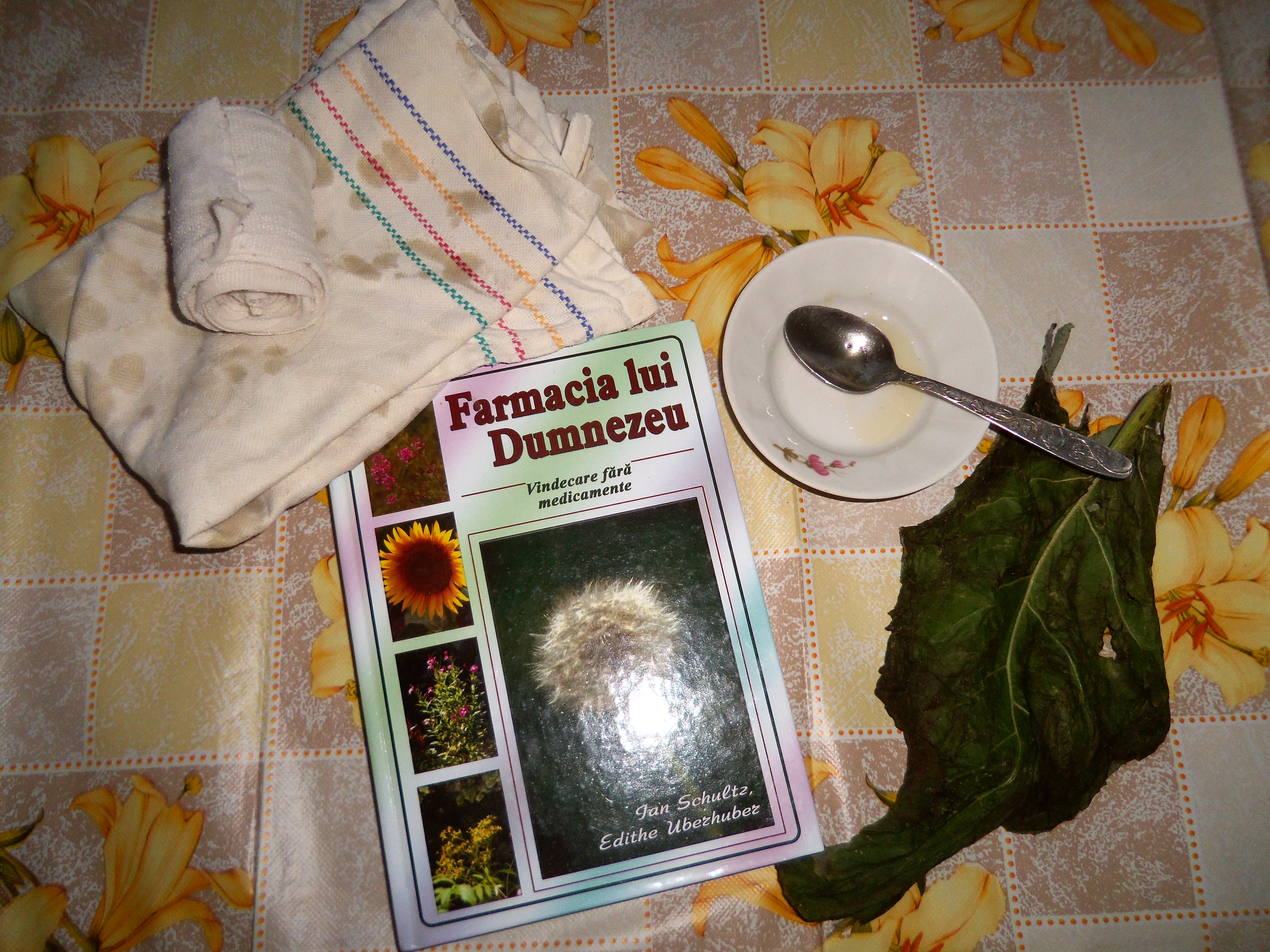
What? Nina has a pharmacy??? (I can see a few ears pricking up and sense a few of you quivering…) Actually, amongst her many and varied interests, she seems to know quite a bit about “natural” remedies. I’ve already blogged about the raspberry masks; additionally there have been teas, and soups, and herbal rinses. Last night, I got the leaf wrap.
After smearing my knee with honey, she covered it with a very large green leaf from a tree in her garden. Though I asked her twice what it was, I can’t remember the name. Then, the leafy knee was wrapped by an ace bandage, which was then all firmly bound up by a large dish cloth. Then I was sent to bed. Or at least to lie down (I promptly fell asleep.) When I got up the next morning, the swelling had gone down noticably and the pain had decreased. We will wrap up again tonight and hope that Moldovan medicine keeps working along with the Vibram’s.
And now a big shout out to my angel in America – Robinmarie! Received a package from her today in training – the COD manager brought it to our cluster site from the PC office. I felt just like a soldier in Afghanistan: everyone gathered around me, longing for a taste of America, something to remind them of home. I’m the first one to receive a package here so I had lots of hands helping me open the box and had to shoo everyone away from the goodies inside. (Although the box of Girl Scout cookies didn’t survive the crowd…)
I have a new friend – Sophie – who will be joining me on my adventure. I’ve taught her a few words in Romanian already but she’s surprisingly shy about trying them out in company. Ah well, I know how she feels…
So – I know it’s HUGELY expensive to send things here, but it really does make a difference. It’s like being at summer camp for the first time and getting a letter from your mom. You want to hold it and turn it over in your hands and smell the contents because you know that it was once held by someone dear to you and you ache to see their face or hear their voice or hold their hand. I do fine most days, but I can sink myself into a bit of the blues if I dwell on home too much. I think about all of you, probably too much.
Thanks Robinmarie for being the angel you are! And you, too, Bart. I received two of your postcards today along with the package. Your poetry continues to bring beauty and inspiration.
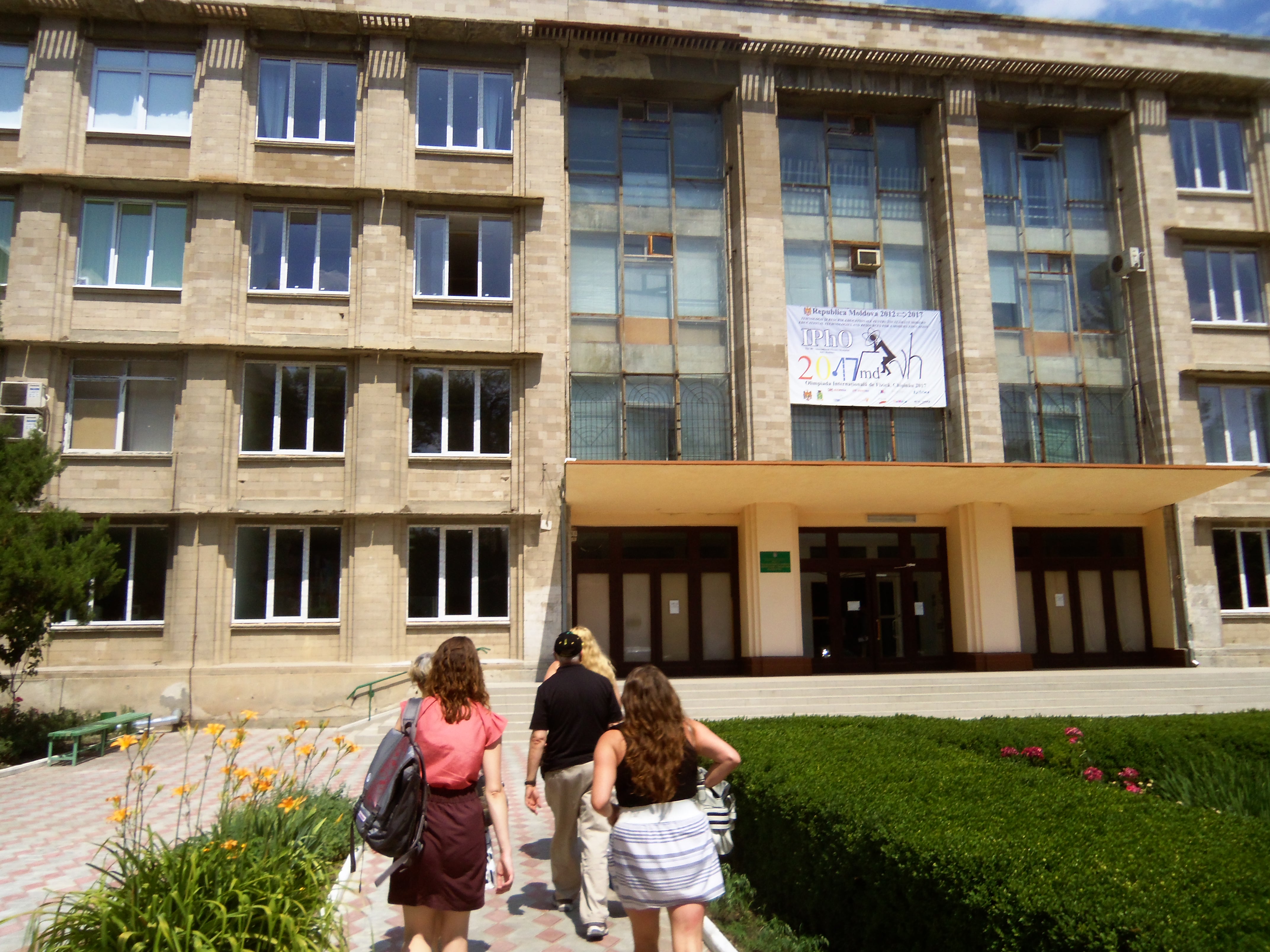
Entering the mathematics building State University Moldova
Our big project this week for Pre-service Training was paying a visit to an NGO in Chisinau called MilliniuM – the significance of the two “M”s representing “2000,” the year in which the organization was established, or registered, in Moldova. We interviewed its founding director and a Peace Corps volunteer who has been placed with the agency since last summer. Both the director and – of course – the PCV spoke English, so again we were relieved from having to draw on our mish mash of Roman-Engleza to communicate. (I’m still keenly aware of the future looming ahead, when I will be dropped off in a distant village on my own with no fellow Americans buffering the crushing linguistic tidal wave, keeping me afloat within their lifeboat of common conceptual experience.)
We spent an entire afternoon carefully crafting a series of multi-part, syntactically dense questions that I just had an inkling were not going to fit the situation we would find ourselves in. The interview we imagined ourselves conducting could’ve been written off on the expense account of any family foundation CEO or the Board Chair of a third generation non-profit sitting pretty on a diversified endowment. Instead, we found ourselves perched in a ring of hastily assembled mismatched chairs surrounding a pasteboard desk in the Soviet-era office of Vitalie Cirhana, a mathematics professor at Moldova State University. Conrad, (the PCV) was in shorts and flip flops; Vitalie was valiantly attempting to keep some air of authority amidst a battle with a motley crew of oblivious teen volunteers who invaded the office and commandeered all the computers in the midst of our session.
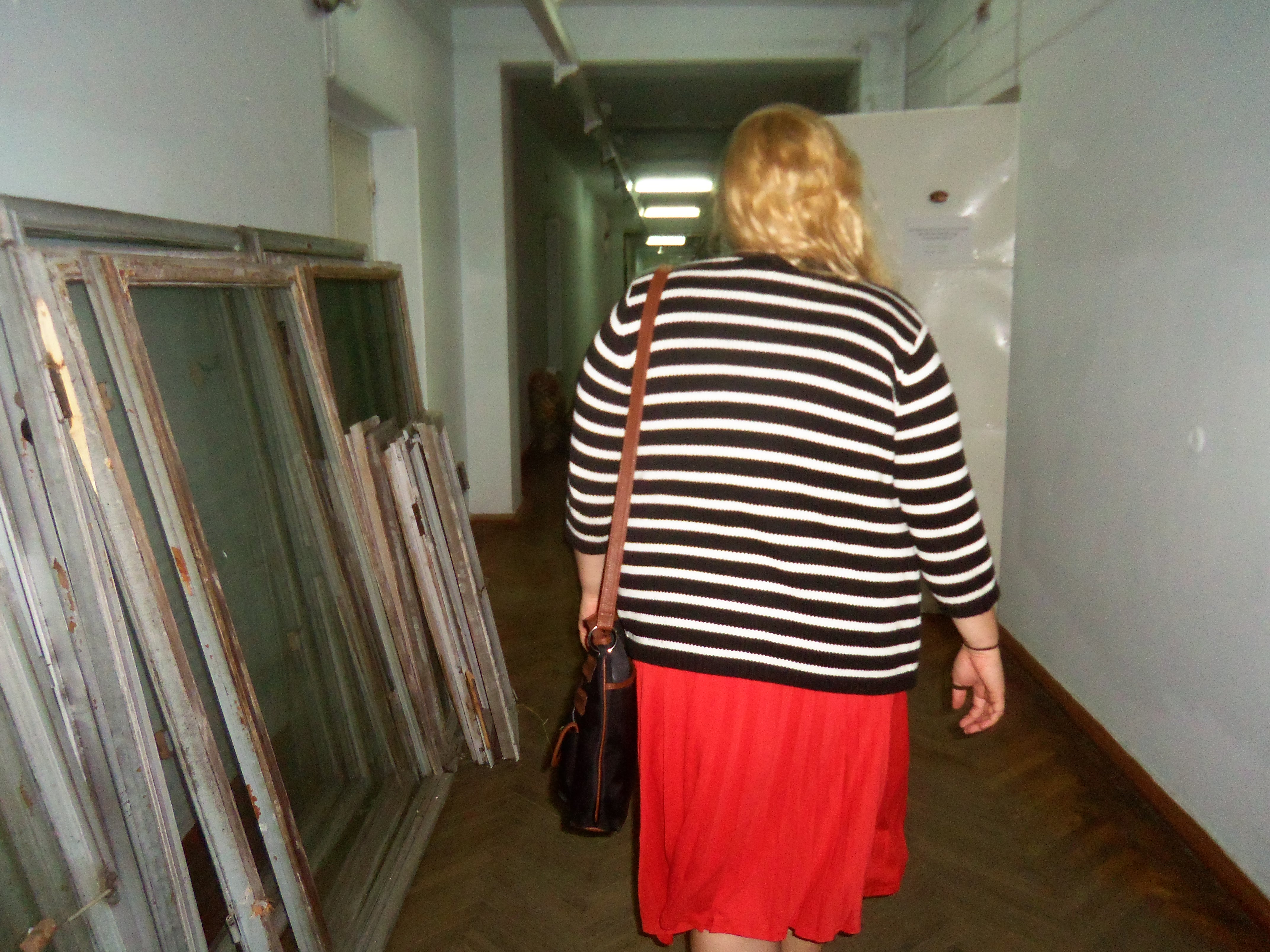
Hallway leading to Vitalie’s office
This is one of the beautiful realities – at least in my opinion – of the Peace Corps. Your placement will inevitably be ad hoc and entirely of your own making and nothing like anything you might have done before in the States. Conrad is an attorney who used to be the in-house counsel for a condominium association in Florida (though if you saw him, I swear you’d think he was a musician/hipster straight out of Echo Park. He doesn’t look a day over 25 and I’m sure he rides a fixed gear bike with no brakes into work.) Conrad openly admitted he knew nothing about running an NGO and that it had taken him the better part of a year to figure out what MilleniuM’s mission and goals actually were and how Vitalie envisioned it continuing to be viable and effective into the future. This gives me great hope for the comparative value I can bring to my future placement site, but also causes me to wonder if my executive level experience will really be of any practical use in this environment. I foresee myself coaching some well-intentioned mayor who holds down a full-time job in the city and farms his outlying plot on the weekends how to create a balance sheet for the village’s expenses.
European Union Embassy
One of the stark realities of this place that I was faced with today is the general dilapidation of the infrastructure here. Because I was overwhelmed and fascinated by the newness of my environment, I wasn’t making any evaluative judgments about it. Now that I’ve been here for a couple of weeks, the crumbling buildings, worn sidewalks, eroding pavements, and boarded up windows are becoming more prevalent in my consciousness. You can see that everything must once have looked quite grand – there are elaborately carved stone edifices and elegantly designed buildings that have not seen any maintenance in a couple of decades. Beautifully landscaped central parks are overgrown with weeds and tangled bushes; it is obvious that no one has mown the grass or trimmed the trees in recent memory. Though litter and refuse are not prevalent, there is no sense of overall care and husbandry of the environment. It almost feels like some sort of spontaneous recovery after a nuclear accident – a makeshift metropolis patched together from the relics of a once proud civilization. You can see the potential hovering like a kaleidoscopic watercolor painting just below the gritty surface sketch. If only. I mean, this is the first place I’ve been in the world – including Guatemala for effin sake – that does not have a Starbucks. Nowhere. In the whole country. (Is my shock quotient coming through?) Did you know there was a country in the world without a Starbucks??? What the bleep?
That’s Rodica – one of our LTI’s – in the corner of the picture, waiting to flag down a rutiera
There is vast potential here – that is what is so exciting. A representative from the US Embassy came yesterday to speak to us about the socio-political environment in Moldova. Though most of the younger PCT’s couldn’t really stay focused, I was fascinated by the information. They have been through so much and come so far in just two decades. I mean, here we find a former Soviet state grinding the gears of representative democracy into motion. Even though the going is episodic and halting, it is moving. And I get to participate – at least at the sidelines – for a couple of incredible years. I do feel lucky and really excited to be here at just this moment in time.
On a more somber note: we had our first casualty this week. A member of the 50+ group decided that the experience is not a good fit and he returned to the States today. We all liked him a great deal – he was a fun-loving, gregarious chap. Not the person I would’ve picked to throw in the towel. But another great aspect of Peace Corps is their absolute commitment to our well-being; if we decide that we want to go home, they book our plane ticket ASAP, no questions or criticisms. And I do admire the courage needed to admit that this isn’t the place one wants to be, after all the excitement and hoopla and bravado that most of us have displayed in coming here. Sometimes the reality just doesn’t match up to the ideal and that’s life. The statistic is actually close to 30% of every incoming group who don’t make it for the whole two years, for whatever reason. So we have about 22-23 more people who will head home sooner rather than later.
I am pretty determined at this point not to be one of them.
So it’s the middle of our second week, six left to go. We have settled in to our daily routines and are wearing pathways between our homes, the school, and the bar. We know who gets to school early and who is perennially late. Our language instructors are possessively proud of us and sang a lovely song for Leslie and Jan’s anniversary today at the break. The bar staff is so inured to our presence that they conducted a water fight over our heads this afternoon. We forgave them (and even felt a bit jolly that they’re not treating us like aliens anymore.) Today it was at least 98 degrees in the shade. They say, “Capi frijți!” My brain is fried.
It hit me softly in the stomach today that just one month ago I was sitting on a balcony at the Ritz Carlton in Laguna Niguel sipping a $19 martini and slurping up a plate of exquisitely prepared mussels with my daughter and grandmother, worlds away from my mental and economic circumstances at the moment. (How quickly life can change with jet propelled air travel.) I went to the market today and stood in front of the shelf of instant coffee, debating whether I really wanted to spend 40 lei on a jar. I decided that was too much; it wasn’t until I was halfway home that I realized 40 lei works out to about $4.50. I wasn’t wont to buy instant coffee at home, but I imagine it runs a bit more than that in the States. And it certainly cost a lot less than my over-priced martini.
When we first arrived, the Peace Corps gave us an envelope with 730 lei for our “walking around” expenses. This works out to just over $60. Since our board is provided, we use the money to pay the 6-8 lei roundtrip ticket price on the rutiera (which we take a couple of times a week), load minutes onto our phones, purchase internet time from our host families, and – of course – finance our trips to the bar. Let me tell you, I’m adopting a whole new awareness of money. There are no credit or debit cards to fall back on; Moldova is almost entirely a cash economy. You can’t even get a mortgage for a house. So I must be cognizant of the total sum of money I have available to me on a daily basis, a concept I haven’t had to entertain for at least a decade. I’m anxiously anticipating the advent of my next allowance, which will be deposited, unfortunately, directly into a bank account that will require the use of an ATM card to retrieve. I may be poor for awhile.
These are the sorts of incremental, incidental changes that end up altering my existential experience of being at home in the world. It’s like being slammed back into childhood, suddenly and with no reprieve. I can’t talk right. I can’t communicate my needs or desires or worries or doubts to the person I’m living with. I can’t order complicated food at a restaurant (we have managed to buy a pizza.) I’m somewhat terrified each time I get on the rutiera that I won’t recognize my stop and I’ll end up wandering the back alleys of Chisinau’s less desirable quarters stammering to wary strangers in a patched together dialect of verb infinitives and singular nouns. When I go into a store, all the labels are in Russian. Unless I recognize the packaging I have no clue what I’m buying. And I have no idea if the prices are steep or fair. I bought a credit card from Orange, the mobile phone company, to load minutes on my phone. I couldn’t read any of the directions and fumbled my way through the process relying on luck and tactical guesswork (i.e., randomly punching buttons on my iPhone menu.) The date is twisted here – the day listed prior to the month, the cold water is on the side the hot water should be and time is told military style. I am literally exhausted at the end of the day from translating the world around me and struggling through inane tasks that I could perform with my eyes closed standing on one foot while texting and cooking dinner back home. It’s all we long for at this point – to one day be multi-tasking, competent, self-assured grown-ups again.
So here is the speech that I’ve been working on for a day and half to present in my language class tomorrow morning (no notes, I have to speak it in front of the classroom):
Pe mama gazda mea o cheama Nina Covș. Ea este din statul Leușini din Moldova de vest apropriat de frontiera Română. Soțul ei Alexandu din Belarusia dar el este murit de la cancer intestinal mare deci ea locuiește singura. Nina este pensionara dar înainte de acesta ea a lucrat în clinica medicina estetica ca adminstrator.
Ea are două fiice, Natalie și Oaxana. Natalie are treizece și doi de ani și locuieste în Torino Italia cu soțul ei Domenic. Ei au trei copii. Alexandrina și Michella și Daniele. Natalie nu muncește. Domenic muncește în Elveția.
Oaxana are treizece și sașe de ani și locuieste în Torino Italia de semenea cu soțul ei Liviu. Ei au unu copil Federico. Oaxana nu muncește. Liviu muncește la Uzina Ferari.
Nina este energic și fericita. Noi suntem două prietene.
If you have any interest, copy it into Google translate (Romanian into English) and you can find out how embarassingly childish my vocabulary and grammar have become in just one week. It’s totally frustrating to have to compose such simplistic sentences, but believe me just this first grade effort is taxing me at this point. And this is after some thirty-five hours of INTENSIVE language classes in a small group of five taught by a native. We keep hearing from M25s and M26s (the groups that came in 2010 and 2011) that they now think in Romanian and translating those thoughts into English represents a concentrated effort. I’ll believe it whence I experience it…
Which causes me to reflect a bit on a topic that always surfaces during an election year (and actually seems to perenially occupy some sordid corner of the conservative media bandwagon.) All those immigrants – what to do about them? Those lazy, selfish, ignorant, greedy people who invade our country without permission to soak up our generous tax-financed social welfare benefits and spit out children on our dime. Yeah.
Enough said
Let me tell you, from the perspective of someone struggling to assimilate into a culture and country where I am fully supported by a solid infrastructure of educators, administrators, doctors, accountants, IT and security personnel who all speak my language: this is NO walk in the park folks!!! Imagine finding yourself in a place where none of the road or store signs, advertisements, maps, bus routes, menus, prices, applications, billboards, newspapers or ingredients on a food label are intelligible. How would you go about finding a job? Renting an apartment? Buying your groceries? Seeking medical assistance? Enrolling your children in school? I can’t tell you how impossible all these activities seem to be to me right now, despite all the background support I enjoy. Yet there are thousands of people all over the world who brave these immense difficulties in order to better their own, their children’s, and/or their families’ lives. With no language teachers or “host families” or stipend or medical kit to help them along. I am in awe – really – of the amount of sheer bad-ass courage it would take to be in this situation on my own. I really don’t think I could do it. So my hat goes off to all those people who accomplish this, whatever the legality of their circumstances may be.
Believe me, I can’t imagine going through this experience and being the least bit lazy or ignorant; it takes too much out of you. It’s too damn hard. I am exhausted at the end of the day just trying to keep myself oriented in the environment, figure out a few words in the conversations that envelop me, memorize the layout of downtown Chisinau and my neighborhood in Stauceni. Most people who do travel to places like this insulate themselves within an American tour company or are accompanied by a friend who speaks the language or have their Google translate app loaded up to fire on the iPhone. And they know that they will be going home within a week or a month at the most. Very few people drop themselves into this sort of situation purely for pleasure.
I wish those people who mouth off about the generalized traits of illegal immigrants could have a little taste of what they experience. Whether you believe what they are doing is right or wrong, give them a heap of applause for their sheer guts and perserverance, my friends. I can only hope to succeed half as well as most of them seem to do. And perhaps entertaining the thought of finding a legal way to incorporate such strong and determined people into our culture and economy isn’t such a bad idea…
At this point in the Peace Corps adventure, the two things predominant in the trainee’s daily experience are language classes and his or her host family interactions. Just because I find my host mom (mama mea gazda) to be one of the more interesting people I’ve met so far, let me tell you a little more about her.
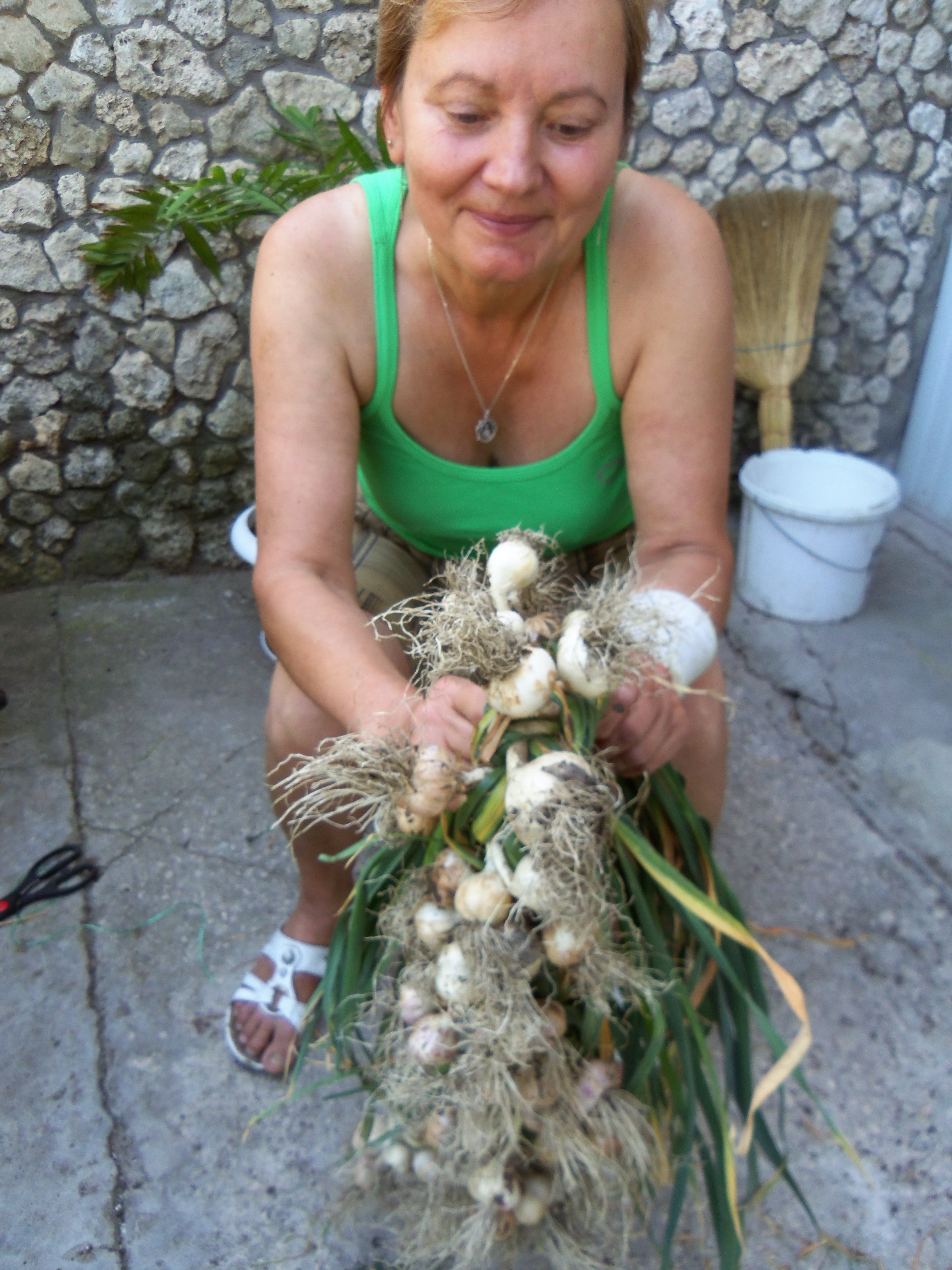
Niona braiding garlic from her garden
Nina, as far as I can tell, is not a typical Moldovan woman. She is sixty-one, but could easily pass for being in her late-forties or very early fifties. She spends most of her day in her garden or tending a neighbor’s who is currently in Germany. As such, she is quite strong and fit – no flabby triceps or sagging chest on her. She has not worn make-up in my presence, though I do see a few sticks of eyeliner, one lipstick, and a tube of mascara in her bathroom (I spy.) No foundation – she doesn’t need it.
On several occasions she has tried, rather animatedly, to communicate her former profession, which I finally figured out was as an administrator of a medical aesthetic clinic. Maybe women came there for facials and dietary consultations? She certainly seems to know a lot about massage, acupressure, nutrition and the like. (In the food department, I feel incredibly fortunate to have been placed with Nina. Many of the other trainees are eating Westernized, store-bought food or are fed quite a bit of meat, dairy products, bread, and white rice along with their vegetables. While I do get a very thin chicken breast most every day and she does keep a loaf of brown bread on the table, the majority of our meals have been composed of herbs and vegetables from the garden and/or whole grains like buckwheat or oatmeal.)
In the host family survey I completed for the Peace Corps prior to coming to Moldova, I indicated that I had been juicing for the past few months and had lost some weight. I told them that I was worried about gaining it back and would really like to be placed with a family that avoided fatty or processed foods. Well, I think this may have been conveyed to Nina as she seems to have taken on a personal mission to transform me before I leave her house.
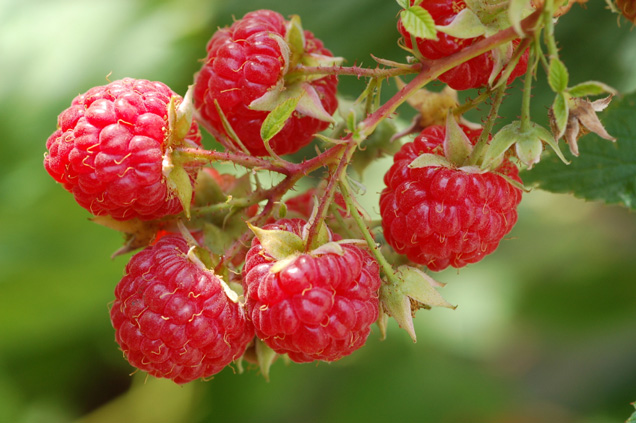
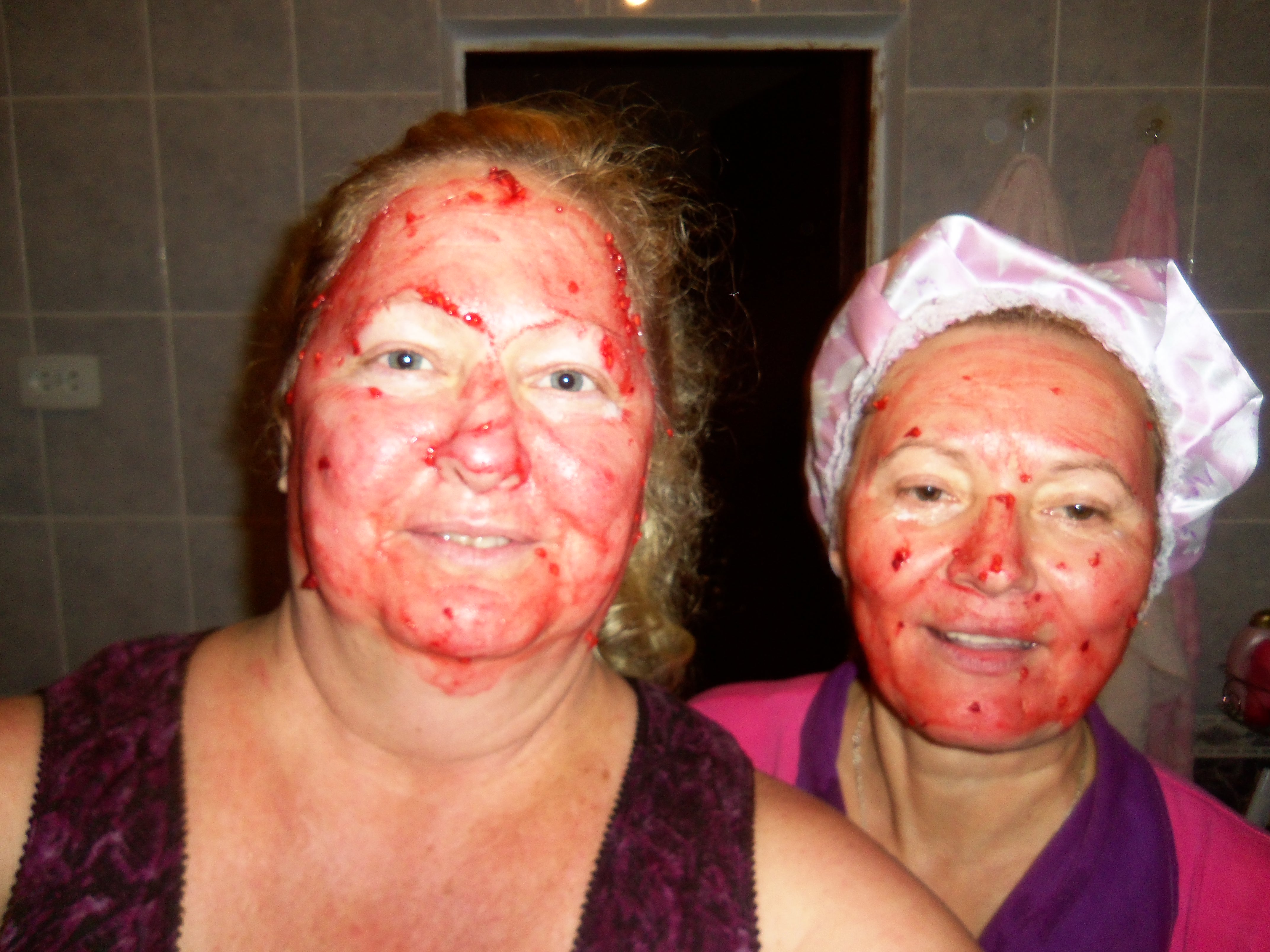
The other night as I was struggling to conjugate the horrid verb “to have,” she appeared in my room wrapped in a towel with a bowlful of mashed up zmeură (raspberries) and motioned for me to follow her into the bathroom. With an unintelligible (for me) stream of Limba Română as our soundtrack, she had me remove my shirt (I kept the bra on) and proceeded to slather us both with the raspberry/cream/honey/olive oil concoction. With our arms, hands, necks, chests, and faces covered in the pink slop, we stood in the bathroom, arms in the air, and I listened to her chatter away at me in words I dearly hope to understand soon. This was quite a comical experience to have with someone I only met a week ago and with whom I can barely communicate. This was another, very tactical briefing in cross cultural exchange. The thought of my mother conducting this exercise with some UCI exchange student from China or Korea about makes my head explode.
Admittedly, not my best look….
After we rinsed, we returned to me room where Nina very enthusiastically demonstrated for me her impressive limberness and agility. She performed a series of calisthenics and pilates-type stretches that I’m quite sure would have challenged my 26 year old daughter. Needless to say, I demurred from joining her in this activity. She seems determined, however, to enlist me in some form of exercise soon. I’m not quite sure where she gets the stamina, given her workload in the garden, kitchen, and around the house. Luckily for me (and this has been a very mixed blessing, believe me) it has apparently been too hot for her to challenge me to another “gymnastica” duel. It’s supposed to be in the high 90’s this week, so for now I’ve been granted a reprieve…







 From Now On I Live Mad