Rethinking the Peace Corps Experience


Picture of me unrelated to this post but provided for the benefit of my grandma and father. You’re welcome.

My postings are shifting from frantic, nearly daily hand wringings when I first arrived in Moldova to a more leisurely drop-in visit once a week or so, I have realized.  I attribute this both to becoming more acclimated to my surroundings – successful integration – and to having beat a retreat into a state of meditative contemplation, which is a really a westernized, acceptable way of admitting I have a remarkably empty mind these days.

For so long I had been preparing to leave overseas, having to think about applications and essays and medical visits and disbursing twenty years’ worth of accumulated possessions and packing clothing and selling the condo and tying up financial matters; and then I was here, in Pre-Service Training, meeting herds of people, hearing and speaking a new language, familiarizing myself with a new culture and geography and transportation system, eating different foods, establishing routines of boiling and filtering water and hand washing clothes, setting up a new bank account and telephone…it was so much novelty coming at me my head was like to burst at times and I had to get it all down  and out of me.

Now, I live in Moldova.  And life is becoming routine.  Funny how three months changes things.

Last Tuesday, I began going to the “office” everyday.  I started Tuesday because Monday was the 21st anniversary of Moldova declaring its independence from Russia and I only worked through Thursday, because Friday is their national language day.

Political/cultural segue – skip if you’re not into history.

Going to the office as a Peace Corps Volunteer is very different from going to the office as an executive administrator, I am finding.  People only darken my doorway to ask, “Ați dori sa mancați?” (Would you like to eat?)  I am not responsible for anything related to day to day operations and – obviously, with my language being as juvenile as it is at this point – am not an abundant source of pertinent information (or gossip, for that matter.)  Other than Ana, my partner, stopping by to struggle through our (pathetic) attempts to plot her management strategies, I am mostly left alone to translate documents, peruse online funding resources, study Romanian, or surf the web as the whim takes me.

The Peace Corps drills into us, over and over and over again, that it will take months and most likely all of our first year to become sufficiently proficient in the language to be of any real use to our partners.  This is the primary reason Peace Corps service lasts for two years and why volunteers who extend to a third year are so valued and effective. Though we accept this conceptually, in practice it is simultaneously anxiety-provoking and stultifying.  Who wants to spend a year confined within a little tower of Babel, unable to begin a satisfying – much less challenging – task because one cannot communicate with one’s compatriots?  There is a buzz of activity and purpose in the air but you cannot participate in or contribute to it because your ears and tongue are not set to the same station.

I think it is doubly hard for Americans, as our culture is built on the precept that activity equals  Purpose and Purpose defines Meaning, from which all notions of success derive.  Sitting at a desk madly trying to imprint the squawking hieroglyphics of a foreign language into one’s reluctant brain does not feed one’s longing for Purpose, let me tell you.  So the most mentally satisfying practice I’ve found at this point is to cultivate an empty mind.  Think about nothing. Or rather, quit thinking about the things that formally filled up one’s brain and open it up to new content.

With the result that I (and most other PCVs here) flee to the comfortable filler of the Internet when the afore-mentioned empty mind’s echoes begin to reverberate too loudly.

Silly but informative segue: OMG!  The wealth of free entertainment available on the internet!!! PCVs and their cohorts are scrappy treasure hunters that regularly unearth and proclaim the bounteous pleasure of sites like Project Free TV, which is currently providing me with every episode of How I Met Your Mother (the Friends of the 21st century.)  Or Grooveshark, where for the first time ever I found an uploaded copy of Buckingham Nicks (orgasm!)  And Brain Pickings, where the inimitable Maria Popova, an Atlantic Montly writer and MIT Futures of Entertainment Fellow, curates a delectable sampling of cross-pollinated tidbits from the writings of Anais Nin to the science of Michio Kaku. Or the delightful and stimulating Big Think, where some fascinating thinkers propose tantalizing ideas in a series of video monologues.

Honestly, I think the Peace Corps would be a substantially different experience without access to the Internet.  My fellow PCVs and I talk all the time about our dependency on its encyclopedic information and divertissements.   When one is ready to pull one’s hair out from hearing Romanian ad naseum, there is always English to be heard on the internet.  When one has a need to build a white board from scratch, check the internet.  Question about substitutions for ricotta (impossible to find in Moldova) in lasagna?  It’s on the internet.  Need to translate that indecipherable Russian label on a hygiene product?  Internet. Hopelessly confused by the unfathomable melancholy many Moldovans display for aristocratic and/or authoritarian forms of government? Wait for it…..Internet!

We reluctantly admit that we cannot claim to be having the “authentic Peace Corps experience” that by now has attained mythic status amongst us.  What would it be like to be serving in Thailand, for example, in a mud hut with no electricity?  Or Timbuktu, in a yurt at 40 below?  Or in Birkina Faso, helping to deliver babies with traditional midwives with no plumbing, sanitation, or medical safety nets?  There are PCVs right now living in conditions that far exceed Moldova’s (the ‘Posh Corps’) in hardship, isolation, depravation, and cultural displacement.  Moldova is too much like a younger, poorer, distant cousin of the United States to make it feel as if we’ve been kicked out of our universe.  And we have the internet.

A couple of us were speculating yesterday on why the Peace Corps is still in Moldova.  They feel so close sometimes to having attained a foothold into western-style economic capitalism – see the McMansions and BMWs and Victoria Secret fashions and cell phone towers cluttering the landscape – that we are often puzzled by what the substance of their need might truly be.  One of the answers we posited relies most heavily on the last two of the three main goals of the Peace Corps:

  1. Helping the people of interested countries in meeting their need for trained men and women.
  2. Helping promote a better understanding of Americans on the part of the peoples served.
  3. Helping promote a better understanding of other peoples on the part of Americans.

Just by being here, we help foster an important political and cultural dialogue for the Moldovans as they continue to struggle with the lingering, sugar-coated memories of the Soviet system of minimum entitlement while concurrently suffering from democratic capitalism’s imperfect success in bridging economic, social and educational barriers within their country.

And by having access to the internet, and sharing our experiences, perceptions, and thoughts, perhaps we PCVs are contributing to the emerging discussion in American about our hardwired cultural precepts, blindfolded nationalism, and rampant materialism.  And we run across fresh takes on why the juxtaposition of post-soviet mentality with 21st century EU aspirations of consumerism are so confusing, yet potentially stimulating and fruitful.

Slavoj Žižek is a Slovenian philosopher and cultural critic who is a professor at the European Graduate School, International Director of the Birkbeck Institute for the Humanities, Birkbeck College, University of London, and a senior researcher at the Institute of Sociology, University of Ljubljana, Slovenia.  He proposes an extremely interesting take on what our global mission should be at this particular point in civilized history.  After reminding us of the horrible failure that communism in practice turned out to be, he turns to the would-be capitalism reformists:

This is why, as I always repeat, with all my sympathy for Occupy Wall Street movement, its result was . . . I call it a Bartleby lesson. Bartleby, of course, Herman Melville’s Bartleby, you know, who always answered with his favorite “I would prefer not to” . . . The message of Occupy Wall Street is, I would prefer not to play the existing game. There is something fundamentally wrong with the system and the existing forms of institutionalized democracy are not strong enough to deal with problems. Beyond this, they don’t have an answer and neither do I. For me, Occupy Wall Street is just a signal. It’s like clearing the table. Time to start thinking…

My advice would be–because I don’t have simple answers… precisely to start thinking. Don’t get caught into this pseudo-activist pressure:”Do something. Let’s do it, and so on”. .. [T]he time is to think. I even provoked some of the leftist friends when I told them that if the famous Marxist formula was, “Philosophers have only interpreted the world; the time is to change it” . . . thesis 11 . . . , that maybe today we should say, “In the twentieth century, we maybe tried to change the world too quickly. The time is to interpret it again, to start thinking.” (emphasis mine)

And actually, the internet provides a very effective means for sustaining and building this strategy.   Especially for Peace Corps Volunteers.  We have cleared our metaphorical tables, so to speak.  Our minds have become empty.  Now we can begin filling them again with impressions, perceptions, and interpretations formulated through exposure to a people striving to follow our journey, but with a much more complex web of cultural, linguistic, political and economic circumstances to untangle.  (If you actually clicked the link on Moldovan history above, this would make more sense.)

Our dialogue is potentially fruitful and enlightening for both parties.  We can learn from each other’s histories.  Knock ourselves out of repeat mode. Think rather than mindlessly do.

Perhaps by me living and working with Moldovans, and them puzzling over the discordant picture I represent of Western-style success (You left your family why?  They pay you what?), and both sides spreading stories through emails and blogs and Skype sessions and Facebook and Tumblr and tweets, we are – each of us – reframing, reinterpreting, rethinking our world.

And, while we’re at it, that enduring myth of the “Peace Corps experience.”

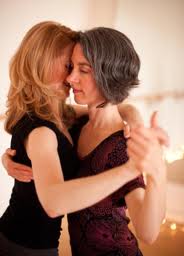
Dancing the waltz

Anais Nin and Henry Miller

I will admit that I spend more time on the Internet these days (and I didn’t know that was even possible) since the work site I have been assigned to won’t open until September 1 and it’s back to being a bloody inferno outside.  Because I have so much time to surf, I fortuitously encounter different articles from divergent sources that somehow overlap or coincide, amplifying each other’s message and causing the information to echo through my brain for several days.

Here’s one example.  On Monday morning I received my weekly newsletter from Brain Pickings, a website I highly recommend if you want to be served a veritable smorgasbord of interesting information dipping into such varied topics as art, design, science, technology, philosophy, history, politics, psychology, sociology, ecology, and anthropology.  There was a piece culled from the third volume of Anais Nin’s diary, wherein she transcribed a letter written to her by Henry Miller. He is describing the synergy of altruism:

“For me it is no problem to depend on others. I am always curious to see how far people will go, how big a test one can put them to.

Certainly there are humiliations involved, but aren’t these humiliations due rather to our limitations? Isn’t it merely our pride which suffers? It’s only when we demand that we are hurt. I, who have been helped so much by others, I ought to know something of the duties of the receiver. It’s so much easier to be on the giving side. To receive is much harder — one actually has to be more delicate, if I may say so. One has to help people to be more generous. By receiving from others, by letting them help you, you really aid them to become bigger, more generous, more magnanimous. You do them a service.

And then finally, no one likes to do either one or the other alone. We all try to give and take, to the best of our powers. It’s only because giving is so much associated with material things that receiving looks bad. It would be a terrible calamity for the world if we eliminated the beggar. The beggar is just as important in the scheme of things as the giver. If begging were ever eliminated God help us if there should no longer be a need to appeal to some other human being, to make him give of his riches. Of what good abundance then? Must we not become strong in order to help, rich in order to give and so on? How will these fundamental aspects of life ever change?”

Miller manages to make so many points here pertinent to my situation in Moldova that I wonder if perhaps he’s been peeking over my shoulder some days from wherever his juicy spirit happens to be oozing right now.

Peace Corps Volunteers – in all countries where we serve, I would venture to say – are involved in a delicate dance with their host country nationals.  We are giving to them, of our time, our expertise, our education, our energy.  But they are reciprocating: they are opening their homes and work places, teaching us their language and customs, sharing their food and wine, welcoming us in to important life events and celebrations, such as weddings, baptisms, and funerals.  Think about how difficult it might be to have a stranger show up at your door one day for a two year visit – one who does not know your language or cultural norms, much less recognize or respect your little idiosyncratic daily routines.  You need to familiarize them with your town, where the market is, the bank, the pharmacy, who the neighbors are and which places maybe dangerous or unsafe after dark. You need to show them where they can buy a hair dryer and how to hand wash their clothes.  Perhaps they don’t know how cook.  Or make a bed.  Maybe they are messy – even dirty, tracking mud throughout your home when they keep forgetting to remove their shoes at the door.

Then think about including this person into all your most emotional and memorable family events, taking them to your sister’s birthday party, your daughter’s graduation, your niece’s wedding, your father’s funeral, and having to watch out after them the whole time so they don’t do something culturally inappropriate like slap your aunt on the back or hug your brother when they are introduced or collapse on the ground in a heap if they’ve danced too hard or had one too many vodkas.  One must possess a true wealth of spirit and a large portion of patience to continue giving of oneself through those (perhaps seemingly endless) two years.

I won’t go into detail, but I did hear one story from a volunteer who was disrobed, bathed and cleaned like a baby, put to bed in crisp sheets, and had the bathroom swabbed of her mess after a bout of giardia that had her spewing from both ends.  (Did I mention there was no toilet – only a flimsy trash can – in said bathroom?)  And this all took place within minutes of her meeting her host parents. And the father was just as solicitous and nurturing as the mother. So there is definitely give and take going on here.

And this odd waltz can take place precisely because of the manner in which Peace Corps operates: it is coordinated and supported aid that doesn’t involve giving money to the “needy” – it is all about extending a hand of service within an intimate context that allows both the giver and receiver to participate fully in the exchange and to take the lead at different times.  And that hand can be extended by anyone – rich or poor, educated or ignorant, male or female, old or young, privileged or needy.  We can all be generous in spirit, in caring, in listening, in sharing, in inclusion, in opening ourselves to each other.

So after having had this Miller piece slosh around in my head for a couple of hours, I happened upon the following story on the NPR website about a new study published in the Chronicle of Philanthropy:

Study Reveals The Geography of Charitable Giving

For those of you who can’t bear to leave my scintillating expository, I extract a few pertinent quotes here:

Ever wonder how charitable the people are who live in your state or community? It turns out that lower-income people tend to donate a much bigger share of their discretionary incomes than wealthier people do. And rich people are more generous when they live among those who aren’t so rich.

…. High-income people who live in economically diverse neighborhoods give more on average than high-income people who live in wealthier neighborhoods.

Paul Piff, a social psychologist at the University of California, Berkeley, says that’s consistent with what he’s found in years of research on income and giving.

“The more wealth you have, the more focused on your own self and your own needs you become, and the less attuned to the needs of other people you also become,” he says. “Simply reminding wealthy people of the diversity of needs that are out there is going to go a long way toward restoring the empathy or compassion deficit that we otherwise see,” he says.

The NPR article concluded that it is important people see need first hand by integrating into heterogeneous neighborhoods that are economically diverse.  And I would amplify that thought by saying this is true not merely because those who see need will tend to be more generous, but because it is imperative that we allow the osmosis, the synergy, the waltz of generosity to be fully and deeply expressed by both the giver and the receiver.  And that can only happen when we are not isolated from each other, when we become part of the fabric of each other’s lives, when our homes and neighborhoods and customs and idiosyncratic behaviors are no longer “foreign” to each other.  I love Peace Corps for illustrating the truth of this, each and every day, all over the world, amongst thousands of dancing partners.

There are merits to playing both roles, to attaining the flexibility and humility to both lead and be led. We Americans must realize that the money and material goods some of hold in relative abundance are not the only sources of wealth that exist in this the world.  And that, perhaps, a much greater gift is presented sometimes by standing in the role of receiver.

I know most of you out there are not going to run out and join the Peace Corps.  But realize that you can give by receiving, too.  By stopping to talk to that person asking you for money on the corner, allowing him to tell you his story.  By accepting the dinner invitation from the couple that bores you to tears and just keeping your heart and mind open for a few hours.  Perhaps through attending the dance rehearsal of your next door neighbor’s granddaughter and clapping vigorously and enthusiastically.  Or going to the ethnic festival in your community center and participating in the dances, eating the food, and intermingling with people from diverse backgrounds.

Try putting yourself in places you normally avoid, meeting people that unnerve you just a bit, stepping outside of your comfort zone and risking humiliation by joining in the waltz maybe once or twice a week, all in the spirit of dancing.  Go ahead: I challenge you.  I’m doing it.

(And I’d love to hear any comments on what it felt like …)

Floored

Floored

There is no other way to put it.  I wandered down the road just above my apartment building and found this:

Hîncești Lake

I don’t know what else to say.  (Of course, I always have more to say.)  I wrote in my journal:

What did I do to deserve this?  I finally, finally found the place where I can be completely at home here.  The language, the culture, the buildings, the corruption, the sadness, the confusion, the disparity, the discomfort – none of that intrudes here.  Though I did have a half hour conversation with two seemingly homeless, mentally ill folks who sat down on the bench next to me and shot me questions in Ruski-romanian .  They really wanted to know when we could hook up again…

Friends at the Lake

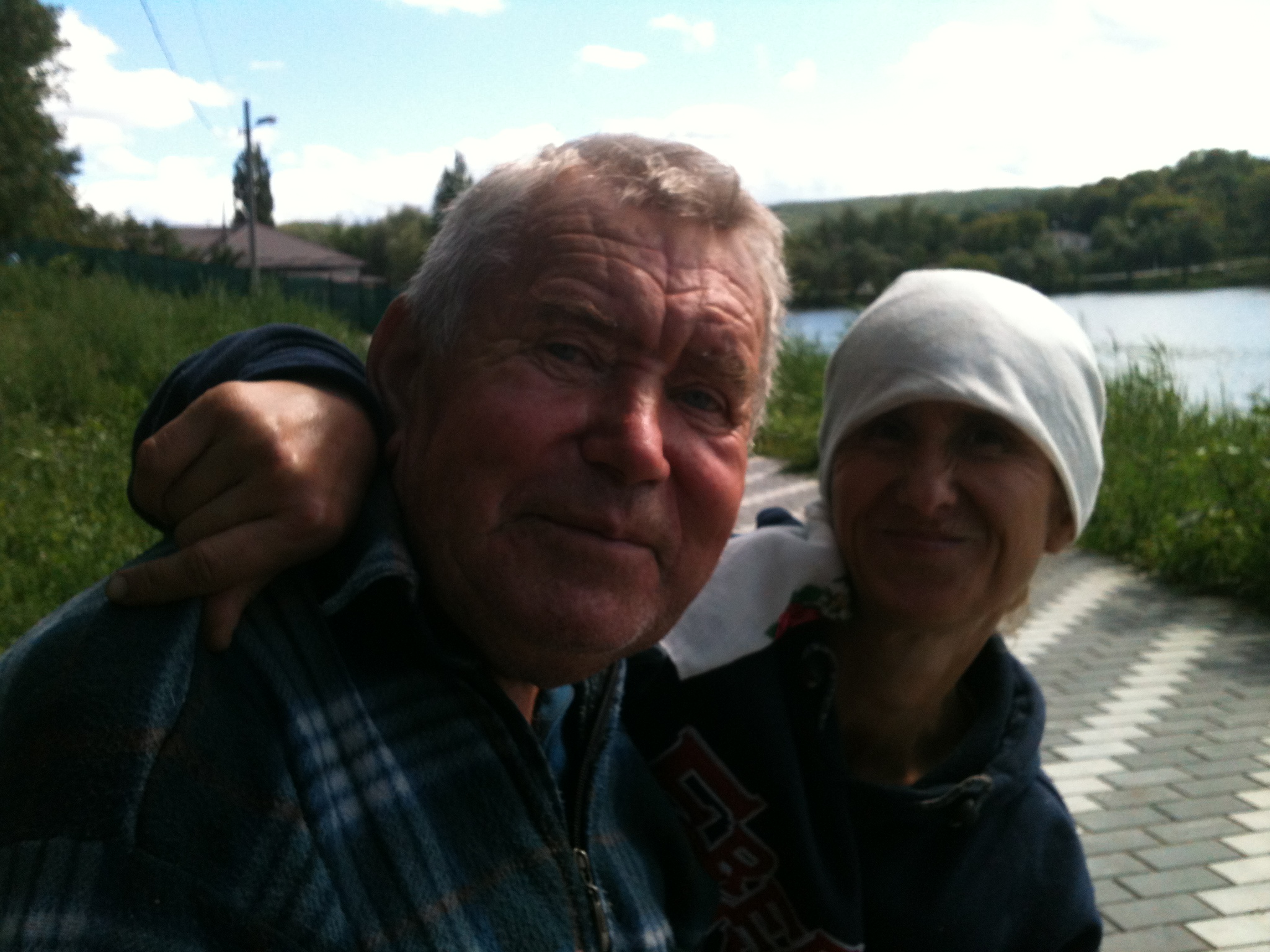
I appreciated the opportunity to converse really slowly and repetitively with people who were happy to play along.  I am blessed.

As I was soaking up the last of the afternoon rays I got a text from my site mates, Matt and Lindsey.  I made my way to the bar next door to my apartment and spent a relaxing couple of hours with them, comparing notes on how lucky we are to live in Hîncești.  Patty was walking by and heard my laugh (mom, are you listening?)  and then we were four.  Patty just moved to site today, having completed her 10 week English Education Training.  Took her oath this morning.  Now the whole M27 group are officially Peace Corps Volunteers!

Matt
Patty and Lindsey

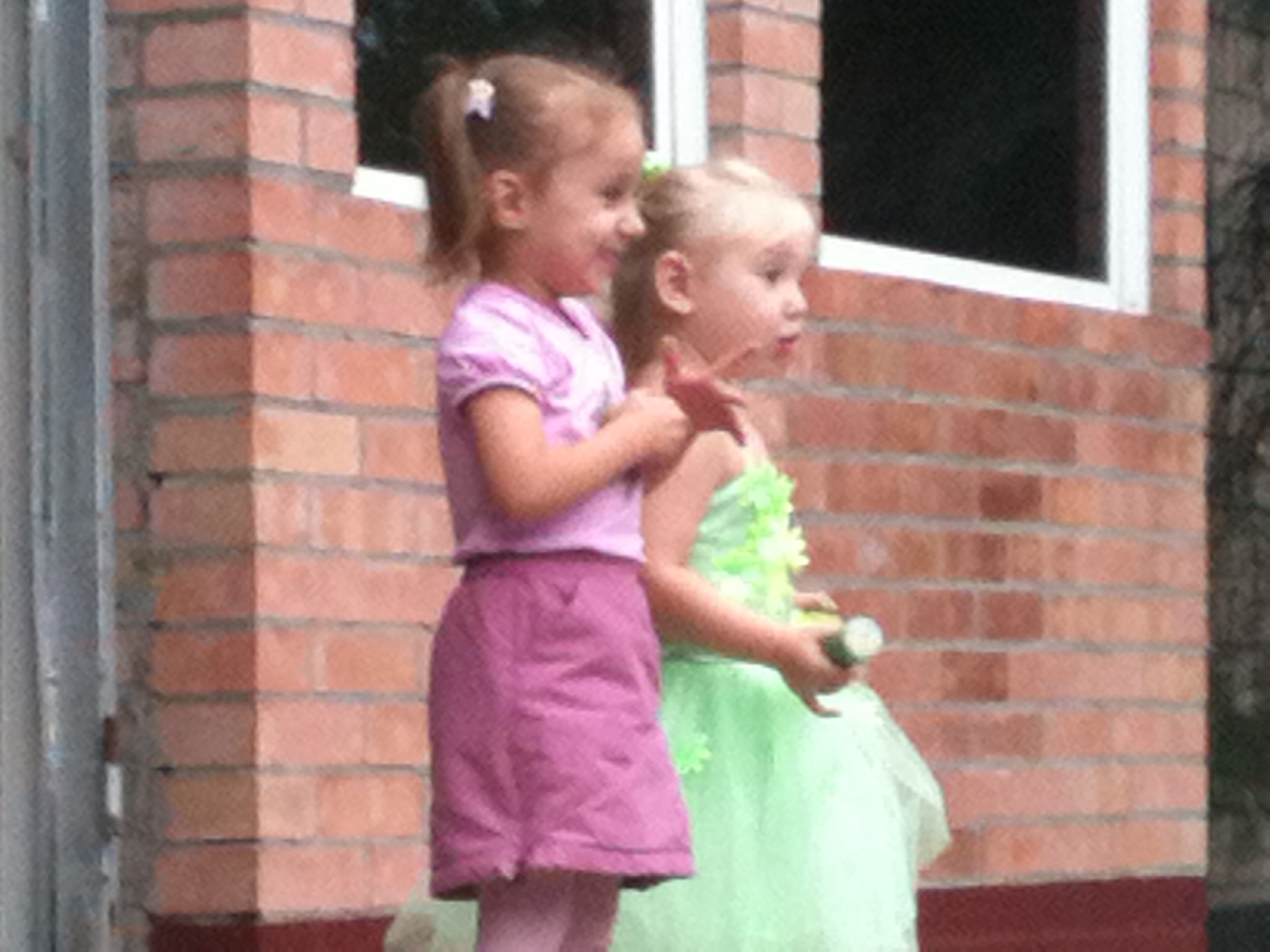
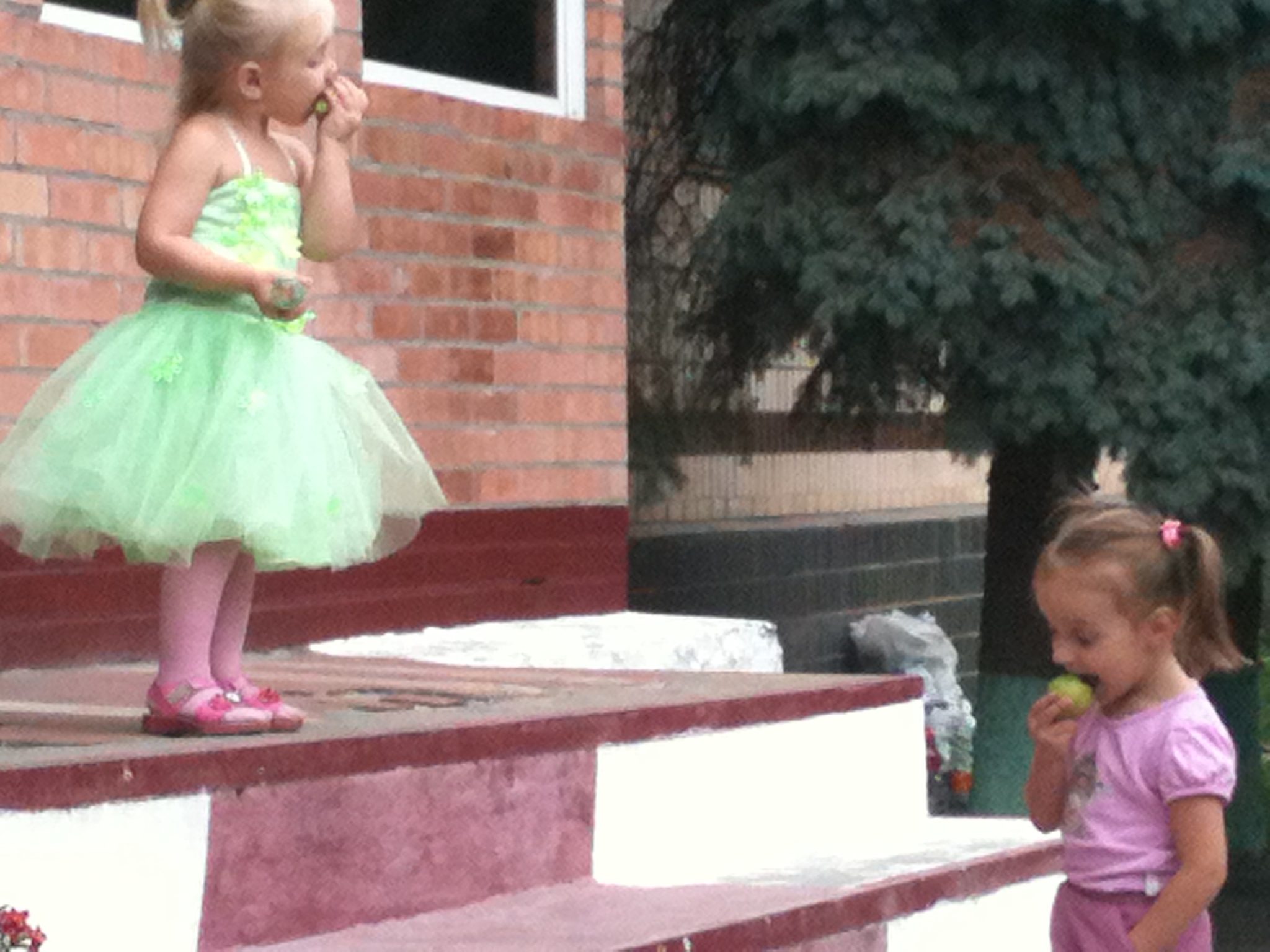
I don’t know what these adorable little girls were doing in the bar, but they certainly provided a whimsical touch:

I felt a bit like her, finally having put on my tutu and ready to dance for the world.  I have some good friends, a great host sister, an energetic work partner, and a bustling village in which to live for the next two years.  The Peace Corps is proving to be everything I wished it would be…I am so blessed!

The Big City

Famous portal entering into Chisinau

Time has sped by the last 10 days…with PST over and all my M27 friends departed to site, I thought I was going to have an easy, quiet time in the TDY apartment in Chișinău while I received daily treatment for my knee.  Not so.  It was probably the most busy (and entertained) that I have been since arriving in Moldova.

Let’s begin with the diva knee.  So, I am sent to this NICE apartment right next door to the Peace Corps office with all my bags (suddenly I have even more stuff than I came to Moldova with) after the swearing in ceremony.  There are three bedrooms there, all empty, and a great big kitchen with a microwave, even.  So I’m excited.  I trot off to the market and buy some groceries and cook my very first meal since leaving home.  Then I spend some time reading and I take a bath and I make up a bed and settle in and soon am fast asleep.  RRIIIIINNGGGGG….ring…it’s the telephone.  9:30pm the PC doctor is calling, not to check up on me but to announce the impending arrival of another volunteer.  (I guess she didn’t want me to freak out when the front door opened.)

Well, this volunteer’s arrival marked the start of the week of the revolving door.  In seven days there were eight other people in and out of the apartment for various reasons.  They all stayed for at least a day or two and somewhere in there I heard every single one of their stories, all of which fleshed out for me a more complete picture of Peace Corps Moldova.  It’s complicated.  Just like most other things in life, I guess.  It made me appreciate how unique each person’s service ends up being: even though we‘re all in the same country, we are not having the experience.  Which means that it is impossible to judge anyone else’s outcome or decisions – whether they ET (early terminate) or extend for an extra year or do their proscribed two years and flee back home.  There are a million different reasons for walking many different roads here.  I suppose that’s true of all the PCVs around the world.  But here is a video of my new friends Maria and Katie playing on the teeter totter outside our apartment:

This is the one of the main reasons PCVs say that they love their experience.   We know how to make fun happen with whatever comes along…

My other new friend Maria – in traditional Moldveneasca costume!

Back to the knee: every day I would walk over to PC offices and my own driver would whisk me off to a state-of-the-art medical center (called MedPark – looks exactly like Kaiser in the US) where a lovely aide would spend half an hour giving me various treatments involving magnets, electricity , and sonar.  Another volunteer was getting the same treatments, so we had a chance to chat everyday for an hour or two as we rode there and back and underwent our treatments.  She related a lot of useful info about her year’s worth of time here and she was very funny and entertaining.  My knee felt better and better every day. Life was lovely. (Then I screwed up my knee again my first day at site – more on that experience later…)

I was also invited by a group of the M26s for an evening at an American couple’s house in the outer limits of Chisinau.  He works as an IT specialist for the American Embassy and his wife loves to cook but has no one to eat it all.  So every Thursday they host a buffet meal in a varying theme for any American ex-pat who wants to attend.  The best part of all was their pets – a BIG Sharr Mountain Shepard (never heard of it before that night) and a cat that both craved attention.  And all of us animal-starved people were ready to slather it on.  I felt like I had received a mental health intervention just petting and cooing at them.  Man, I miss my dog.

On my last day in Chișinău my lovely friends Elsa and Carl, who are stationed in the city, took Darnell and I out for a day long excursion through the parks and museums and fashionable districts.  We had a lot of fun and I got to see a side of Chișinău that I hadn’t seen before.  There are stores – like Abercrombie and Salamander – that one would see in the US.  There are multi-storied, densely packed buildings that house a warren of vendors selling an eclectic variety of products: one floor will be shoes, one floor fabric, another bed linens and bath accessories, one all toys, etc.  It’s like having a whole mall, but packed into one building.  Very efficient.  There are lovely parks with giant chessboards where people stand around watching a game like it’s a tennis match or something.  There seem to be hundreds of couples getting married.  They speed by in cars decorated with masking tape and colored plastic bags and honk horns and scream madly to passersby.  More pictures of Chișinău:

Darnell and Elsa
One of hundreds of wedding limos driving through Chisinau on Saturday
Parliament Building
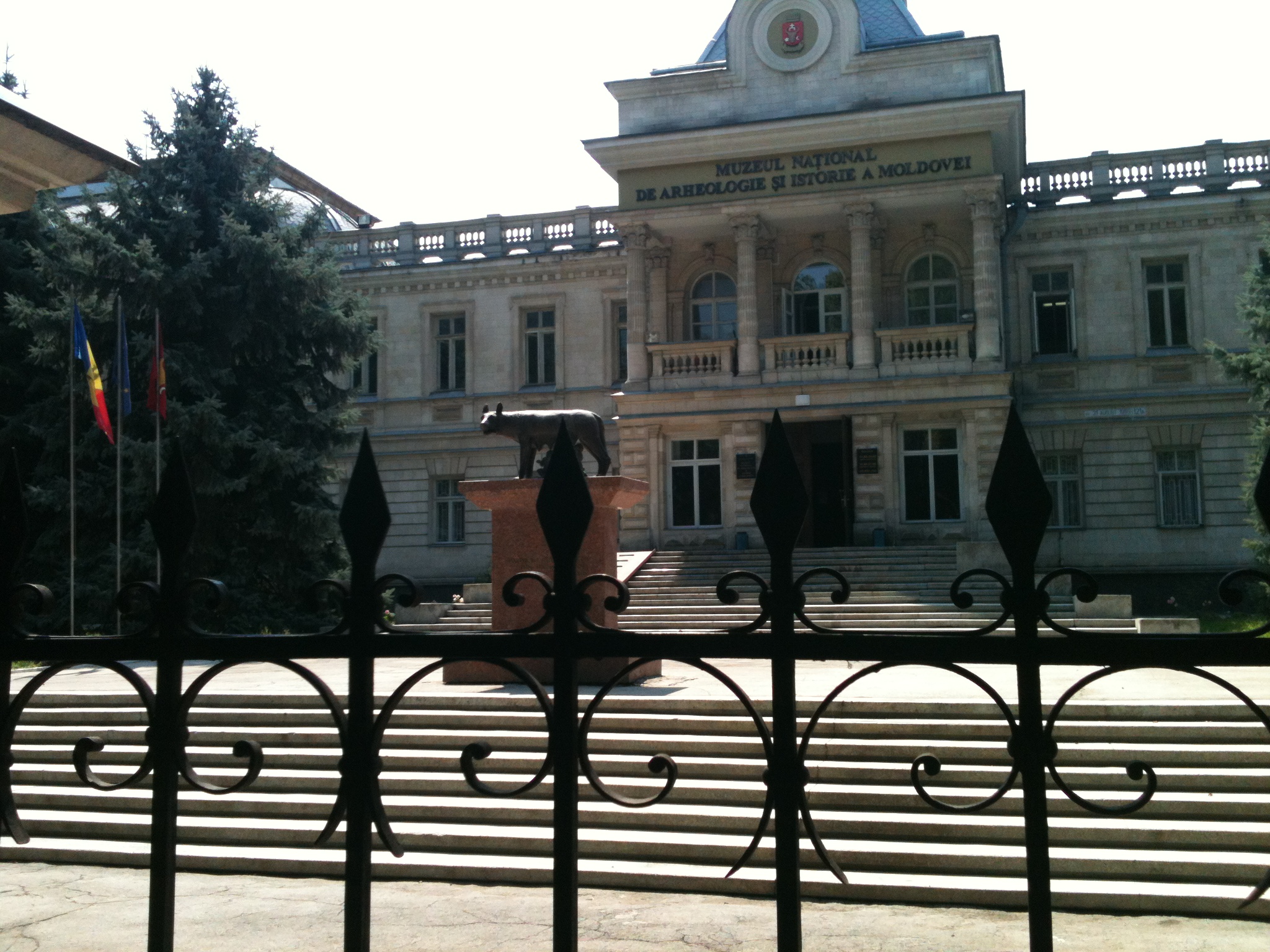
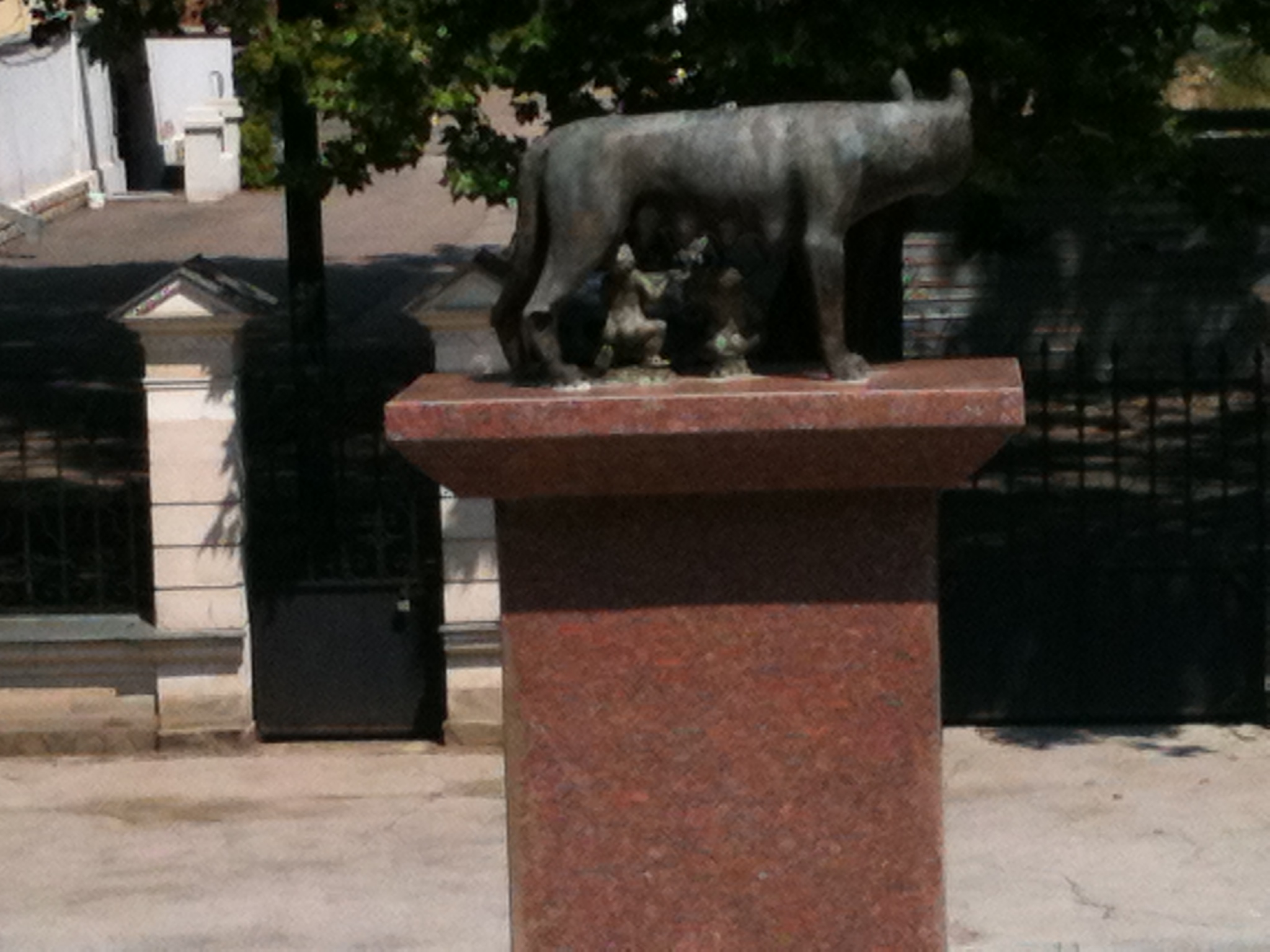
Romulus and Remus in front of the Museum of Archeology
Game of Chess anyone?
Cinema
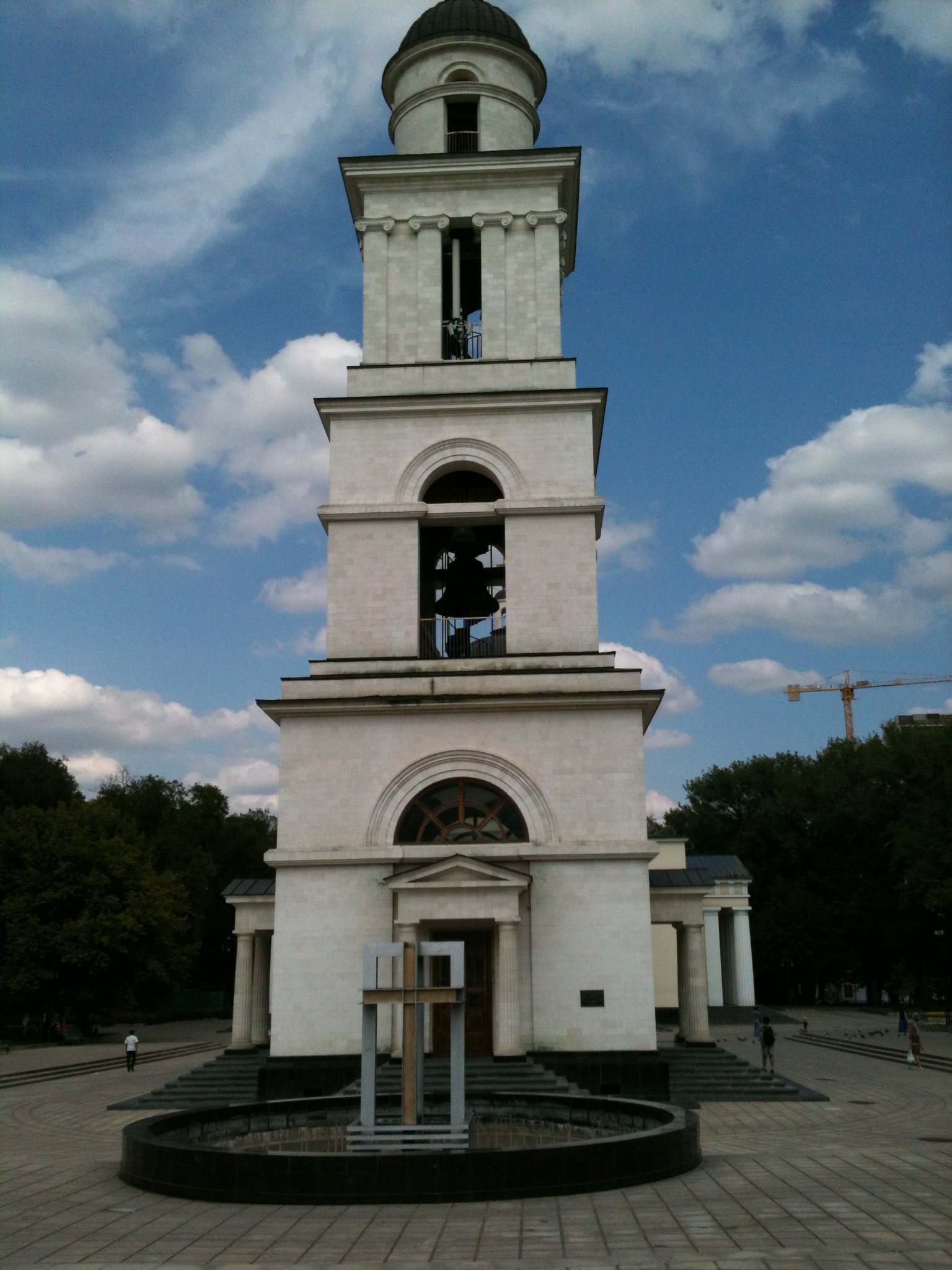
Biserica in the Park
See the tiny police car
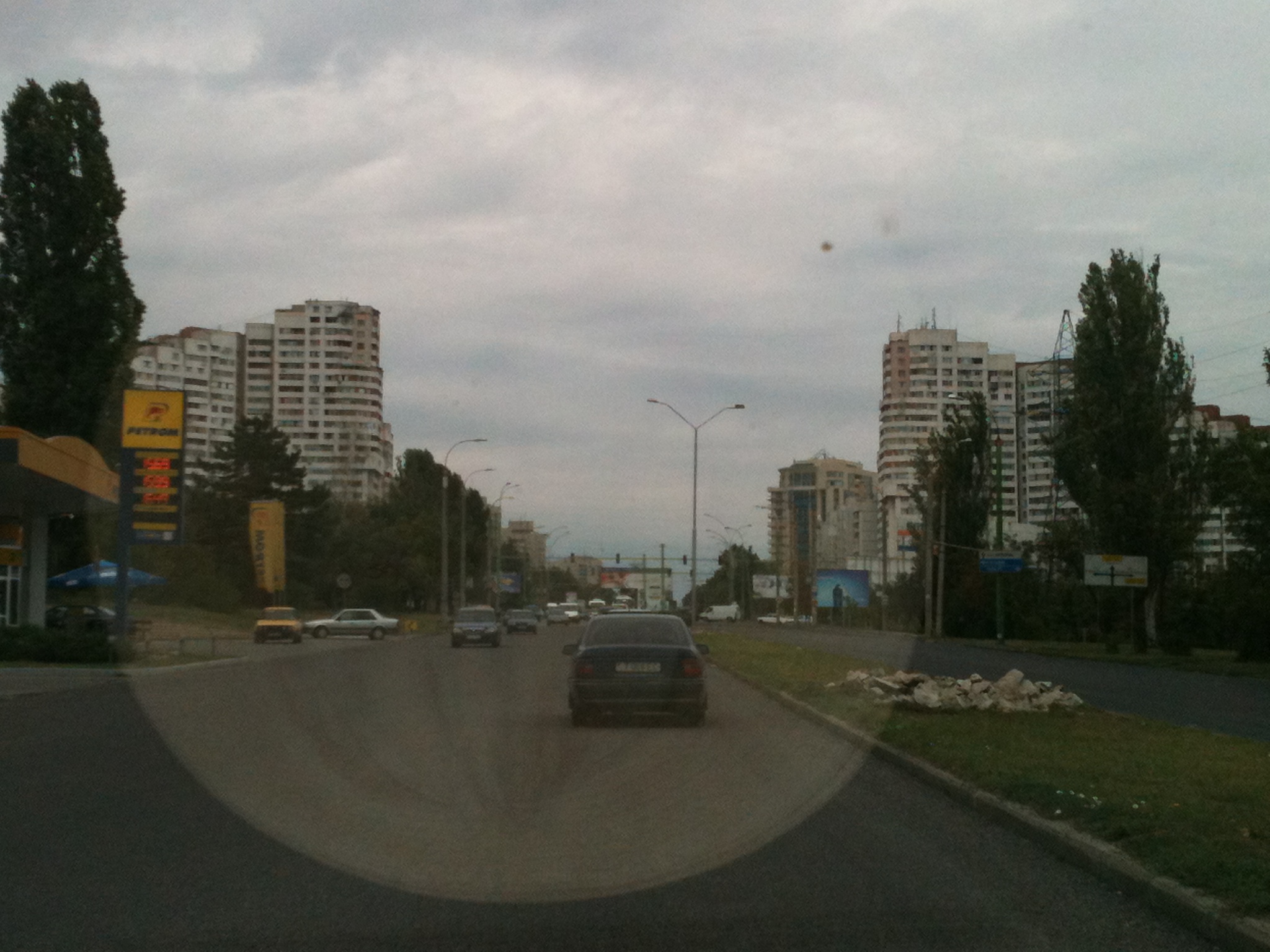
City street
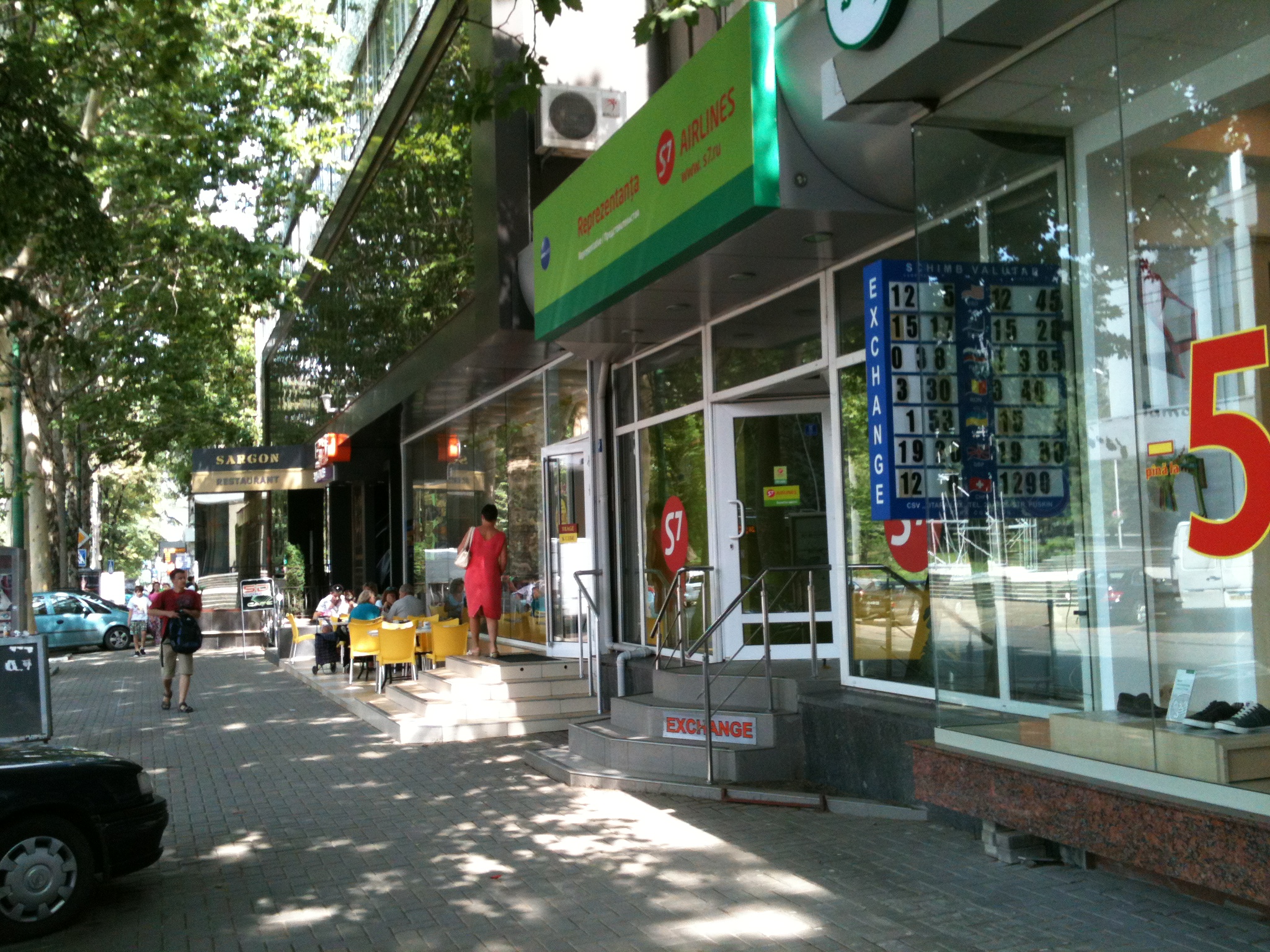
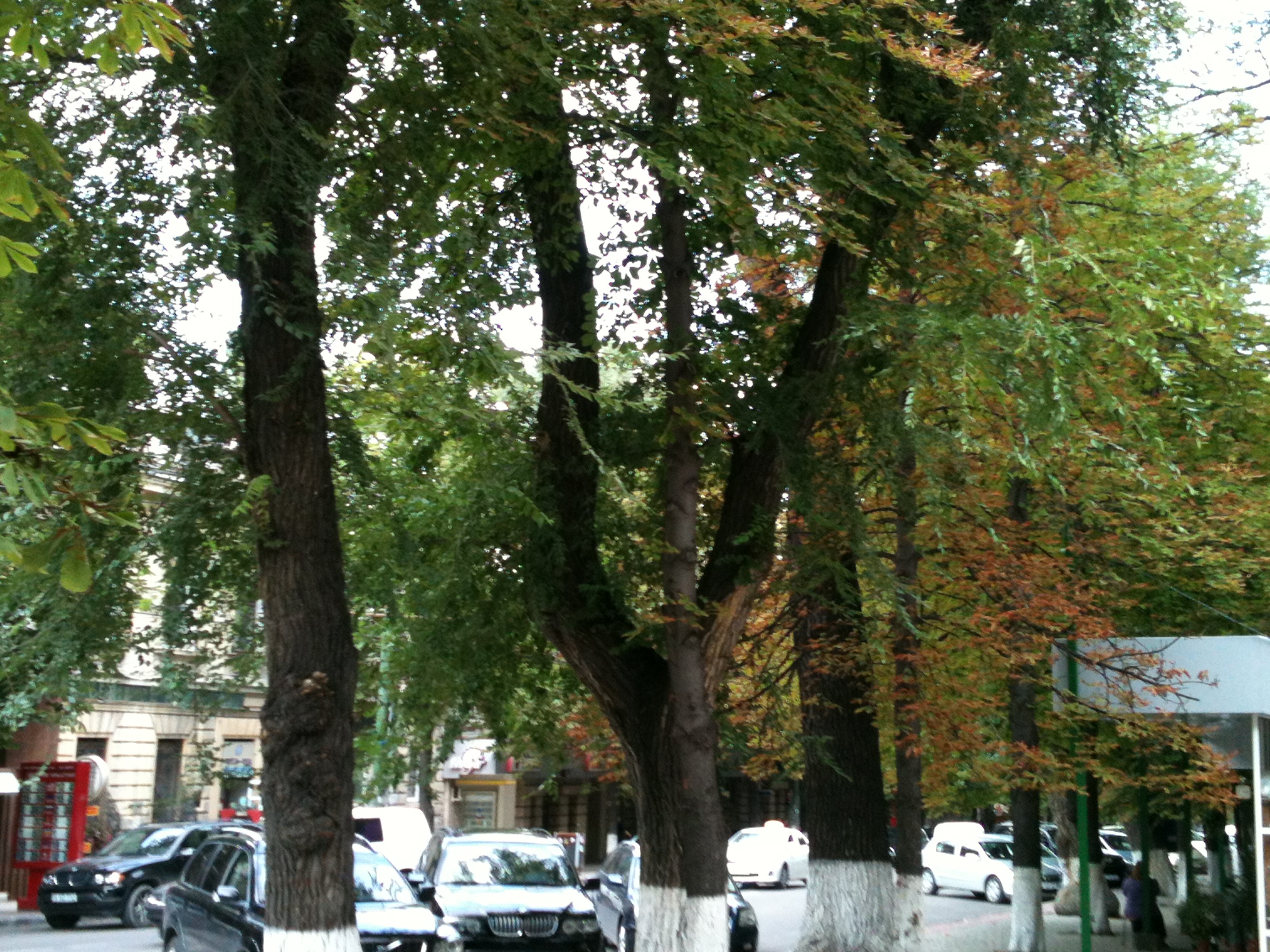
More city street – lovely trees

I am a Peace Corps Volunteer

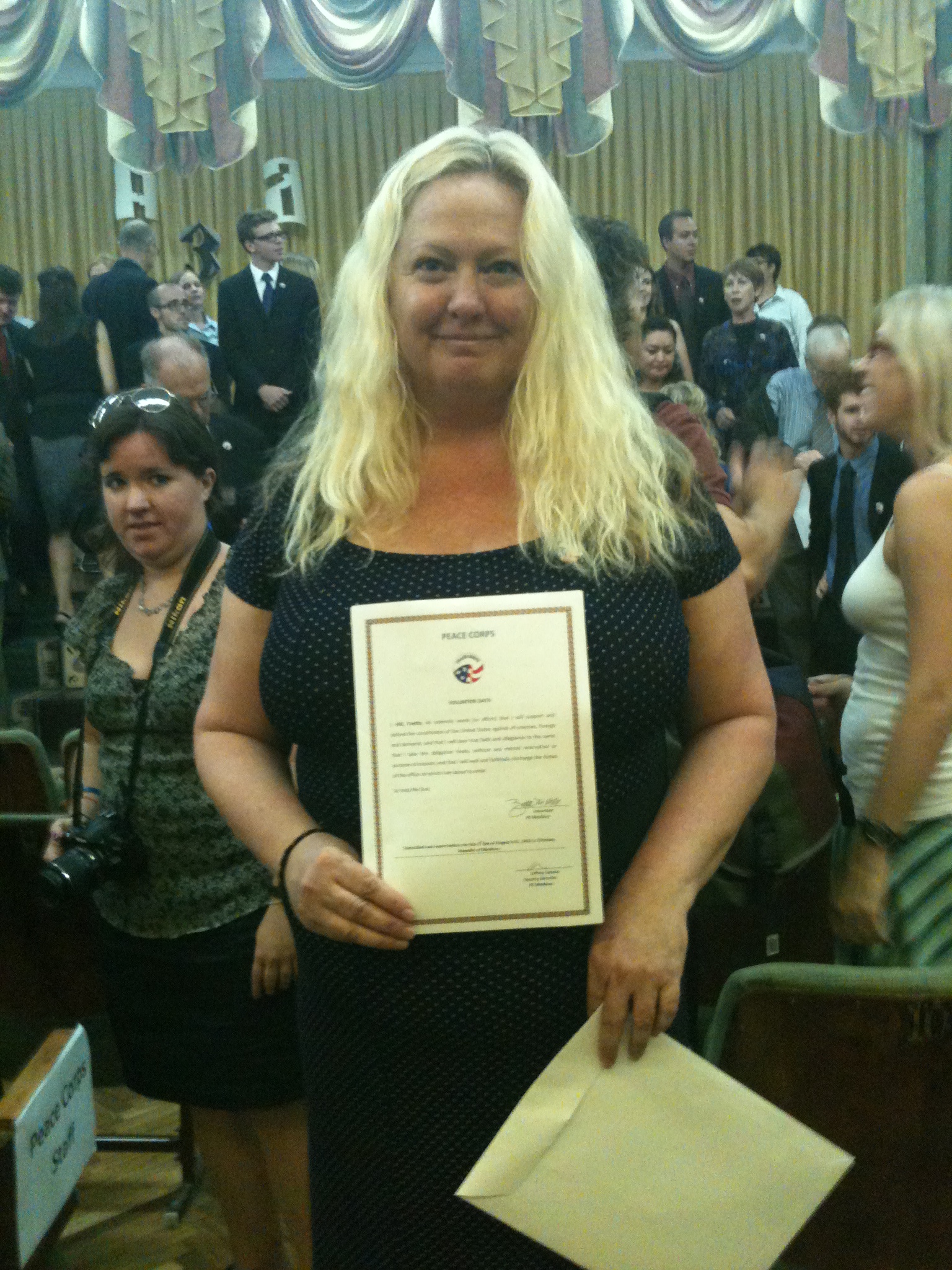
Holding my Oath of Office – I am a Peace Corps Volunteer!
Today, in a suitably serious and solemn ceremony, I and 37 members of my colleagues in the M27 Moldova group were sworn in as Peace Corps Volunteers.  (The rest of our group, Health and English Education Trainees, have 7 more days of “practice teaching” sessions remaining in their training.)

I confess that, as we repeated the same oath that – in various permutations –  thousands of other Americans serving in the military, diplomatic service, political office and other agencies of government have taken, I did tear up.  Being an American is a insoluble paradox for me.  I left the country partly because I am so tired of its politics, its materialism, its narcissistic patriotism, its inability to transcend its own mythos.  Yet it is America that brought me here, that sustains my work and the Peace Corps mission throughout the world, that continues to believe in “promoting peace and friendship” abroad through the voluntary service of over 200,000 of its citizens to date.  As the Ambassador to Moldova William H. Moser said in addressing our group, we are the most effective ambassadors of the American people in 137 countries around the world.

In searching for a YouTube video of my new site, Hîncești, I came across the following video.  Made, of course, by a Peace Corps volunteer.  Because I challenge you to search YouTube for a video made of ANY country in the last five years and not come up with one made by a PCV.  This is what we do.  We bring laughter, creativity, camraderie, esprit de corps, hope, friendship, diplomacy, and good will wherever we have been.  And we share it with the world.

Today, I am proud to be American.

http://www.youtube.com/watch?v=Xyk2qJjPQwE&feature=related


Fast Friends really fast

Community Development PSTs in Stauceni

From left to right: Warren, Leslie, Jan, Yvette, Roberto, Georgia, Patty, Quinn (Robyn taking photo.)

It’s amazing how close you get in just eight weeks. We will all be departing to different locations spread across Moldova on Friday.  I am going to miss having them around.  The worries, anxieties, complaining, support, laughter, tears and beers we’ve shared will stay with me for a long, long time.

Thanks you guys!

Roberto, Robyn, Warren, Leslie, Yvette, Jan, Olga, Diana, Quinn, Rodica, Georgia, Patty

Celebrating Georgia’s mama gazda ei zi de nastere (Olga’s birthday) last week.


My Peace Corps challenge, still unidentified…

[Disclaimer: I apologize in advance for the inexcusable length of this posting.  I pretty much vomited up a week’s worth of internal angst here.  Feel free to subdivide into chapters if necessary.]

Insert funny picture to entice potential reader…

You’ve probably noticed that the fountain of blogging clogged up somewhere last week.  We were warned by the M26s (the group of PCVs who have been here for a year now) that these last couple of weeks of PST could prove to be difficult and tedious and we shouldn’t be surprised if we felt “depressed” or “homesick” or “disappointed” right before our actual Peace Corps journey is set to  commence; I heretofore acknowledge their wisdom and experience in identifying the precise time period when exactly this would occur for me.   I am not adept at recognizing some of the less desirable emotions I experience; I tend to paint every self-portrait in happy colors, populate the background with balloons and sunshine, and frame it all in gold stars and smiley faces.  That I can’t manage this all the time now is one of the (unplanned) lessons I have been given to learn.

I have been considering why this is so (the lack of sunshine and balloons) for a couple of days now: is it just me or is there something in my environment that I am reacting to?  Is it this big change, in general, that has thrown me off balance or is Moldova a unique impetus for eliciting a certain, complex set of emotions within me? Or is it merely just the end of PST, when I will depart from my established routine in Stauceni and all my American cohorts?  So, given my propensity for over-thinking every last detail of my life and experience, my analysis traced the following path:

  1. Is this the scariest/most challenging/potentially life altering experience that I have ever had?

The short answer to this, I believe, is no.  It is a ‘short’ answer because the other experiences that I might consider to be relatively scarier, more challenging, or life-altering lasted for 15 hours and about 5 minutes, respectively.  The first was the time that my friend and I were lost in the Angeles National Forest overnight and were ultimately rescued by a Marine Search and Rescue helicopter.  The second was a personal epiphany that I had while speeding along the edge of an escarpment in a rickety bus through the Andes. (Though it was a life altering experience for me, I have never effectively conveyed its mind-blowing impact to anyone else who’s suffered through the details, which I will omit here.)

At this juncture I am forced to acknowledge that – duh – the scariest, most challenging, potentially (and actually) life altering experience I have had was becoming (accidentally) pregnant at 23 and choosing to go through with it, keep my beautiful child, and raise her – if I had to – alone.  Thankfully, the abundance of life provided us with everything we could ever have wanted or needed.   But my life DEFINITELY followed a different path than I would have tread had I not encountered this fork in the road.  And I was terrified, often and thoroughly, during her first two or three years of life.

  1. Is there something about Moldova that is eliciting these feelings in me?

The answer here is a (qualified) yes, though truly this question requires a book-length explication to actually do it justice. In fact, I did just read a book – The Lost Province: Adventures in a Moldovan Family by Stephen Henighan – that did much to clarify for me the tumultuous impressions I am juggling vis-à-vis Moldava, its denizens and the realities of twenty-first century trans-national capitalism.  Though I realized it has been a mere 21 years since Moldava gained its independence from Russia, I didn’t have an appreciation for the dregs of history that boil and ferment just beneath the surface of a culturally suppressed and economically-raped population.  Henighan came to Moldova to teach English in 1993-94; his experience of Moldovans was largely delineated by their seeming inability to cope with the catastrophic changes being forced upon them by the advent of a “democracy” and “freedom” heavily subsidized by rampant consumer materialism. The particular anxieties delineated by their ever-shifting borders, the complexity of their linguistic history and the historic artifacts it denies them, the tension that keeps them culturally, economically, and politically suspended between Western Europe and Russia are all integral to their national identity (or lack thereof) and make for an interesting read. (If you are lacking a good book for the beach this summer, I highly recommend Jonathan Sacks The Dignity of Diversity. He is much, much better than I at drawing out the intricacies of cultural identity and how it defines and shapes the human experience.)

Let me just excoriate here for a bit my favorite demon, transnational corporations: From 1991 on the Moldovans have been relentlessly saturated by the corrosive infiltration of first world media and products while trapped in a netherworld between the tantalizing but vagarious rewards of capitalism and the stultifying, pseudo-security promised by the communist state.   They can no longer rely on their agricultural products and the rural lifestyle it (more or less) supported for centuries to sustain them.  Embargos and tariffs are placed on their exports by various countries seeking their allegiance and/or to co-opt their borders.  Virtually their entire industrial sector has been cordoned off in the separatist, unrecognized “state” of Transnistra.  Their governmental ministries and officials struggle to integrate diametrically opposed political parties and philosophies. Meanwhile, the likes of Mercedes Benz and Apple and McDonalds tantalize them with seductive advertisements carefully calculated to whet their burgeoning appetites, You Tube proffers hypnotic music videos replete with heavy-lidded, long-legged beauty queens draped in gangsta bling, cinder block McMansions are sprouting in the suburbs Chișinău, and speaking a foreign language is de rigueur for any ambitious youth seeking gainful employment in an increasingly globalized economy.   They are not far enough removed, resource-depleted, nor education-deprived to be ignored by the ravenous maw of consumer-dependent corporations.  Yet they lack the political stability, economic base, and cultural cohesiveness to collectively harness the engine of capitalism and make it enrich, rather than drain, their bank accounts.

Most of the adults between the ages of twenty five and fifty are what is popularly referred to as “departe” – far away.  They work, usually far beyond their allotted visa period, in places like Italy, Germany, Moscow, and Canada, to be able to save and send money home for their families. They are forced to leave parents, children, spouses, and siblings for decades in order to earn the money needed to afford the necessities that life in the twenty-first century increasingly demands.   Families are torn asunder, children are orphaned, seniors work well past retirement age, half-built houses crouch in weedy lots, and an entire generation of Moldovans is denied the opportunity to influence or preserve their political system, cultural institutions, or dwindling national identity.

I think when I pictured the “Peace Corps,” I imagined a challenge that would involve enforced abstinence from common conveniences enriched by adventurous encounters within tribal enclaves: no running water or electricity, scarce or no access to conventional medicine or hygiene products or retail establishments, no Internet access, telephones, television, etc., all offset by a teeming social beehive of sustenance activity that would serve to distract me from the privation. That is far from the case here in Moldova.  All of those conveniences that were supposed to be inaccessible are here, relatively affordable (at least for me) and attainable.  Many Moldovans have them.  Yet they are, for the most part, so busy, distracted, anxiety-ridden, and stressed by attaining/retaining the ability to grasp and keep hold of these things that the social fabric that binds them is noticeably affected.  Kind of like America.

And so perhaps, I am disappointed at being ‘denied’ the opportunity to live out the atavistic fantasy I had built around my service within my head.  Instead, I am being asked to integrate into a community of people just embarking on a seemingly inevitable march into the consumer lifestyle the ultimate consequences of which I (and many others like me) am attempting to flee.  The causes, implications, ramifications, and veracity of this line of analysis are far too complex for me to explore here.  But I am consumed with these details all the time; I just can’t work my way out of the maze within which my nationality, economic status, education, opportunities, personal predilections and consumption patterns conspire to entrap me.

Anyway, enough of that.

Another funny picture to re-engage the bored reader

3. Is it the end of Pre-service Training, my imminent departure from the relative familiarity and comfort of my fellow American volunteers and the English language, esprit de corps, and common cultural referents  they represent, that is unsettling me(In other words, am I finally being forced to leave home?)

Undoubtedly, this is a loaded question, one that is not at all comfortable to contemplate.  After all, isn’t this one of the reasons I so doggedly spouted for joining the Peace Corps in the first place?  What does it mean if I don’t really want to leave America, after all?

It means that I am a product of my culture influences, like it or not.  And I now have a eminently valuable opportunity to truly see and appreciate the aspects of Americanism that are deeply embedded within me, that shape my perspective and way of being in the world, and that I don’t want to lose:

  •  Americans are preternaturally optimistic.  We believe, generally speaking, that we can do anything.   We are not subdued by the hand of fate, nor do we cede the trajectory of our biography to some unfathomable plotline drafted by forces outside our ken or influence.
  • We tend to believe that most people like us.  While this characteristic has had some unfortunate implications on a global scale, within neighborhoods, families, work environments, and public places it generates a great deal of shared laughter, social cohesion, and a predilection for including the people around us in our circle of perception.
  • We lean towards the adventurous and are more likely to embrace challenge and opt for change. We like to explore, question, debate, pinch, poke, and prod.  We can be (for the most part) persuaded to abandon traditions and historic influences in favor of scientifically-backed theories that have generated a wealth of technology and increased affluence for our country.

Granted the aforementioned constitute a gross generalization of what it is to be American.  And I don’t have the space nor my readers, most likely, the inclination to embark on a dialectic about what is accurate and bona fide about this generalization.  All I can say at this point is that I feel I am letting go of these qualities when I say goodbye to PST.  Of course, I can continue to nurture them within myself.  Many ex-pats are quite successful at maintaining their national/cultural integrity for years in foreign climes.  But I am going to feel the dearth of these characteristics in my day to day environment.

How and why Moldovans differ from Americans is part of what I am here to experience.  And, ultimately, to be able to understand, share, and celebrate.  The multi-faceted aspects of actualized cultural diversity are more complicated, potentially fractious and alienating than I was able to truly understand within my generative environment.  But it is an experience that we are being forced to grapple with, like it or not, comfortable or no, in our suddenly interconnected, transnational, globally networked world.  I feel like a baseball player on a soccer team; I keep using the wrong limbs and skills and all my moves are predicated by a different set of rules.  And I definitely don’t get the jargon.  I am a fish out water, flailing about, pining for contextual familiarities.  I miss being comfortably at home in my own head.  Above all else, I did not appreciate how much language defines the contours, dimensions, and palette of my reality.  It is like living in a science fiction story: this world shares much of the same surface characteristics as mine, but it is ineffably, maddeningly different.

Will I ever feel at home here?  And is that the challenge that will define my Peace Corps experience? Or just one of the many ahead of me that I can’t even hope to identify this early on?

And that’s what’s up with me this week….

First impressions

Image
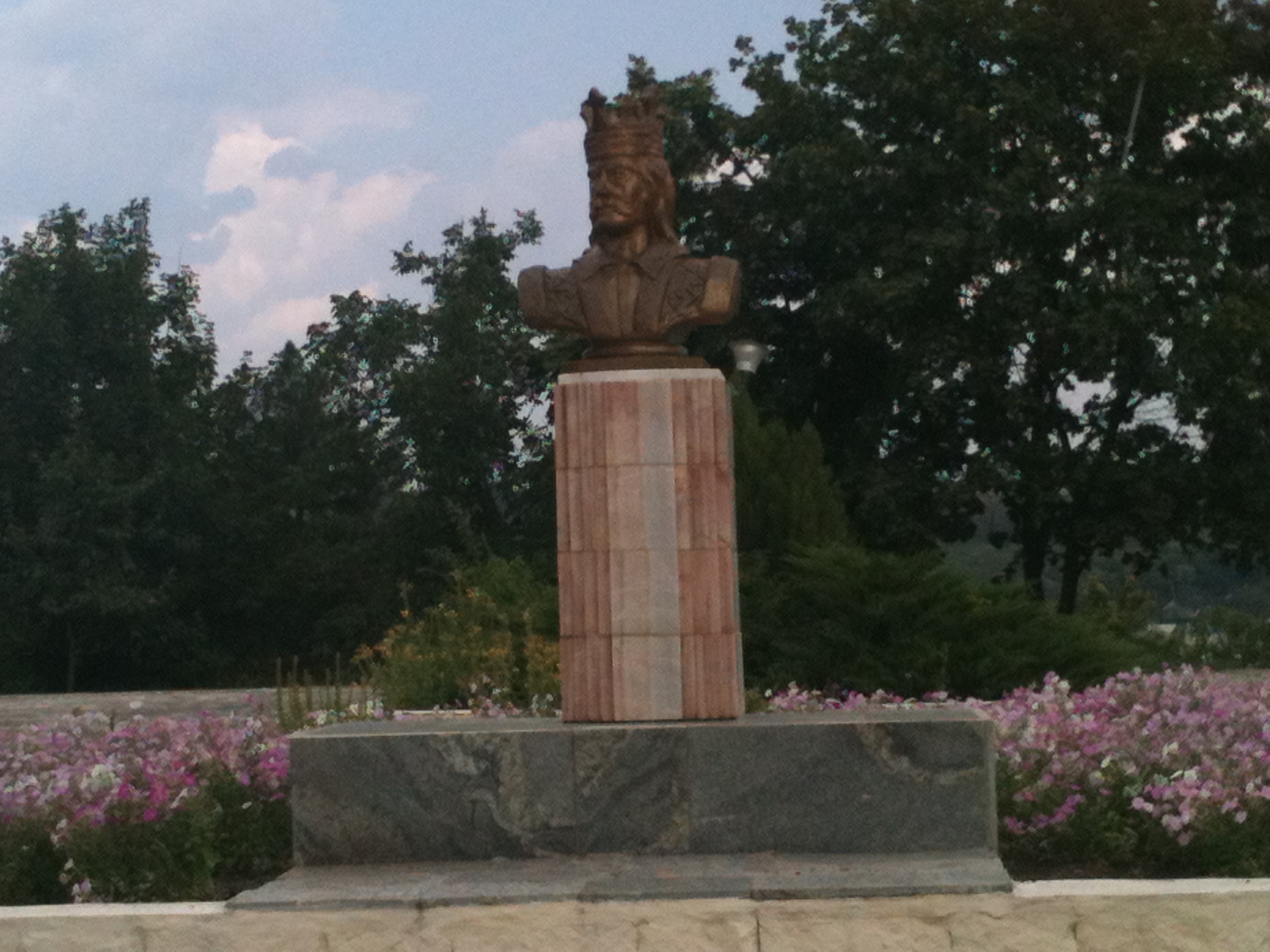
The ubiquitous Stephan Cel Mare, beloved hero of Moldova

This past weekend I cleared the final, obscuring hurdle in this protracted journey from my past and familiar life into a great unknown.  Starting in February of 2011, I have spent months wondering about the location, people, and organizations that would fill my life and delineate my experience for the twenty-seven months of my Peace Corps service.  The journey to Hîncește on Saturday lifted the final veil.

Let me say first that actually making the journey all on my own was a HUGE success for me (you have to celebrate the little stuff, folks!)   I took the familiar route into Chisinau, but then had to navigate my way through the piața – the vast outdoor vendor mart where one can obtain anything from chicken feet to pirated DVDs to Chanel knockoffs – and find a rutiera serving a route which I had never taken to get me another six or seven kilometers to the Gara de Sud where I would board a trolley bus to Hîncește.  I was able to communicate in Romanian enough to ask someone for directions and to be notified when we reached the station.  The trolley bus was parked right in front of the station when I arrived – lucky me.

Image
Hîncește mayoral office

I arrived in Hîncește and hour and half early, so I decided to try to find the organization that is sponsoring me – Pasarea Albastra – on my own.  Mysteriously, I headed in exactly the right direction, even though it was uphill and around a long and sweeping corner, to find myself standing in front of the closed up building – come on, it is Sunday, Yvette – within ten minutes.  I then had to call the woman, Ana Vioara, who speaks no English and will be my work partner to explain who and where I was.  Within five minutes she joined me on the sidewalk.

Image
Ana Vioara, my work partner at Pasarea Albastra

 She then took me inside and showed me around.  It’s a bright and cheerful place, newly built or refurbished (couldn’t quite make out which) and opened for use last December.  It certainly rivals any day care center in the US that I’ve visited.  She made me tea and brought out a plate of cookies, however, we soon realized that my limited language capabilities were putting a serious damper on the party.  While Moldovans are generally much more comfortable with prolonged silences that most Americans, I think Ana was a bit nervous and wanting to make a good impression so it pained me greatly not to be able to converse with her.  Periodically she would roll forth a rushing river of sentences from which I could only wishfully pluck a scarce smattering of familiar nouns and strangely conjugated verbs (damn those reflexive pronouns!)   All I could truthfully respond was “Îmi pare rau, nu ințeleg.”  (Sorry, I don’t understand.)    We hadn’t even finished our tea before she suggested we move on to Nina’s house so she could introduce me to my new mama gazda. Really, I think she was looking for reinforcements in her effort to hold up one end of a dialogue.

A surprising characteristic of Moldovan architecture is that one cannot judge the building by its cover.  So many of them here are crumbling artifacts of the Soviet era, hulking cement block monsters moldering in weedy lots, framed in scraggly trees and festooned with ribbons of clothesline.  It was exactly one of these that Ana led me to, wending her way up the eroded asphalt that served as parking lot, driveway, sidewalk and playground around the back of the building.  There, the harsh outlines were softened by a pleasant little hillock of trees and bushes nestled up against the building.   Nina has added an “office” to her apartment (in Moldova most people own, rather than rent or lease, their living quarters)  so there is an actual separate entrance used by visiting clients giving entry into an extra space attached to her bedroom.  And the interior was a refreshing and pleasant contrast to the dismal exterior, markedly upgraded and very modern.

Moldovans seem to take greater pride than most Americans of similar – or even better – economic circumstances in furnishing and decorating their living spaces.  All the furniture I’ve run across here is sturdy and finely-upholstered in good fabric; bathrooms and kitchens are tiled in ceramic or stone with substantial bathtubs that one could actually stretch out in; cabinets are crafted with heavy wood, solid hinges and decorative blown glass; the floors are of inlaid wood, individually fitted and highly polished; carpet pile is heavy, soft and brilliantly hued.  It is far more tasteful and better made than the plaster board, spray-painted, hastily assembled Target/Ikea breed of furnishings that is slowly encroaching homes across America.  And it definitely counters the depressing vistas of their cityscapes.

Nina’s apartment is much smaller than the house in which I am currently residing in Stauceni.  And there is no garden – boo hoo.  I get the feeling that she is quite consumed with making money, building her client base, and scouting out potential new pyramiding opportunities.  Although she was somewhat shy around me, she did manage to haul out the Avon catalogue to peruse with me page by page and posed not-so-subtle questions regarding my Peace Corps income and potential revenue from the husband back in the States.  I think she sees me not only as a potential consumer of products, but as a conduit to a whole new gathering of female resources.  I could tell she was more than a little disappointed at the obvious absence of cosmetics applied upon my person.  This will be a much different relationship, I think, than the one I enjoy with my current mama gazda.   We shall see.

Image
New Nina

Diva Knee

The Diva

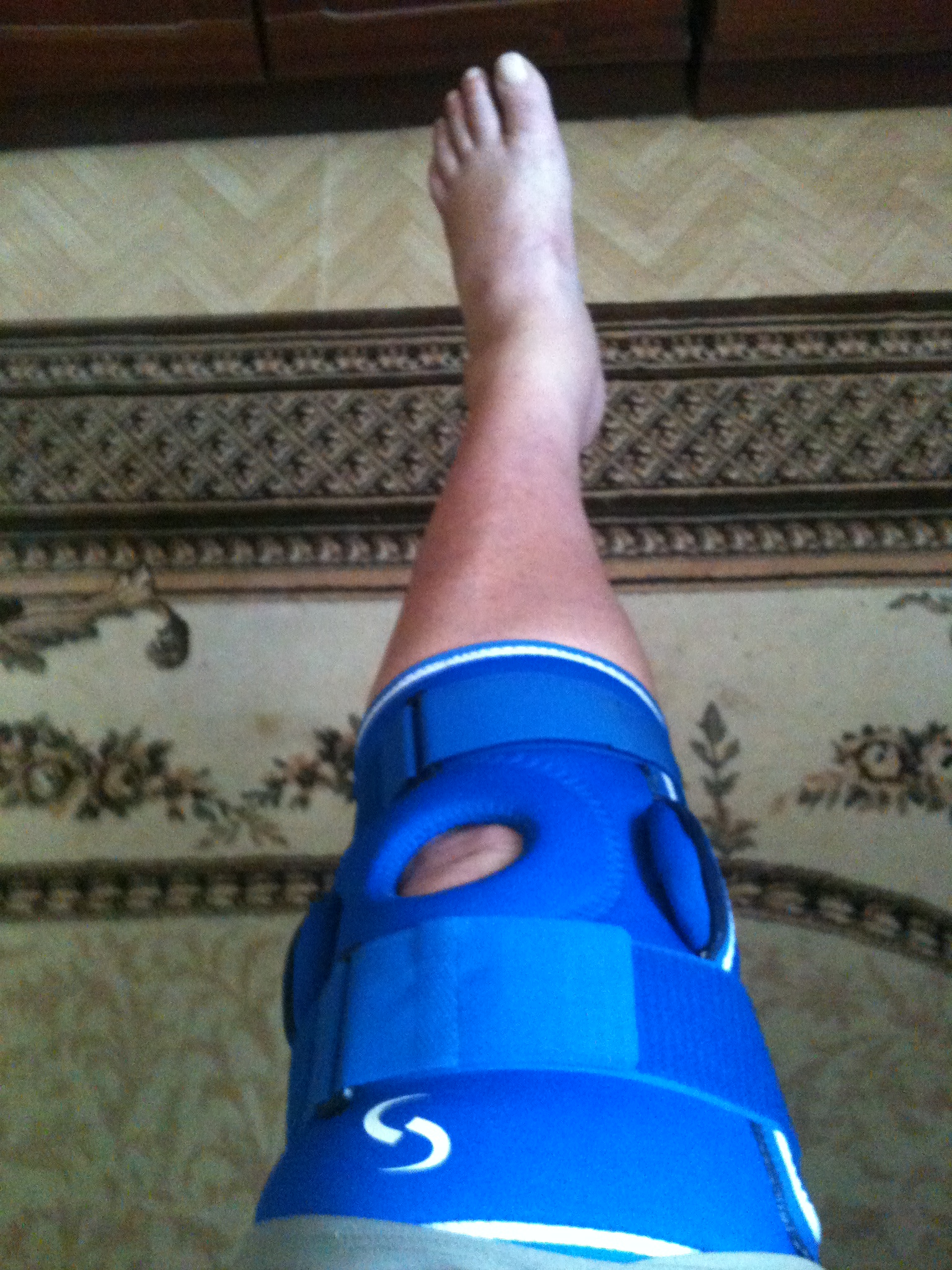
In that way that a niggling irritant will steadily blow itself into obnoxious proportions in seeking the spotlight, I have had to bow down before the increasing tantrums of my left knee and allow it take center stage.  Through weeks of humping back and forth to school along rocky roads slogging sixteen pounds of paraphernalia, coupled with boogie boarding the aisles of careening rutieras, compounded by an ambitious hike up the crumbling, Soviet-era, one hundred and seventy three steps (I counted) linking my home and a picturesque lake in my new village, I’ve managed to create quite a diva out of this joint.  It sends shooting pains up my thigh at night, rumbling into a dull throb in the morning that climbs to a screeching glissando of pain after ten or twelve hours of the above listed activities.  I finally went to see the PC doctor, who set the wheels in motion that will all but ground me for the remainder of Pre-Service Training.  I did not see this coming.

What I did know was that I would be walking.  And walking, and walking, and walking, everywhere while in the Peace Corps.  So I began walking, almost from the moment I began filling out the application.  The furthest I ever went in a day was 10.12 miles; I routinely went four to five without breaking a sweat.  I was hiking rough trails in the Fullerton and Tustin hills at least four times a week. (Okay, I will confess to slacking off slightly towards the end when it got up into the upper 80’s in Fullerton, which is quite balmy weather for me now.) Not one knee problem through it all.  I did not see this coming.

My second week here I tripped on the tiled stairway inside the PC offices and went down smack on my knees.  (One of the stairs is slightly higher than all the others causing one to miscalculate in clearing it going up and land heavily when going down; everyone knows this and many people have taken their own spills.  The HR professional in me wants to run screaming through the halls at the liability potential. Oops.  That’s right, I’m in Moldova.  No one cares.)  According to the PC doctor, this “triggered” an underlying problem with cartilage wear and compressing space in the joint.  What’s this: a pre-existing condition that I did not note on my medical application?  Mostly because I didn’t know about it, Doctor. (I guess the Peace Corps needs to take precautions against the middle-aged uninsured who sign up for two years of service in a sweltering country without pay with the sole aim of getting their blown out joints fixed for free?)  The pre-existing clause causes an issue in gaining authorization for any kind of expensive intervention, like arthroscopic surgery, for example.  What is authorized is three weeks of house arrest, a strong anti-inflammatory, a hulking knee brace that mysteriously increases my overall body temperature by at least five degrees, and a combination of physical therapy and ultrasound to excitedly anticipate in the coming weeks.  I couldn’t be more thrilled.

The thing about my situation that sucks the most is that I’m stuck in the middle.  All the older folks (60 and up) have already HAD their knees done, so they are all springy and sly with surgically-conferred youth.  And of course the kids still have their knees, which they torture quite regularly with the blithe disregard of youth,straining and popping them in strenous soccer matches only to appear dewy fresh and mysteriously healed the next day.  Me? I am just beginning the long, slow decline into better acquaintance with orthopedic surgeons, MRI’s and Latin terminology, which I’ve quite creatively managed to accelerate in my forever ambitious manner.

Oh well.  Perhaps it is my devious little daemon taking action, zealously guarding my thirsty need for time. Time to read, time to write, time to sit and gaze dreamily into space; time that isn’t filled with the recitation of new nouns and verbs and propositions or downloading safety information, rape prevention tactics and other obviously, DC-formulated policies and procedures or listening to PCVs and administrative coordinators and program managers prepare us up down and sideways for any anticipated occurrence which could rattle our now somewhat tenuous hold on the idealistic convictions that landed us here.

PST is lasting too long and the diva knee is asserting her potent will.  Other than mornings spent in language class (which I am insisting on attending for my own sake) I have now gained about ten hours per week back for ME.  Perhaps my joints are not so bad, after all.