Prima Zi

Proud parents

This last Sunday I arose with some little trepidation (I’ll admit it) and put the last stray items into my luggage in readiness to move to my final destination.  It has been a long journey that brought me to this point, all the way from my sallying cry in the dark so many years ago.  It was not registering completely that this trip in Terry’s van would probably be my last ride in a personal vehicle with all my luggage in tow while I’m in Moldova. (When you leave the country at the end of your service, for some reason you have to find your own way back to the Peace Corps offices and the airport.  Hence, most people leave most of their things here, only taking back the REALLY important stuff….)

When they arrived – Ana, my work partner, and Eduard, her husband, and Terry, the driver – we had to haul my luggage out from the apartment all the way around the building to the front to the car, because of course I couldn’t manage to open the gate into the parking lot.  (This was the beginning of the end of my ‘healed’ knee.)  On the way to Hîncești we stopped at a store called Metro, which I heard about but didn’t quite believe existed.  I was wrong.  Costco has married WalMart and moved to Moldova.  Here is a huge warehouse store with everything from dish soap, to washing machines, to socks, to watermelon and cheese.  All under one tin roof.  For a nation of bus riders.  That’s right.  You know how much you buy when you visit a warehouse store….well imagine transporting all of that home on a jam-packed rutiera.  I don’t get how this works.  But Moldovans are diligent and proficient at getting done what needs to get done, with very little technology most times.  It makes me yet again realize how much consumption we take for granted in the USA.  Ana and I have hesitant conversations, comparing the price of laundry detergent.  We find a bag for 20 lei cheaper and send her husband to put back the more expensive versions we had just picked up.  Terry careens madly through the store, flirting with every woman he sees.  (More on Terry at later time – he really deserves his own post.)  I am feeling vaguely comfortable with Moldovans, not an American in site.  We stuff all our purchases in the van with all my bags and climg aboard for the wild toad ride to Hîncesti. Terry pilots the van somewhat like a flying carpet.  We seem to be zipping a couple of inches over the actual road. Is this better than a rutiera? I think.

I had barely set my bags down and hadn’t even unzipped a suitcase before Nina, my new host sister (I have to call her that as she is my own age – it feels too weird to call her my “host mom”) tells me that we are going to a masa in the small village of Boghaceni in celebration of a four month old baby boy born to a couple for whom she is the “Nona.”

Culture break: A Nona is sort of like a godparent for married couples.  It is a non-relative whom a couple asks to serve as a guide and mentor for them during their married life.  It can be a couple or a single man or woman.  Generally, the person or couple is quite a bit older with some life experience under their belt.  They will help the new couple make big decisions, teach them about parenting, offer advice and comfort during difficult times, etc.  I find this especially perceptive in NOT having it be a relative, as many times married couples can encounter difficulties with parents and in-laws that require some sound guidance to help them through so they don’t make a mess of things.

So we cross the street in front of our apartment building and begin waiting for a ride to this village.  Now ruteiras come by every ten-fifteen minutes or so, but most folks are impatient and try to flag down passing cars that are going the same way.  Of course, Peace Corps advises volunteers against this practice, but everyone does it anyway.  It is a good way to meet Moldovans and practice your language, I guess, but I haven’t tried it on my own.  Now that I’m with Nina, I guess I’m ready to hitch hike (I actually don’t have a choice.  She’s madly flagging down every car that whizzes by.)  A couple of cars stop but they’re either going a different way or they can only fit one person.  We end up in a rutiera just as it starts to rain.

And then it’s pouring.  (Luckily at this point I had not learned of the horrible accident that just claimed the lives of ten people in a 17-seat rutiera that was carrying fifty persons. It’s brakes failed on a curve and the mayor of a town and his wife were among the fatalities.)   I am not looking forward to the walk from the rutiera to this masa, as I left in such a hurry I didn’t grab an umbrella and hadn’t changed out of my sandals.  After about an hour, I hear Nina yell for the driver to stop.  We’re out in the middle of nowhere.  I am confused.  After we disembark, a young man comes up to greet us.  His car is parked right there where the bus stopped.  Oh thank the lord, I don’t have to walk.  We get in his car and proceed down a dirt road that is quickly melting into mud.  He is driving fast, trying to beat the disintegration of traction.  A couple of times I find myself wondering if walking would’ve been better, but the road turns out to be miles long.  The house that we’re going to comes into view ahead – it’s way up on a hill to the right of us and as we slowly drive by it is apparent that the car is not going to make it up the slippery slope of mud flowing down that is probably a road in dryer times.  We exit the vehicle and ponder the slope.  Nina is in high heels, I am in sandals.  The young man grins, grabs my arm, and says: Sos!  (UP!)  Here we go.

Well, this is the second stage of total knee failure.  I am slipping and sliding and clutching at the branches of bushes to my left with my free arm.  Up ahead of me, Nina is slogging on galliantly alone with her umbrella held high and her wedgies sinking inches deep into the mud. Up and up and up.  We finally attain the summit and walk for another few minutes through flat muddy soup and stop in front of a locked gate. The young man – his name is Sergio, I’ve learned during our little ambling duet – pulls out his cell phone and calls his parents, the people we’re visiting.  Are they not here?  Are they still miles away in a rutiera?  If they’re home and they know we’re coming, why is the gate locked?  We wait.  And we wait.  And we wait.  Recall that it’s raining.  Pretty hard.  Me without umbrella.  In sandals.  In mud.  After about 10 minutes, we hear the hearty hey ho of a man approaching the gate.  He is laughing and chattering away in Romanian as he unlocks the gate.  I learn soon enough why it took him so long.  We have another half mile climb up yet another muddly slope to the house above.

We pass through orchards full of pear trees and grapes hanging off the vine.  There are more tomatoes (roșii) and watermelon (harbuz) than we saw at Metro.  Another orchard with plum trees, the fruit being the actual size of the prunes that they will become later upon drying in the sun (pruna.) Some corn that looks sere, droopy and tattered from the (former) lack of rain.  Finally we pass what smells like the outhouse.  Good, we must be getting close, I think.

Why am I here again, when I could be back at Nina’s place, dry and unpacking?  Oh yes – the all important „integration” (I didn’t mess up on the quotation marks, btw, that’s how they do it in Romanian.)  Not soon enough, we arrive at the front door where three older woman, all wearing kerchiefs and aprons, one with missing teeth and a wandering eye, one small, anxious boy, and one lithe young woman holding a forty pound baby (no kidding) stand waiting to welcome us.  We remove our shoes and enter into safe harbor.  Thank the lord, we’ve made it, I think.  Now I just have to get down again.  I guess I’ll worry about that later.

There is a mass of food – a masa – spread out on the table before us.  We are given some bread and wine and salt, the traditional Moldovan welcoming gesture and invited to sit.  Nina gives the married couple (Sergio turns out to be the husband) some money and a gift for the baby.  We begin to eat.   For the next two hours it continues to rain outside while we repast indoors.  Wine, food, talk.  More wine, more food, more talk.  Many toasts to America and my health.  The people comment on how well I speak Romanian.  The old man says Barak Obama’s name several times, as it is the only English words he knows.  Nina pulls out her Avon catalogues and goes into a protracted sales pitch which, suprisingly, holds both the men and the women rapt.  Even the little boy is held captive.  Perfume samples are passed out to all.  She’s good.  After about an hour, I note that Sergio is trying to refuse more wine as he reminds them he has to drive us back to the bus stop.  Thank the lord, I think.  He’s only successful about half the time in not having his glass filled.  Oh well, I think.

The masa

When it’s finally time to go, Sergio runs out ahead of time and returns with a nice pair of galoshes for both Nina and I.  Thank you god, I think.  Though there may be no tread on the bottom of these, at least my toes will stay clean and the cuts on my feet will not be infected  with typhoid.  We wash our own shoes in a bucket of rain water kindly provided by the clouds overhead.   And then we ski down the hill.  That is the best term for our meandering sliding progress.  The old man is holding Nina’s arm and Sergio has mine.   I am clutching him in the hopes of avoiding an embarassing face plant.  This is the penultimate stage of knee damage.  (I still have to walk to work tomorrow carrying 20 pounds of books and computer on my back.  That did it in completely…)

The ride back to the highway is a testament to German autobuiders (I think  we’re in an old Audi.) The car weaves wildly on torrents of mud from one side of the road to the other.  Sergio hunches with great concentration over the wheel, smearing his left hand against the inside of the windshield every minute or so to clear the condensation.  One windshield wiper is working valiantly. A car passes us on the left. Seriously? I think.  Nina pats my knee and smiles winningly.  I wonder if she’s going to pull out the Avon catalogue.

When we get to the road, Sergio stops at the bus shelter and leads us inside.  Then he runs back out to the highway.  What a gentleman, I think, waiting to signal the passing rutiera for us. Within seconds he has flagged down a late model Taurus (compete with leather seats and Dolby sound) and he gestures us to climb in with the three burly, bald Russian occupants. Great. Everything the Peace Corps warned me about.  Gangsters, I think.  Note the gold chains and silence. Completely unconcerned, Nina pulls out her phone and checks her voice mails.  The entire way no one talks.  The driver dials a number but gets no answer.  Apparently the human trafficer connection has taken the day off, I think. When we arrive at our apartment, Nina tries to give the driver 20 lei.  He refuses gruffly.  Well how about that, I think.

The grandparents (bunicii)

Later that night, I put brand new sheets on my bed.  I unpack all my bags for the first time since I loaded them up in Fullerton so many eons ago.  I find things I forgot I brought.  I Skype with Rhiannon and Nicole back in the States.  I take a shower and get into my jammies.  It’s still raining outside.  Nina is already sacked out, fast asleep.  The winds whistles and a steady patter of rain drops is like a metronome tick-tocking right outside my window.  A smile spreads slowly cross my face.

My first day in Hîncești, I think.  This might turn out to be a bit of the adventure I’d hoped it would be…

My Peace Corps pause

A pair of lovely sisters- good friends of my daughter – posted/reposted this on Facebook.  It gave me pause:

the area of pause

you have to have it or the walls will close
in.
you have to give everything up, throw it
away, everything away.
you have to look at what you look at
or think what you think
or do what you do
or
don’t do
without considering personal
advantage
without accepting guidance.

people are worn away with
striving,
they hide in common
habits.
their concerns are herd
concerns.

few have the ability to stare
at an old shoe for
ten minutes
or to think of odd things
like who invented the
doorknob?

they become unalive
because they are unable to
pause
undo themselves
unkink
unsee
unlearn
roll clear.

listen to their untrue
laughter, then
walk
away.

Bukowski

I had never read this before, but it’s startling how clearly Bukowski pinpoints the underlying emotion of “what fifty feels like” for me.  I needed a “pause” from my life, a way to look at it from a distance, examine its contours and facets and weigh its true value on the scale of my soul.  My Peace Corps experience is a means for me to do this.  I have definitely taken a step back and out.


Diva Knee

The Diva

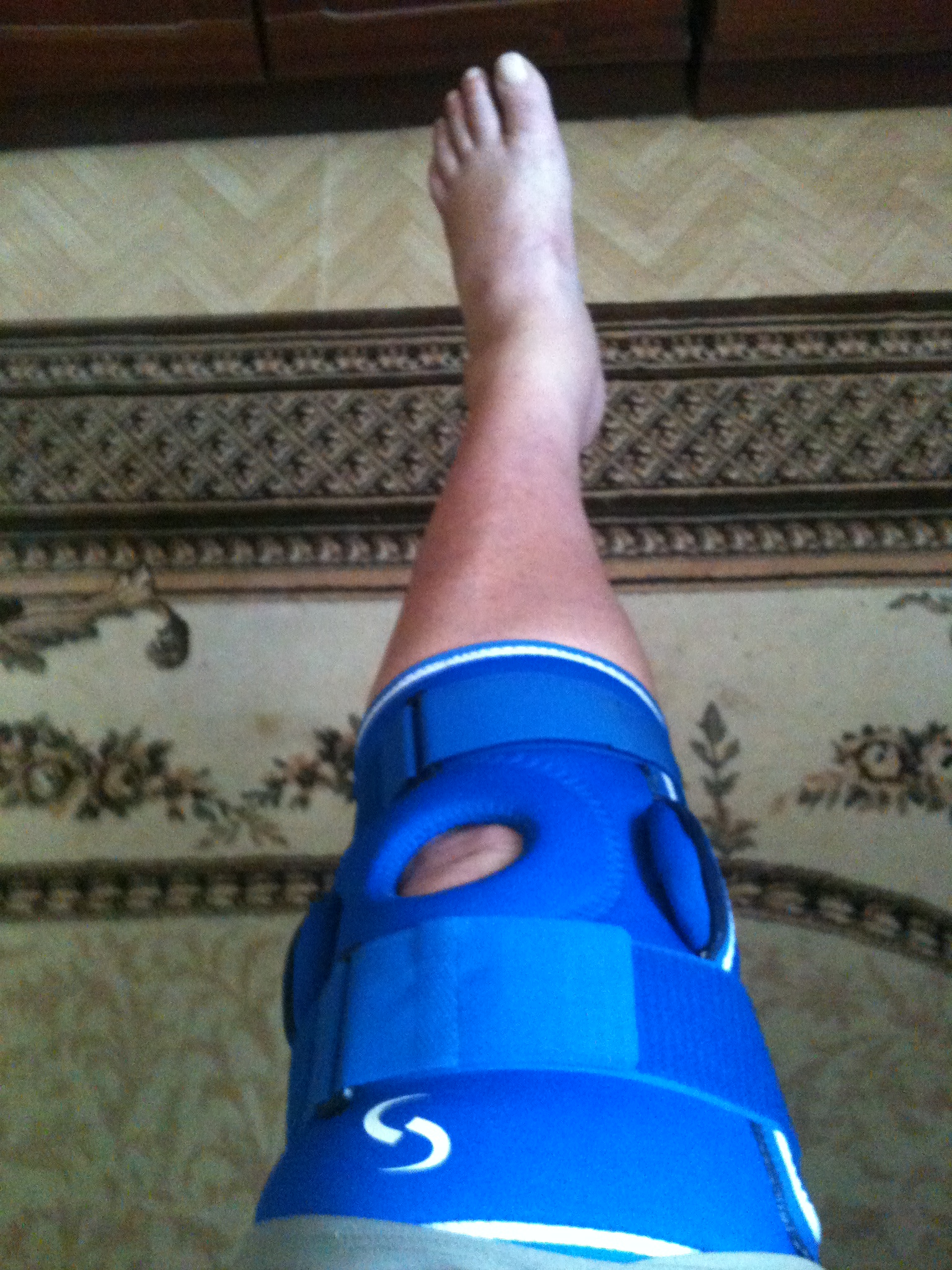
In that way that a niggling irritant will steadily blow itself into obnoxious proportions in seeking the spotlight, I have had to bow down before the increasing tantrums of my left knee and allow it take center stage.  Through weeks of humping back and forth to school along rocky roads slogging sixteen pounds of paraphernalia, coupled with boogie boarding the aisles of careening rutieras, compounded by an ambitious hike up the crumbling, Soviet-era, one hundred and seventy three steps (I counted) linking my home and a picturesque lake in my new village, I’ve managed to create quite a diva out of this joint.  It sends shooting pains up my thigh at night, rumbling into a dull throb in the morning that climbs to a screeching glissando of pain after ten or twelve hours of the above listed activities.  I finally went to see the PC doctor, who set the wheels in motion that will all but ground me for the remainder of Pre-Service Training.  I did not see this coming.

What I did know was that I would be walking.  And walking, and walking, and walking, everywhere while in the Peace Corps.  So I began walking, almost from the moment I began filling out the application.  The furthest I ever went in a day was 10.12 miles; I routinely went four to five without breaking a sweat.  I was hiking rough trails in the Fullerton and Tustin hills at least four times a week. (Okay, I will confess to slacking off slightly towards the end when it got up into the upper 80’s in Fullerton, which is quite balmy weather for me now.) Not one knee problem through it all.  I did not see this coming.

My second week here I tripped on the tiled stairway inside the PC offices and went down smack on my knees.  (One of the stairs is slightly higher than all the others causing one to miscalculate in clearing it going up and land heavily when going down; everyone knows this and many people have taken their own spills.  The HR professional in me wants to run screaming through the halls at the liability potential. Oops.  That’s right, I’m in Moldova.  No one cares.)  According to the PC doctor, this “triggered” an underlying problem with cartilage wear and compressing space in the joint.  What’s this: a pre-existing condition that I did not note on my medical application?  Mostly because I didn’t know about it, Doctor. (I guess the Peace Corps needs to take precautions against the middle-aged uninsured who sign up for two years of service in a sweltering country without pay with the sole aim of getting their blown out joints fixed for free?)  The pre-existing clause causes an issue in gaining authorization for any kind of expensive intervention, like arthroscopic surgery, for example.  What is authorized is three weeks of house arrest, a strong anti-inflammatory, a hulking knee brace that mysteriously increases my overall body temperature by at least five degrees, and a combination of physical therapy and ultrasound to excitedly anticipate in the coming weeks.  I couldn’t be more thrilled.

The thing about my situation that sucks the most is that I’m stuck in the middle.  All the older folks (60 and up) have already HAD their knees done, so they are all springy and sly with surgically-conferred youth.  And of course the kids still have their knees, which they torture quite regularly with the blithe disregard of youth,straining and popping them in strenous soccer matches only to appear dewy fresh and mysteriously healed the next day.  Me? I am just beginning the long, slow decline into better acquaintance with orthopedic surgeons, MRI’s and Latin terminology, which I’ve quite creatively managed to accelerate in my forever ambitious manner.

Oh well.  Perhaps it is my devious little daemon taking action, zealously guarding my thirsty need for time. Time to read, time to write, time to sit and gaze dreamily into space; time that isn’t filled with the recitation of new nouns and verbs and propositions or downloading safety information, rape prevention tactics and other obviously, DC-formulated policies and procedures or listening to PCVs and administrative coordinators and program managers prepare us up down and sideways for any anticipated occurrence which could rattle our now somewhat tenuous hold on the idealistic convictions that landed us here.

PST is lasting too long and the diva knee is asserting her potent will.  Other than mornings spent in language class (which I am insisting on attending for my own sake) I have now gained about ten hours per week back for ME.  Perhaps my joints are not so bad, after all.

Undercover angel


Sofie at the bar with Leslie and Jan


So it suddenly occurred to me that I may have been spending too much time in a huddle.  Perhaps that’s what’s making me suddenly weak in the knees.  I’m not really that social, after all.  Oh yes, I enjoy my friends – hugely, mind you – but we tend to get together in delineated doses.  For sporadic adventures that are time limited.  We know when enough is enough and we all go home to our separate, largely tranquil domiciles (not those currently raising children, granted, but you all should have started earlier like me.)


I just recognized that I have been conducting my life amid a cacophony of other people’s noise – wending my way through their random thoughts, spontaneous opinions, toxic complaints, silly exuberance, and fill-in-the-blank musings.   I’m not used to it.  For the last eighteen months I’ve been largely alone or with one other being at most (Zoe and Mike alternating as my sidekick, depending on the hour of the day.)  I haven’t had to make small talk or be accommodating or smile for no reason in particular in a long time. It’s tiring.  On top of all the other challenges presenting themselves for attention at my doorstep.


For the last few days I’ve been bowing out.  Going home instead of hanging out, skipping the mentor picnic today, bailing on the US Chambers of Commerce All American BBQ tomorrow.  I just don’t feel like chumming up with more Americans.  Time to meet Moldvenii.  Become part of a new culture. Lose my all-too-American identity.  I want the culture and the differentness to wash over and engulf me.  I didn’t come here intending to bring the US with me.


Assimilating a new identity and taking on a new mission soon…


A beautiful meditation

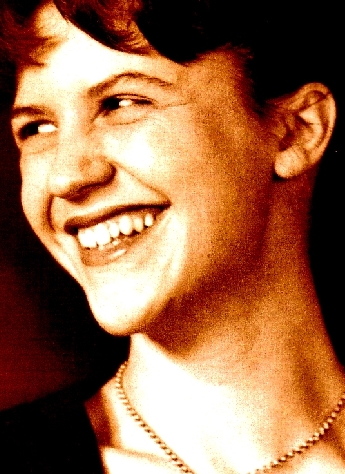
Sylvia Plath

I ran across this on Brain Pickings today:

I love people. Everybody. I love them, I think, as a stamp collector loves his collection. Every story, every incident, every bit of conversation is raw material for me. My love’s not impersonal yet not wholly subjective either. I would like to be everyone, a cripple, a dying man, a whore, and then come back to write about my thoughts, my emotions, as that person.* But I am not omniscient. I have to live my life, and it is the only one I’ll ever have. And you cannot regard your own life with objective curiosity all the time…

Sylvia Plath was 18 years old when she wrote that in her journal.  What a beautiful meditation on resiliency, curiousity, and embracing life whole heartedly.  It inspires me.

Twinkle, Little Star

This morning I opened my email and discovered a 41-page document from the Moldovan Community Organizational Development (COD) Program Director outlining the goals, strategies, and outcome measurements of the Peace Corps relative to its in-country community collaborative partnerships.  It is a comprehensive, coherent and detailed document that goes a long way toward clarifying what I will be doing for the next 27 months.  With all the excitement and bustle of shopping, packing, and making the rounds of goodbyes, I almost forgot that I will actually be working for the first time in almost two years.  Predictably, the insidious doubting of my own abilities and skills started snuffling round the perimeter of my thoughts: “Can I really be of service to a community of people with a completely different culture? Political and social environment? Economic obstacles? Language?”   I slap down this unwarranted disbelief in my own experience and history as the debilitating and ennervating soul-sucker it is – I must believe that I can or I have no business getting on that plane next Monday.

My good friend Stacy, who worked alongside me at Canyon Acres as the CFO for almost 15 years, recently began working at a new agency.  I remember how nervous she was, thinking that her experience at Canyon Acres had been so insular and particular that she might not have anything substantive to offer her new employer.  After her first two weeks, however, I received an email from her detailing the many meaningful tools and insights she was bringing to the table and how appreciative her new employer was.  Most of all, however, she surprised herself at the true value she was able to impart to this new organization.  I always believed in her – I knew how much I relied on her wisdom and experience in my own professional endeavors.  But, like her, I have a hard time acknowledging the gems in my own treasure chest. I keep the lid shut tight and refrain from assessing my own worth.

Why is it that we women, especially, tend to minimize our effectiveness and value outside the realm of our immediate comfort zone?  Most of us refrain from blowing hard on our own horn, downplaying our particular gifts and skill sets in favor of deferring to the overall effectiveness of the team or group or department that garners our allegiance.  While this quality girds our ability to integrate easily into collective endeavors, it can also detract from our individual sense of self-esteem and cause us to shrink from challenges that may highlight our own specific talents and abilities.

Of course I don’t want to generalize this observation too broadly: in my professional capacities I have worked with a handful of women who were very self-assured and competent and not at all reticent to shine a light on their own accomplishments.  Interestingly enough, however, these women tended to rise quickly to the top of their organization and color the very real successes of their collective efforts solely as testaments to their managerial, mentoring and leadership abilities.  There seems to be too few of us able to comfortably reside in that fuzzy territory between acknowledging our own contributions and celebrating the accomplishments of a group.

I look to my Peace Corps service as a vehicle in helping me reach that place.  While the Peace Corps itself is a bureaucratic  governmental entity drawing on multiple resources and capacities to accomplish its goals, its particular structure lends itself to identifying, clarifying and focusing the individual skills and experience of its volunteer work force.  There are no standard jobs that PCVs are slotted to fill; each posting reflects the assessed, time-limited needs of a particular community being matched with the skills and experience of a particular volunteer.  Usually, we do not replace or repeat a former PCV’s role in any given project (English teachers are one exception;) each one of us is expected to discover and define a unique service, defined by our own histories, talents, and accomplishments, that we can offer a public administrative body or non-governmental organization collaboratively seeking to build its capacity or strengthen its infrastructure.

Admittedly, our individual stars will be mere pinpricks in the spangled firmament of US foreign aid and intervention, but I hope, after my two years is over, I can feel confident in the genuine light I’ve brought to one little corner of this world.  While I will have a great deal of support and guidance in accomplishing my goals and objectives, in the end the measure of my effectiveness will be largely attributable to my own creativity, motivation, and efforts.  I will be on my own a great deal of the time, working within a strange environment to facilitate the goals of a foreign community to capitalize its internal resources.  In doing so, I hope to accomplish much the same for myself.

Absolute Audacity

This week I ran across the blog of Steve Fabes, a thirty-one year old London doctor who is cycling the length of six continents, a feat which he estimates will take him about five years. With no support team or companions, he relies largely on donations and the generosity of the people he meets along the way. Starting in January 2010, he has now logged over 30,000 kilometers (roughly 18,600 miles) and is currently riding through Chile, his 29th country visited.  His most significant mishap to date has been a “joint mouse” (a torn bit of cartilage) wandering around his left knee which necessitated a brief return to London for surgery three months into his journey.

I hope a big “wow” is filling up your brain at this point, too.  Can I just say that Steve is a perfect example of the kind of people who floor me?  Whenever I get just a wee bit full of myself, thinking about how daring and brave I might be in chucking it all to join the Peace Corps at fifty, invariably I run across the exploits of people like Steve, whose absolute audacity and verve in tackling the adventure of life just stuns me.  Here is a man who has already been to medical school, cycled the length of Chile with his brother when they were just seventeen and nineteen, traveled to India, East Africa, Iceland, and Eastern Europe, climbed mount Damavand in Iran, and enjoyed a side career as a popular hip hop DJ while completing his residency.  All before he turned thirty.  If there really is such a thing as reincarnation, I want to come back as Steve Fabes.

I know there are some of us who never want to leave the comfort of the familiar, choosing to live out our allotted years within the same state, or county, or even city where we were born.  We form deep friendships and enjoy solid connections within our communities. Buying our first house, we plant a tree, hopeful that it will shade grandchildren playing in the yard years hence. We come to know the lay of the land – or the grid of the freeways – like the backs of our own hands.  A profound sense of rootedness and belonging is gained by remaining in the environs that cradle one’s history and memories and traces of people long gone.  This is a lovely life to live; I do not disparage it.

But for me, I’ve spent alot of my energy tamping down the niggling suspicion that I built this kind of life from my own fears: fear of the unpredictable, the unknowable, the uncontrollable.  What if I got cancer and had no insurance?  What if I lost my job and didn’t have a safety net?  What if the stock market tanks (again) and I lose my retirement?  What if I was blinded by lightening and couldn’t fend for myself anymore? What if I trusted in the abundance of life and it short changed me?  Those “what ifs” are real and profoundly unnerving and they serve to keep people like me toeing the line, hedging our bets, buying insurance, feeding our IRAs, investing in real estate, and keeping the machinery of civilization churning onward.  But somehow, they don’t stop people like Steve.  Or Daniel Suelo or Zero Dean.

Perhaps my time in Moldova will serve to embolden me.  Perhaps this is the first baby step toward the future I once imagined for myself when my parents dropped me off in Humboldt at the tender age of nineteen, wild with imagination and audicity and verve, possessed of no friends, or family, or history, or job, or plan (I failed miserably, by the way, but had a heck of a lot of fun before I ran home.)  Perhaps I don’t need to wait for another reincarnation to step boldly into the stream of life and immerse myself completely.  Stay tuned, folks…

Is today the day?

“I live now on borrowed time, waiting in the anteroom for the summons that will inevitably come.  And then – I go on to the next thing, whatever it is. Luckily, one doesn’t have to bother about that.”

– Agatha Christie

For some reason I think that today may be the day.  The red (?) blue (?) packet – it keeps changing color, according to different postings I read on the Peace Corps website –will arrive in my parents’ mailbox today.  A packet of paper has been wending its way through the post office process: in a huge plastic carton leaving the Washington DC office; in a truck; a plane; a semi; in a bin waiting for sorting; into a mail pouch slung over the deliverer’s shoulder; along the suburban streets; into the black mailbox posted at the end of a cul-de-sac on the opposite side of the continent from whence it started.  This packet contains the name of the country where I will be living for the next 27 months.  It describes the environment that will circumscribe me –the national language, the mean temperature, the presence or absence of electricity and/or indoor plumbing, the availability of housing, the cost of living, and the components of the local diet.  I will learn about the non-governmental organization to which I’ve been assigned – what city it is in, if there is any other PCV assigned there, what the mission and purpose of the organization might be, how long it’s been in existence.  It is an exercise in faith and hope to deliver your life into the unknown.  And it shows how far down the rabbit hole I had fallen that ambiguity is more attractive to me than the knowns of the past decade.

It’s in the anterooms of life that one makes the acquaintance of faith and hope.  And, if kept waiting long enough, one can take the opportunity to become their friends.  Strangely, athough I am anxious and excited to get the packet and learn the details of the next 27 months, I feel like I will be happy whatever the paper inside might say.  I have allies I didn’t have before.  I have the patience that being fifty brings.  I can face and thrive in whatever circumstance lies outside the anteroom door.

Wisdom for 50

We must become ignorant of all that we have been taught

And be instead bewildered.

Run from what is profitable and comfortable.

If you drink those liqueurs

You will spill the spring waters of your real life.

Forget safety.  Live where you fear to live.

Destroy your reputation, be notorious.

I have tried prudent planning for long enough.

From now on I live mad.

– Rumi