There’s a certain slant of light,
On winter afternoons,
That oppresses, like the weight
Of cathedral tunes.
Despite being an English major, I was never adept at memorizing or effortlessly espousing appropriate verse at opportune moments to charm or impress a casual audience. Yet that one line remains embedded in my brain, surfacing at unexpected moments to perfectly contain the feeling that a certain slant of light so exquisitely conveys.
Unlike the inimitable Emily Dickenson, however, the poetic rapture that assails me is not confined to a particular season; today it surprised me during a mundane commute between Chișinău and my village as I sat wedged into a too-small seat (why am I so much larger than the average Moldovan?) listening to a genius mix of Toni Childs while balancing two bags on my origami-ed knees.
Had I not seen this same 20 km stretch of Moldovan countryside at least 30 times in the last two months? Why – suddenly – did the view seem choreographed for pleasure, softly speckled with shoots of infant grass below waving wands of wheat? Lake Ghidici – iridescent blue! Glimpses of moldering concrete blocks and weather-worn factories, transformed into marbled reliefs. Liquid gold melding fragile, newly sprung leaves into pulsing halos around the stark white trunks of birch trees. Rays of sun, frosting, plating, caressing, everything in their path. Sky, sky, sky – freckled with cottony adornments – spreading luxuriously over rolling hills of plowed, darkly fecund earth.
SPRING! This is spring, I think. Never before have I encountered her subtle, enchanting beauty, full force. Southern California, where I’ve lived most of my life, is a study in variations on a theme: sun, sun, wind, a sprinkle of drops, sun, sun, a few paltry clouds, sun, sun, fog, a pathetic mist. Sun, sun, sun. Always, boldly up above, overhead, in charge. Never surreptitious. Hardly ever slanting.
But this was a flirtatious light beckoning me. A hint of warmth to come. A feathering brush of shimmering paint, coating the landscape. Coy. Suggestive. Enticing.
And in that moment, revelation. I had made it, survived the cycle: Summer – stumbling trainee, dazzled with vertigo, wilting in the humidity and overwhelmed by the sheer unexpectedness of where I’d landed; Autumn – falling into routine, struggling with language and a new home, job, roommate, friends; Winter – the loss of all I had tentatively constructed, parsimonious sun begrudgingly meting out fewer and fewer hours of daylight, hibernation, confusion, doubt.
And now Spring. A new beginning, at last, sure and clear. Moldova, clothed in a gown of green and gold, had finally extended a warm welcome, basking in a certain slight of light.
Heavenly hurt it gives us;
We can find no scar,
But internal difference
Where the meanings are.
I give this to you as a great example of that certain slant of light in the countryside and a perfect four-minute container of what life is like in Moldova. I have been to many of these places, met these same kinds of people, danced these dances, sang these songs. Moldova is beginning to grow on me…
Today I was interviewed by an evaluator from the Peace Corps’ unit of the Office of Inspector General. She was a lovely, vivacious young lady (apparently a little older than she looked as she had appreciable previous experience in the private sector prior to Peace Corps.)
For those of you dying to learn more about what the OIG does in relation to Peace Corps, click here. Brief summary: she and another evaluator are visiting Moldova for three weeks to interview staff members and a select group of PCVs distributed across location, gender, age, program, marital status and a few other categories. The OIG evaluators (not Peace Corps Moldova) select the group members and through their interviews gather information related to PCV experiences in training, host family interactions, health and safety issues, project development and community integration. I feel fortunate to have been selected, not only because I genuinely appreciated the interest in my feedback and perspective, but because it opened up a potential career path that I never knew existed previous to today.
In the course of our conversation, she mentioned visiting Turkmenistan, Indonesia, Liberia, Ghana and Peru during her four-and-a-half years of service. I didn’t ask for a listing of all the countries she has evaluated, but she did say that a typical year included 3-4 discreet site visits. She is based in Washington DC and also conducts human resources investigations from there. As I listened to her, I was struck by the relevant job skills I already have that would translate well to this type of position.
I have been wrestling with my desire to continue working with Peace Corps after my 27 months of service ends, but have been hesitant about taking up residence for five years in a country I would not have much input in selecting (if I was even selected, mind you!) My wanderlust has been piqued, rather than quelled, by this taste of overseas living; but I still miss the comfort and familiarity of American culture and the close relationships I enjoy with family and friends at home.
To have a job which entailed extended visits to Peace Corps sites for in-depth conversations with Peace Corps Volunteers and host country staff for the purpose of evaluating and influencing the efficacy of Peace Corps programs, interspersed with significant time residing in one of the more vibrant and fascinating cities of our nation, sounds like a perfect melding of my mixed desires.
Just a heads up to those of you who might have interest in pursuing this, or other, types of work with Peace Corps: there are many jobs that don’t require prior experience as a PCV. You can learn more about them here.
For me, synchronicity and circumstantial happenstance have been pretty reliable signposts for considering the next direction to take on the path of life. They do say things happen for a reason…
Fair warning: Not entirely unlike my others, but certainly to a greater degree, this blog is entirely self-involved and navel-focused. If you generally read my postings while half asleep, this one will put you there in no time. If you’re in a really good mood, you should probably put off reading it for another day. If your bored already, it just might do you in. There are no beautiful pictures or entertaining anecdotes to amuse you. How’s that for putting off any potential readers? But of course, I’d appreciate the audience anyways….
You know how it is when someone (usually a parent or spouse or sibling) tells you something that you feel like you already know and you kind of nod your head and simper, trying to look attentive and appreciative, but inside you’re saying:
Got it covered. I’m capable!
Okay, come on now, we both know I’ve been alive for more than two decades, for pete’s sake!
I know this already. I know this already. I know this already.
Really? Do you imagine I’m that stupid?
I grew the ef’’n turnips this bloody truck is sending to market, give me a break!
or some other such permutation of narcissistic arrogance? Such is the case with most of us potential PCVs who scan the provided literature, nod our heads sagely, and then proceed to jump up and down with enthusiasm and glee before eagerly putting pen to the dotted line. Of course there will be frustrations and the need to adapt and periods of ambiguity and challenge, but it is all part and parcel of the grand adventure and the mind-altering journey and the uplifting opportunity to be of service and the blessing of subsuming humbly to a greater good….of course I can handle it! I am Ghandi and Mother Theresa and Martin Luther King and Albert Schweitzer and Sargent Shriver all bundled up in one tidy little package, ready to be shipped overseas!
Yeah. Let’s talk about that.
See, this the thing that I’ve come to believe about us Peace Corps Volunteers. If you look real close, I bet you might find many of us (not all mind you, one can never generalize to that extent) to be hyper-inflated, self-engrossed, experience-greedy, over-achievers masquerading as retro-liberal, greater-good-minded, altruistic missionaries spreading peace and friendship. The Peace Corps is a relatively difficult organization to join, given the lack of motivational pay and impoverished living conditions that must be endured. The big prize you get is the untarnished badge of courage. You immediately and effortlessly earn the gaping admiration of all of those back home who sing a chorus of wonder at your bravery and selflessness. How can you do it, they ask? Leave friends and family and the comforts of home to strike out for the great (unwashed) unknown? What a saintly soul you harbor in your humble breast!
And soon, you imagine, you will be in the position to gratify their approbation by sharing swashbuckling tales of humanitarian magnitude: how you single-handedly assisted the overworked midwife delivering a baby in the fly-specked hut; constructed stout sewers to port away disease-mongering filth; funded innovative treatment plants to make the village water safe; plaited purses from gum wrappers to help domestic violence victims achieve economic independence; built schools out of mud and straw to educate the next generation and hospitals to treat the discarded and greenhouses to feed the hungry and windmills to power it all, and oh, by the way, taught English to would-be social entrepreneurs in your spare time, all the while knowing you were icing your resume and weaving a global network of potential partners and acquiring powerful contacts in embassies and international NGOs to assist your ultimate goal to travel the world and live in exotic locations on someone else’s dime.
Except when you can’t. Because you haven’t done anything to merit even the smallest bragging rights that you assumed as your entitlement once you debarked the plane.
Ok, I probably sound cynical. But you’d be surprised. Or maybe you wouldn’t Maybe it’s an unaccountable naivete that has heretofore blinded me to the self-aggrandizing ends that serve to motivate some of the best work done in this world. Poftim.
Something inside me has always impelled me to achieve, at times without a larger purpose or vision, but always to prove that whatever I undertook I could accomplish well. I don’t know if it was the oldest child syndrome, or a sublimated competitive drive that didn’t get expressed through sports, or just a preference for directed action as an occluding buffer against the persistent whispering of samsara, but I’ve prided myself on my ability to perform above average in most professional and educational circumstances, thereby cementing my sense of self-worth and bolstering other’s opinion of me. (Of course, I didn’t go to Harvard or work for Apple, so my means of testing myself were pretty confined.) I didn’t expect to be seven months into this endeavor with not a damn thing to show for the time but a remedial ability to speak a provincial language and a healthy case of psoriasis. Here I am, an unremarkable thumbnail (in the immortal words of Sue!) on the Peace Corps’ global screen of achievements. There are many, many other (most, much younger, I might add) PCVs who are succeeding in ways that I’m not even close to touching at this point. My resume looks pretty bland and the address book painfully thin.
At the end of December, my partner left her position with the organization where I was placed in August after my Pre-Service Training. Because Peace Corps assigns volunteers to a partnership rather than an organization and because, for a variety of reasons, there was no alternate partner for me there, I had to leave, tail between my legs, along with her. The time preceding this ignominious, inconclusive end had been fraught with frustration and inaction. Our hands were tied on so many levels that we faced the impending train wreck like helpless maidens forsaken on the rails by a faceless agent of doom. Fortunately, I had a two week vacation scheduled just about that time which provided a needed (and very pleasurable) measure of distraction, but since the second week of January I have been sitting in my room, trying not to dwell on my ineffectiveness by watching movies, reading books, snacking more than I should, and avoiding YouTube videos that could be teaching me how to knit. (This last activity just seemed to be too sad, launching me into full-fledged spinsterhood WAY before my time.)
The experienced PCV will tell you that winter is a period of hibernation in Moldova: from the beginning of December through mid-January, there are a steady series of holidays that mandate a great deal of eating, drinking, and dancing, but after that most Moldovans hunker down to wait out the cold and the snow. In contrast to your typical Americans, who greet the New Year with to-do lists, grandiose resolutions, new cookbooks and expensive gym memberships, Moldovans seem to accept Mother Nature’s cyclical guidelines and slow down their activity levels during these frigid months. Hence, it is not the best time of year to go foraging for a new partner.
I have received much good advice from those who have been here a year or two longer than me. “Slow down, take it easy, appreciate this time of reflection. Let go of the compulsion to be so American, the need to do, do, do. Learn to follow gracefully the seasons’ lead and relinquish frenetic energy to these meditative months of withdrawal and inactivity. And this is very good advice. (Remember that head nodding and simpering?) Advice that I imagine will be much easier to apply once I have another year under my belt and can reflect back on a spring, summer, and fall replete with a small successes, challenges overcome, and the fruits of my labors gleaming, plump and robust, in the storehouse of memory.
I find that I am not productively managing the acres of empty hours stretching before me. While part of the incentive for joining the Peace Corps, believe it or not, was the thought of those empty acres that could be cultivated with writing and journaling and blogging and researching publishing avenues for the next generation Eat, Pray Love that I intended to compose during my time here, the tillage period has proved to be never ending and the seeds of experience are slipping through my fingers like sand. I can’t grasp onto anything tangible to prove my mettle or worth, have produced nothing remarkable or noteworthy, haven’t had an iota of lasting impact, and the friends that I made have scattered in the aftermath of the events that blasted me from my site.
Perhaps it is more that I feel guilty. As if, like the proverbial grasshopper versus the industrious ant, I have somehow neglected to provide for my own nourishment during these lean times. I am restless and unsettled and have a perennial churning in my gut. The future is uncertain and the recent past a wobbly structure not capable of supporting my current anxieties. Like those fraught filled moments when you teeter at the apex of the roller coaster before heading down, I realize that I put myself on this ride but at this very moment I can’t quite recall why I imagined it would be fun.
This experience is altering me in ways I didn’t consider but probably need. While I am not one to steer my ship by someone else’s stars, I realize now that, after I have plotted my course of action, I typically seek the comfort of external validation before proceeding . This time, for the first time – at 51 years old, no less – I find myself on my own and surprisingly lost at sea. I joined the Peace Corps, received my standing ovation, and now the lights have dimmed and the audience departed and am left in an echoing auditorium to contemplate how minor role my role in this drama could turn out to be.
No one else, not even another PCV, can comprehend my extant situation clearly or advise me on the best course of action or whether action is even possible or necessary. All further lines and plot developments are shrouded in mystery, author unknown as of now. We come into service by ourselves (excluding the married couples) and will need to make decisions and move forward – or sideways or backwards or downwards or not at all – on our own. So this characteristic of mine to think about a problem from every angle, but then perform back up analysis through another’s viewpoint in order to most thoroughly anticipate and manage possible repercussions and outcomes, is completely thwarted here. Plus, I am not able to assuage my need for confirmation of my decisions by others who can be counted on for support and hoorahs.
Seemingly out of the blue, though (but perhaps not,) in response to an incoherent whine about my befuddled mindscape, my brilliant pen pal offered me a bit of sage commentary (completely circumventing my argument above that no one can offer me relevant advice):
Maybe you can’t know ahead of time about any of it. Maybe the best thing can’t be figured out by you with what you know. Sometimes something brilliant comes along that we couldn’t have figured out ourselves, and in fact we might have shunned as a lesser choice. And it turns out that the universe, or whoever, knows more than we do. Are you able to let go, relax, and just see what happens?
I find myself mired in circumstances that I don’t have much control over, but maybe that’s the point: these are circumstances I don’t have much control over. I am not able to consume myself with planning and strategizing and plotting and thinking and being brilliantly proactive in anticipating every nuanced outcome, then parading my analysis before my peers for applause and approbation. At this point all I can pretty much do is throw my hands up in the air and yield to the organ-unfurling plunge. Hopefully, the ride will turn out to be as amazingly mind-blowing as I once was so certain it would be. Meanwhile, my mental furniture is being forcibly rearranged and refurbished by concepts that I would never imagined entertaining previously. Like age and experience doesn’t always equate to an advantage in any given circumstance. Or that logic and reason can effectively inoculate one against unexpected fall outs. That the virtue that develops from patience is not one of one of spiritual calmness enveloping frustrations in a soothing blankness and calming worries to sleep, but the protective, hide-like callous born of constant friction, irritation, and sometimes pain that allows you to endure without seeking surcease from the torture.
So the one blessed thing for me right now, I’ve suddenly realized, is that I have created this megaphone to scream through when I need to, this outlet for stultified activity, this navel-gazing blog – my somewhat ironic tribute to the third goal of Peace Corps: Helping promote a better understanding of other peoples on the part of Americans by complaining. And through that process I have received so much unexpected support, encouragement, empathy, and love from people back home that I feel like I have a virtual bridge I can walk across online anytime to seek out a hug when needed. I am so blessed. Not by what I’ve done, but by what I’ve received.
And maybe the Peace Corps experience, in the end, will prove to be an exercise in developing and formulating better Americans, both those that go and those who witness and encourage them – despite all the setbacks and disappointments and early terminations and unrealized expectations and unattained goals – from home. Maybe it’s good to know and to experience the fact that we – dare I call us a land of hyper-inflated, self-engrossed, materially-driven, over achievers masquerading as the world’s superhero? – cannot and therefore should not attempt to make over other countries and peoples in our own rather distorted image. Maybe this journey is about humility after all, about NOT succeeding, about being at the mercy of forces outside of our control and still doing one’s humble best to influence them for the better and smile during the process. Perhaps I need to take a back seat and just shut up and enjoy the ride.
I certainly hope that I am providing some measure of insight into this journey to others whose bravery and courage is not set on a global stage, but is attained through less visible but no less remarkable endeavors closer to home. My own process of self-discovery is revealing how thoroughly and completely American I am, through and through. And that is neither a wholly positive nor irretrievably negative attribute. But it does color what I choose to attend to, the depth and volume of that attention, and what effect it may have on its object. With half my life already lived I realize that there are aspects of myself that I have never met – unexamined expectations, assumptions, limitations, and aspirations that might be better served with a dose of patience. Teach me, Moldova. I think I’m finally ready to let you drive.
PS: And to all of you prospective volunteers out there reading this blog in hopes of getting an edge on what the future holds, let me just reiterate what you’ve already been told and probably passed over blithely a hundred times already (and will not absorb any better this time either, because you just can’t.) You won’t know what it’s like until you do it and you can’t prepare for it ahead of time because no one can describe the exact circumstances that are even now conspiring to thwart your thralldom to Peace Corps and undermine your determination to be THE best volunteer ever who never complains or sees anything but the positive and describes her 27 months of service as the nexus of all that she aspired to be and learn in this world during the press interview for her surprise, runaway bestseller. But do it anyway. And bookmark this posting, because after you have confronted and endured your own thousand foot drop I’d love to hear how scary/mind-altering/exhilarating/humbling/educational the ride proved to be. Let’s compare notes and celebrate surviving the Peace Corps roller coaster!
Today, in the course of a conversation between a German consultant visiting my center and my partner, the notion of a “Potemkin village” was used to illustrate those aspects of Moldova that can be so misleading for foreigners who try to understand how life works here. My partner had never heard this term, so we related the story (which experts now claim to be myth) of Potemkin erecting only the facades of settlements along the banks of the Dnieper River in order to fool Catherine II during her visit to Crimea in 1787; Potemkin wanted her to experience the area as more densely populated, flourishing and productive than it actually was. Oddly enough, my partner seemed to have trouble understanding the point of the story, almost as if it was perfectly natural for a government official to perform this sort of manipulative trick to impress a powerful benefactor. Such is life in Moldova.
Earlier this week, I received a request to relate the more mundane details of my weekly routine: what do I actually do here from day to day, what is my environment like, who do I encounter and where do I go? And as I thought about responding to this query, it occurred to me that my days are full of these Potemkin villages – the contrast between what is available to me as a Peace Corps volunteer versus what ordinary Moldovans can access; the wide range of locales that I visit and the varied people that I meet in my work and through the Peace Corps. Nothing is really as it seems, and all it takes is a scratch to the gleaming, brightly hued plastic surface to see the iron and rust lurking beneath.
Five Days in the Life of a Potemkin villager
Day 1:
I awake. Lindsey, a fellow volunteer now living in another village, has spent the night for convenience sake. She and I do a language lesson together on Wednesday mornings from 9-11 with our tutor, using the opportunity to converse with each other and receive immediate feedback on grammar and pronunciation. Peace Corps will pay for any volunteer to receive up to 12 hours per month of professional tutoring in Romanian or Russian, depending on the language needed for his or her assignment. I take full advantage of this and it is definitely one important way that Peace Corps invests in local economies throughout the country.
My tutor’s apartment building behind the billboard.
After my language lesson, I literally cross the street from my tutor’s third story apartment to my center. My partner, the center driver and I depart immediately for the Chișinău airport to pick up a consultant flying in from Frankfort, Germany. We negotiate the snow and ice and arrive at the airport prior to his plane landing, so we wander through the shops and restaurants in the small but modern airport that I barely remember seeing when I arrived in a stupor at the end of a 36 hour journey last June. There are many officials going in and out of various doors in full fur coats and leather boots, looking important and fully occupied. There is large Christmas tree decked in splendid regalia on the second
Chisinau airport – exterior
floor and the aroma of brewing coffee and yeasty breads fills the air. Puffy children in pastel hats, mittens, snow boots, and parkas waddle about like mini-marshmallows. (No one wants to peel off layers of buttoned, zipped, velcroed and snapped clothing for such a short amount of time. They are so adorable I want to eat them.)
Chisinau airport – interior
I use the notepad on my iPad to write the German consultant’s name in big letters. My partner and the driver are entranced by the invisible mechanics of such a thing, fascinated that my finger can bring forth words on a screen. They peer at the letters closely and giggle.
Once having obtained our German, we depart the airport and are soon winding through a maze of twisted, pot-holed streets in the outskirts of the city. I realize that this is not the direction home: “Unde mergem?” Where we are going, I ask. “Scuzați, Yvette! Mergem să cautem brad am vazut pe internet ieri.” We’re going to find a Christmas tree my partner saw on the internet yesterday. Not at a store, mind you. Somewhere in this nest of crumbling apartment buildings someone has offered a tree for sale. So the German and I are left in the van to become buddies while my partner and the driver begin a lengthy search on foot for the tree. I try to explain to him that this is normal in Moldova – one maximizes trips into the city by performing a multitude of tasks when there. He nods sagely and relates that much the same is true in India, Afghanistan, and Kazakhstan, places he has visited for work on a multitude of occasions. I am oddly excited to have Moldova lumped in with such exotic locales.
My partner and the driver eventually emerge with a green stick that, upon closer inspection, proves to be an artificial Christmas tree. It possesses four or five bent, sparsely-leafed branches and has definitely weathered its share of holidays. Sigh. Even developing countries have fallen prey to Christmas plastic.
Day 2:
I spend the day attempting to negotiate the niceties for our German guest. He needs to change money, so we drive him to the nearest ATM (which is literally a block away, but no one walks in Moldova if the luxury of a “mașina” is accessible.) It takes three attempts for him to understand how to operate the machine. Meanwhile, it has begun to snow. He wants to stop every few steps as we head back to the car to finish telling me a story – his wife has admonished him not to walk and talk simultaneously when it’s icy. I am freezing and I can see my partner sitting in the front seat of the van wondering what in the heck we’re doing.
After retrieving money from this thoroughly modern convenience (accessible in Russian, English, Romanian, and French,) we drive to the local indoor piața to buy food for the dinner we are hosting at the center to celebrate its year anniversary and search for the cinnamon that the German wants for his breakfast toast. There we encounter entire sides of beef, legs of lamb, livers, tongues, chickens with feet attached, and fish complete with heads, scales and fins. Mounds of homemade cheese (called “brinza”) balance atop rickety wooden tables next to recycled plastic bags replete with unshelled walnuts, dried fruit, wrapped candy (manufactured in Moldova), and two liter water bottles refilled with milk. Bare, bloody hands transfer meat from table to scale to bag. Nothing is sanitized, inspected, or refrigerated, but – since it’s probably only 30 degrees – I tell myself I will not be concerned. Vagabond dogs wend through the table legs nose to concrete sniffing for scraps. Men are smoking in clusters around the meat and fish; their ashes pepper the swirling currents of air. At least its winter so there are no flies. Needless to say, there is no cinnamon.
Day 3:
My center
During a feedback meeting with the German in the afternoon, my partner begins to cry. The beautiful façade of our center with its brightly colored murals, ergonomically-correct high chairs, handicap friendly bathroom, frothy curtains, and cartoon stencils is suddenly peeled back to reveal the seething cauldron of problems that sources her daily tears. After listening for an hour or two as I attempt to translate and summarize the various administrative and funding dysfunctions besetting the center, the German proposes the very same list of solutions that I so eagerly proffered mere months ago. He is met with the very same stubborn rebuttals and intractable arguments that were shoved back to me.
I explain to him that this Moldova; we are both liberally-educated, professionally-networked, culturally
Lyrical ode (in Romanian) to the hope and joy that children bring
privileged, westernized people using our analytical skills and inherent activism to tackle issues that have arisen in a foreign environment, that were born of a much different experience and informed by perspectives we don’t share and will most likely never understand. I see his shoulder sag subtly as he begins twisting his hands in his lap. God, I know the frustration he is feeling, mind scurrying from scenario to scenario, trying to find the invisible thread leading out of this tangled web back to sanity. I want so badly for him to find it where I’ve failed. Sadly, at this point I don’t hold out much hope.
In the evening I am invited to a masa at the lovely home of the second Angela – friend of the first Angela whose house I went to two weeks ago. I am amazed at the architecture: one enters into an intimate, cozy kitchen/dining/living room combination – a miniaturized version of the “great rooms” now so popular in American homes. The center is stabilized by the highly polished trunk of a tree that was culled from their property. The cabinets are all fashioned of a reddish, blond wood with glazed glass inlays and ornate handles that could have come from Restoration Hardware. Other smaller, sturdy trunks support the plastered ceilings of her and her husband’s bedroom, which they share with their 7 year old daughter until the time when their son, 18, is ready to move out and free the second bedroom for her. The bathroom sink is a shallow, smoky glass bowl, the shower fashioned from rough stones also plucked from their property. Angela is pleased that I shower praise on their creation that they designed and built themselves; “Most Moldovans just don’t get it,” she tells me, wryly.
The meal is hearty, the wine plentiful, and the conversation lively. I don’t get home and tucked into bed until well after midnight.
Day 4:
I arise at 5:30am, having lain awake for an hour already dreading the task ahead. I have to dress and ready my baggage for an overnight stay in Chișinău. I am attending the International Women’s Club of Moldova’s annual Winter Bazaar in order to sell Christmas cards, candles, and velvet bags fashioned by my center’s staff to supplement the meager cash they have set aside for the children’s holiday party. While I enjoy being in the capital once I’m there, the journey is fairly long and tedious. It is still dark and very cold when I leave the warmth of the apartment at 6:50am. Negotiating the steep, ice slicked asphalt of the driveway leading to the street, my feet slip out from beneath me and I land forcefully on my butt, driving the wind from my lungs.
At 6:55 I board the waiting rutiera that is scheduled to depart at 7:00 as I have planned to meet another PCV at 8:00am. I am the sole passenger. The driver and I converse about the difficulties of learning languages; he commiserates with me about the mishmash tongue that is loosely termed ‘moldovanești’ – an amalgam of Romanian, Russian, and Ukraine words that is variously spoken in the majority of the small villages. Peace Corps teaches us the proper version of Romanian, but this does not often match up with what we encounter at our sites. The further you travel from Chișinău, the greater the deviation from textbook style.
Many weeks ago, I discovered a well-organized (by Moldovan standards) website, autogara.md, which provides a comprehensive list of the departure and arrival times for buses traveling throughout the country and into Romania and Ukraine. I was so pleased – a schedule! I didn’t have to wander aimlessly up and down the street waiting for the right bus to appear. Instead, I can tear myself from the comfort of the apartment mere minutes prior to departure. The rutiera I have boarded, however, does not end up pulling out until 7:25, five minutes later than the scheduled time for the next departure of the day; only two more passengers have boarded in the interim. I know that I won’t make it by 8:00, but we Americans are smart by now: we pad in extra time to all appointments to account for the vagaries of Moldovan public transportation.
MoldExpo
The Winter Bazaar is held at Moldexpo, a thoroughly modern exposition complex on the outskirts of the city. There are over a hundred booths, mostly embassies – Chinese, Turkish, Polish, Italian, German, English, American – along with the United Nations, various Moldovan NGOs, and the Peace Corps. Experienced participants know to mob the American Embassy booth early, buying up all the cans of Campbell’s mushroom soup, gallon bottles of Log Cabin syrup, one pound jars of Skippy Omega+ Creamy Peanut Butter and containers of Kraft Country BBQ Sauce before the front doors have even opened for business. Ahhh, American manufactured food – don’t we all just crave it, in spite of ourselves.
This day proves to be one of those disorienting experiences wherein I feel as if Scotty has beamed me up to the Starship America: ten or fifteen PCVs of various ethnicities, genders, and sexual identities are milling about inside the small PCV booth and spilling out into the pathway, transitioning smoothly from Romanian to
Last year’s Christmas Bazaar in MoldExpo
Russian to English while sharing plastic plates of Ethiopan and Italian cuisine, laughing at each other’s jokes, discussing the merits of Northface versus Marmot parkas, and comparing itineraries for upcoming vacations.
In the evening, my fellow PCV, Elsa, and I prepare a luscious dinner of oven-baked chicken basted with Kraft BBQ sauce, accompanied by the left-over Spanish rice she served for Moldovan guests a couple of nights before, and a side of fresh (!!!!) Swiss Chard grown by another PCV as part of his greenhouse project. While we are cooking, her Moldovan landlady stops by to pick up the payment for the electricity. She spends a good 20 minutes parsing out the details of the bill, seemingly striving for a rare transparency in a largely opaque cash economy. The Peace Corps allots hugely generous, mandatory, non-negotiable amounts for utilities and rent within our monthly stipends. Moldovans who are selected as host families or who are fortunate enough to land a PCV tenant most times do their very best to provide a pleasing experience, anxious to retain this steady boon to their monthly incomes.
Day 5:
I arise at 6:40am from the bed Elsa generously shared with me, trying not to wake her. She has slept restlessly for most of the night, waiting for two other PCVs whom she has told can sleep on her floor to arrive. Like most PCVs from small villages let loose in Chișinău on a weekend night, they want to maximize their time and don’t show up until the wee hours. That is the bane of being assigned to a project in the big city. The coveted ability to access a variety of perceived luxuries like bars, restaurants, bookstores, malls, operas, ballets, concerts, and well-stocked grocery stores is balanced with the need to build and maintain boundaries of privacy and quiet time. Having an apartment in Chișinău means constantly fielding requests from fellow PCVs to crash for the night when they trek into the city from far-flung locales. When you have a generous, nurturing soul like Elsa’s, the ability to say “no” is one that must be practiced over and over, despite the discomfort it brings.
Dawn is breaking as I spend a good twenty minutes enveloping myself in tights, body shirt, long underwear, sturdy canvas hiking pants, woolen sweater, scarf, hat, mittens under gloves, and water proof UGGs to brave the outdoors. I heave my pack onto my back and decide to take the stairs, as I doubt that me in all my layers plus back pack will fit inside the minute steel box that masquerades as an elevator. Plus, I just don’t trust the damn things.
I trudge through the peripheries of the city’s bustling center, dodging through smoking pedestrians; packs of skeletal, shivering dogs; broken manhole covers that plunge into murky abysses; empty plastic bags of various hues skittering in the wind; careening automobiles with horns that blare at the briefest obstacle; and bundled bunicas selling potatos, beets and cabbage at the crumbling pavement’s edge. Neon signs for gambling dens fight for air space with satellite dishes, trolleybus cables, and billboards advertising European label clothing and airline tickets to Turkey. The women, as always, are minutely coordinated, stylish bags match boots which match scarves which match parka trim which matches lipstick, blush, and eye shadow. I look like a misplaced hobo; I can see their eyes twitching disapprovingly from my shoes to my bulky jacket to the lumpish backpack that causes me to walk in a slightly hunched manner. I couldn’t care less.
Peace Corps Office
I arrive at Peace Corps office, sign in, check the log for a stray package I might have overlooked, then trudge up three flights of stairs to the PCV lounge. By the time I get there I am sweating like it’s mid-July and must frantically discard my top two layers of clothing as quickly as possible. Various volunteers wander in and out, draping themselves about the second-hand furniture, dropping their belongings on the floor, mixing cups of instant coffee with plastic spoons retrieved from the trash, complaining of hangovers and the monumental journeys back to site. It reminds me of nothing so much as a college dorm room; disheveled youths far from home, parked behind iMacs blaring iTune playlists, exclaiming in delight when ripped open boxes from home spill out Cheetos, Kraft Mac N Cheese, deodorant, and warm winter clothing. People emerge from the shower with wet hair, wrapped in towels and proceed to dress with their backs oh-so modestly turned. Talk of projects, families back home, countdown until COS (Close of Service,) and the previous night’s escapades drift through the musty air. Me and two other PCVs, Sue and Tori, retreat to a back office to concentrate on plans for today’s effort to plug Turul Moldovei 2013 (more on this later.)
We emerge hours later into biting wind and mud spattered snow, facing a 35 minute walk to the Palațul de Republica where a formal event honoring volunteerism is set to occur. It takes us only moments to decide to hail a cab. Tori sticks her head in the window and begins negotiating a price. Sue and I stand alert at the back doors, hands on door handles, ready to dive in. Cars line up, honking impatiently, behind us. Though the price is 5 lei more than we originally decided to pay, we pile in hurriedly, willing to cede bargaining efforts for comfort. We inch our way between belching buses and shiny Mercedes only to catapult to 50 miles an hour through the open stretches of icy roadway, suffering whiplash on the sudden turns. Pedestrians scatter before us. Balalaikas blare tinnily from the radio.
We disembark before an imposing, pillared facade that has – no kidding – unfurled an actual red carpet atop the slushy, dirt-laced snow. Depositing purses, keys, and mobile phones on a table, we pass through a security detector which beeps loudly and blinks red for every person, leaving me to ponder the efficacy of its abilities. We enter a magnificent three-story hall, encrusted with chandeliers, burbling fountains, and galactic gold balls hanging from the ceiling like a retro-modernistic installation conceived in 1954. We check our coats with an actual coat check girl who hands us each a carved wooden tag embossed with a glittering number. We are ushered up to the second tier and encouraged to take our seats in the cavernous auditorium in preparation for the festivities to come; ah, but we are smarter than that now. We know that the performance will stretch into the evening hours, with no intermission or refreshments available. We surreptiously slink back down the grand staircase and proceed to effeciently accomplish our mission, nabbing the people we wish to meet as they walk through the detectors (beeping, flashing) in order to introduce ourselves and our future event. (Again, future blog post.) Within 30 minutes, we are hailing another cab back to Peace Corps.
Malldova (I’m not joking)
A couple of hours later I am sitting in a swank coffee shop in a mall that could have been built in any California city, waiting to meet with an Irish woman who runs a large orphanage in Hîncești. Suzanne is an amazing force of nature, who emits energy and cheer throughout any space she enters. I find myself craving her company in these dour days of winter. She has generously offered to let us hitch a ride back in the van that transports the medical personnel working at the orphanage back to their homes in Chișinău every evening. Thank the sweet lord for this, as a blizzard is bearing down and the thought of negotiating the street corner wait and the various bus changes back to site is just overwhelming me at the moment. I have never appreciated personal vehicles – as environmentally depleting as I know them to be – as I have since winter has descended in full force upon Moldova.
Malldova – interior
I spend a few minutes in delightful conversation with Suzanne’s father, who is urbane and thoughtful, remarking to me about the bitter irony of this „Malldova” – an architectural showcase of shops which 95% of Moldovans cannot afford to patronize. (Just like South Coast Plaza, I think.) The coffee here is the same price it is in the States. Men finger their iPhones at the table adjacent to me, while brusquely barking at each other in a language I cannot identify. Heavily made up young women lounge next to them in real furs, feet encased in six inch stilettos. (How do they walk through the ice in those things? I think.)
The ride home is spent in silent, repetitive prayer to a Father God I don’t believe in – please don’t let me die on a highway in Moldova, please don’t let me die on a highway in Moldova. The driver is good, but the road is icy and sleet is blanketing the windshield with frost. There are no street lights or municipal trucks to salt the roads. We slide perceptibly on the curves, hydroplaning three or four times. When we finally turn onto the road leading into Hîncești, I feel the muscles in my neck and back I didn’t realize were clenched subtly relax.
It has been dark for 3 hours by 7:00pm when I shed all my layers, wash my weary face, and sink gratefully into
Winter window view looking out from my bedroom
the easy chair bathed in the warm light of a table lamp in my room. Tomorrow, language lessons, 9:00am. I have not studied a word of Romanian (though granted I have been speaking it at various times throughout the past five days.) I am too tired to care. I am too tired to check email, Facebook, or the days news. I am too tired to eat. The book I am readying on my iPad sits heavily in my lap. Outside, snow is swirling and the wind is whistling through the twisted limbs of the tree just outside my window. An occasional truck thunders by.
Using my Google voice number, I call my husband. He is just waking up, contemplating a choice of cafes for breakfast and a leisurely perusal of the New York Times. Life is moving on at the same pace, in the same grooves, 6000 miles away. It is not snowing there. I hear Zoe bark once, sharply, in the background and picture the person she is warning walking past outside the window. His voice is so clear I could swear he was in the next room. I laugh at one of his jokes and my eyes suddenly fill with tears.
Happiness masking melancholy; plastic coating rust; glitter over darkness; facades hiding emptiness – it all rolls through me in a wave that crests, breaks, and then recedes again. I’m learning to negotiate the currents and swim with the tide. And actually, its really not that bad.
I took my love and I took it down
I climbed a mountain and I turned around And I saw my reflection in the snow covered hills
‘Till the landslide brought me down
Hum along now, you know the tune…..
Oh, mirror in the sky
What is love?
Can the child within my heart rise above?
Can I sail thru the changing ocean tides?
Can I handle the seasons of my life?
I hope I have been abundantly clear to all of you who have taken the time to leave a comment on one of my posts how much they are appreciated. Writing a blog is a little like standing up on stage (sitting at my desk) alone staring out into the blinding white lights that effectively erase the audience (the blinding white page on the monitor) and floating a monologue (pressing “publish”) that may or may not hit a resonant chord with my readers (comment/no comment.) Actually, I myself read many blogs that I think are wonderful but all too often I don’t take the time to comment as I’m not really sure I have anything pertinent to say. That’s bad etiquette on my part, given my first hand knowledge of what a boost it gives the writer to see that someone was moved enough to join the conversation.
Anyway, I received a comment on my last post – 9-5 – that posed a very incisive question, one that I’m pretty sure must have bounced through the minds of more than a few people who know me, but was never actually put to me in person: So why are you there providing volunteer services in a foreign land rather than here helping your own community/country/people? As the commenter truthfully pointed out, there are many poverty stricken, marginalized, under-served communities in the United States. And if all of us just focused on taking care of our own, perhaps there wouldn’t be the perceived need to fly halfway across the world to provide meaningful service to humanity?
This comment definitely made me sit back and go “hmmm.” Initially, I was impelled to react and, fingers poised above the keyboard, I sifted through the myriad arguments tumbling through my brain in an effort to decide which one to put first. But then I stopped. I realized that this was an important question that deserved thoughtful consideration, as (I confess) there have been more than a few times that I have asked myself the very same thing. So I’ve been mulling it over all day. And here’s where I’ve landed:
The Peace Corps’ mission has three simple goals:
1. Helping the people of interested countries in meeting their need for trained men and women.
2. Helping promote a better understanding of Americans on the part of the peoples served.
3. Helping promote a better understanding of other peoples on the part of Americans.
Perhaps because of their simplicity and clarity, these goals have not changed in the 51 years since the Peace Corps inception. They wholly contain the very essence of a volunteer’s service and manage to embody – for me, at least – the reason why our government (and we taxpayers) see fit to continue funding this seemingly idealistic enterprise through administrations of both persuasions and times of dearth as well as plenty. There is a method to this madness. Let me explain.
1. Helping the people of interested countries in meeting their need for trained men and women.
Yes, I highlighted that word for a reason. If a country or a people are ever going to progress beyond the perilous escarpment of hand-to-mouth survival, they must be able to realize the benefits of critical thinking.
“Critical thinking is the intellectually disciplined process of actively and skillfully conceptualizing, applying, analyzing, synthesizing, and/or evaluating information gathered from, or generated by, observation, experience, reflection, reasoning, or communication, as a guide to belief and action. In its exemplary form, it is based on universal intellectual values that transcend subject matter divisions: clarity, accuracy, precision, consistency, relevance, sound evidence, good reasons, depth, breadth, and fairness.”*
Surprise, surprise: critical thinking is not a universal entitlement conferred on all people at the moment of their birth. Rather, it is a hard won skill, usually gained through many years of exposure to a broad range of circumstances and/or – for a lucky and infinitesimally small percentage of the world’s population – through enlightened public education. Despite what for many appears to be a dismal state of the public school system in the USA, we still do promote the value of critical thinking. One learns that by experiencing the stark contrast with educational institutions elsewhere (a nod to you Patty.) As expensive as it is increasingly becoming, an American university education is still a world-class vehicle for learning to think critically if one applies oneself firmly to that goal. And it is precisely that kind of training that poverty stricken, marginalized, under-served populations throughout the world desperately need.
I subscribe to ten or twelve Peace Corps Volunteer blogs; I drop in on at least that many from time to time. One universal theme that runs in common through them all is a general surprise/disbelief/incomprehension/frustration/sadness about the “superstitions” that dictate so much of their host communities’ decisions, choices, and development. Couple those with a pervasive lack of comprehensive schooling, the afflictions of diasporas, warfare, governmental instability, and disease and you have a set of circumstances that Americans have not had to deal with since the aftermath of the Civil War.
I am not denying that desperate people exist in the USA. But I will proffer the argument that they have easier, more immediate access to meaningful, long-term assistance: there are a multitude of investigators, journalists, educators, attorneys, laboratories, foundations, government agencies, research institutions, think tanks and charities that have the resources to at least posit resolutions for problems within our borders. That is not the case in many other countries where Peace Corps Volunteers serve because those aforementioned resolutions are most often the expression of critical thought, a skill which many of them sorely lack and determinedly seek.
The first goal speaks to our commitment to partner with interested countries (they have to ask for our assistance – we don’t invade or force ourselves upon them) in creating those resources which can help them help themselves. This is the quality that my commenter assumes that all peoples possess but which, in fact, they don’t. However impoverished various American communities, neighborhoods, or individuals might be, they have the distinctive, enviable quality of being American – a benefit whose worth we don’t usually recognize until it’s put into stark contrast with alternative nationalities. I left America in a state of perturbed disgust; I am beginning now to acknowledge and appreciate many aspects of its intrinsic value which I patently assumed to be a universal entitlement.
2. Helping promote a better understanding of Americans on the part of the peoples served.
This is a loaded one. Really. Because many of us PCVs here in Moldova appreciate, having recently taken up residence in a former Soviet state, the implications of providing an alternative viewpoint to the one which was sanctioned and forced down Moldovans throats for many a decade. It is – literally – a battle between east and west to win the hearts and minds of a psychologically distressed population which has been traded back and forth like a pawn in a global chess game for centuries.
Have you ever really pondered the image of America that is most constantly, loudly, persistently, pervasively portrayed overseas? For starters, most everyone in Moldova thinks Americans are fat, gluttonous, greedy, obnoxious, loud, rich, lazy, surgically-enhanced pigs. Because that is what our media messages convey through all their various platforms: movies, television, magazines, advertisements, YouTube, games, Facebook, news and entertainment sites. We are not blanketing the world with love. Rather than creating bonds of similitude and friendship, we typically seed notions of competition and self-consciousness, which usually serve to distance people both from each other and themselves. We are not the caped-crusaders we like to picture ourselves to be. Actually, unfortunately, we have a distinctly evil grimace from most angles.
On top of that, we currently represent approximately 4.6% of the world’s population while consuming almost 25% of its energy. AND we export the inculcation of insatiability – we have it all and so the rest of the world should have it too. Never mind that there is not enough stuff (energy) to satisfy 6 billion individual desires for more meat and plastic and timber and gas and electricity and coal and steel and gold and caviar and diamonds and platinum and ……we could – and do, mind you – go on and on. We have fostered the concept that the world’s resources are infinite, rather than finite. We have role modeled wastefulness and ingratitude and greed. We have not paused even once to consider the larger implications of the “American dream.”
We may be heroic at home but increasingly, and unfortunately, we have squandered that reputation abroad. Considered as a portion of the nation’s economy, or of its federal expenditures, the U.S. is actually among the smallest donors of international aid among the world’s developed countries. Yet we boast the largest military expenditures by far, we have a president who has ordered the assassination of American citizens living abroad and we have yet to officially acknowledge the ravages of global warming, which are having far more detrimental effects on third world countries than on us.
Do you see why we might need friendly, altruistic ambassadors doing good deeds in foreign lands?
3. Helping promote a better understanding of other peoples on the part of Americans.
Interestingly, one does not relinquish the title, or responsibilities, of being a Peace Corps Volunteer once service overseas concludes. I will be known as an “RPCV” or a Returned Peace Corps Volunteer for the remainder of my life. And I will be expected to continue my service – to a greater or lesser degree, the choice is mine – by mindfully promoting a better understanding of the country of Moldova and its people through talking about my experiences to other Americans (watch out world – you might find me somewhat tedious at social gatherings after this!)
Joking aside, it is truly unfortunate that most Americans have little experience of cultures outside of our own. It is why terrorists are so successful in inducing fear and our own government is able to slowly chip away at our privacy and civil rights in response. It is why the preponderance of people (myself included) who learned I was going to Moldova had to Google it to find out where it was. The numbers tell the story: Of the 308 million-plus citizens in the United States, only 30% have passports. And most of those passports are not being used to gain access to third world communities for extended periods, I’m pretty darn sure.
Every single blog I’ve read from current and past volunteers who have served in such “scary” countries as Afghanistan, Albania, Azerbaijan, Columbia, Iran, Libya, Nicaragua, Turkmenistan, and Uganda have all sung hallelujahs to the hospitality, generosity, warmth, and caring of the communities that hosted them. Our current interim Country Director, along with all serving PCVs, was just pulled out of Tunisia for safety and security reasons. Despite this, he said that his partners and agency staff were “regular people just like us” who abhorred the violence being perpetrated in their towns and neighborhoods. Just like every single American isn’t a gangster, not every single person born to the Muslim faith or a tyrannical government is a terrorist. We have to get beyond our incestuous self-righteousness and really see and feel in our bones that most people have the same wants, needs, desires, and emotions as us if we are all going to make it into the next century.
So there is one long-winded, but definitely pondered response to the question of why I have chosen to serve in the Peace Corps overseas at this point in my life.
And, as a sidebar, I do wish to point out that for 20 years – until I was forced out – I worked in the non-profit sector making substantially less (as my husband and father would tirelessly remind me) than I could have working in the corporate arena. I have done my part for some of the underserved people in my own community. Have you?
*A statement by Michael Scriven & Richard Paul for the National Council for Excellence in Critical Thinking Instruction
So today is the 11th anniversary of 9/11. Not necessarily a time period that will garner huge headlines back home, but – because I coincidentally referenced 9/11 in yesterday’s blog – it was in my mind as one of those shared experiences that, unfortunately, create a separate cultural context for me and my fellow PCVs from that of our Moldovan counterparts. And that’s a shame. Because it is through fostering that sort of subtle, but seemingly insurmountable divide, that those who wish to “terrorize” us win.
Yet it also put me in mind of a wonderful cross-cultural experiment that one crazy American is carrying on throughout the world: Matt Harding dances and is encouraging people to join him in rollicking troupe performances at locations across the planet. You can read his whole story here, and I really encourage you to take a moment and do so, because it is one of those heart warming tales that affirm our best aspirations and that will breathe fire into whatever little fantasy might lurk in the wee morning hours about taking your life and propelling into a whole new trajectory.
Matt, for me, is the quintessential expression of everything that is uniquely, wonderfully amazing about Americans. His ability to spread joy and create a shared space for exuberant fun and laughter is the BEST weapon I know for fighting the effects of terrorism. I think the United States government should sponsor Matt, and others like him, to travel the world and spread the infectious exhilaration that being silly and energetic and jubilant together can germinate. I defy anyone to watch this video and keep a smile from leaking across your face. To paraphrase John Lennon: let’s give dance a chance.
So, as my friend Patty likes to say, “Put on your dance pants” before clicking: Where in the hell is Matt?
Here are the lyrics to Trip the Light, the song that everyone in the world should get to dance to, together, someday:
One of the more difficult aspects of my service in Hîncești is having to live with a roommate – or sora gazda, as she is called here. Nina is always gracious and warm to me, but it is still strange to move in with someone you just met and whose language and culture you are still learning. The most difficult part about it is being in another woman’s kitchen and bathroom – very intimate and personal places for most women, at least in the United States. I am still not comfortable leaving my shampoo and razor in the shower, or storing my towels in her bathroom cabinet, or intruding into the kitchen cupboards with baking supplies, or preparing a full-fledged meal when she is at home. It feels as if I am encroaching on her habitat; after all, I’ve been here about six weeks now and she still has her clothes in the wardrobe and pictures of her daughter hanging on the wall in my room. I feel more like a transitory guest here than a renter with a two-year contract; perhaps I will move beyond this feeling in time, but for now, I keep my activities very circumscribed when she is at home and mostly live in my room.
So, on the weekends when Nina travels to her village farm, I get pretty excited. Almost like I’m a teenager again and my parents have left me at home alone. Only instead of breaking out the bong and beer keg, I buy pasta, tomatoes, and garlic and do some cooking. On Sunday, Lindsey came over and prepared a bunch of wonderful salads – egg, potato, and cabbage with carrots – that furnished a relaxing picnic by the lake. (Lindsey is an accomplished cook and loves to experiment in the kitchen; I have been the lucky recipient of a couple of her concoctions!)
Matt and Patty H joined us. I spend a lot of time with these three so it’s a good thing we all get along. In fact, it is beginning to concern me the amount of time that we spend together. It is too easy to find comfort in the company of the familiar – no matter their age, gender, or provenance, they are AMERICANS. People who immediately understand a reference to Walmart shoppers or reality TV shows or soccer moms or Starbucks. (Ok, Matt and Lindsey probably don’t know who Eldridge Cleaver is, but how often does his name come up, really?) You don’t realize how much these shared cultural allusions pepper conversation, standing in for extraneous explication, allowing one to abbreviate and link ideas more efficiently. It’s truly gratifying just being with people that come from the same place you do – and now that place stretches the length and width of the nation. I am amazed how much I have in common with people with whom I would never have imagined being friends.
The most trenchant experience, I’ve found, that Peace Corps provides is to continuously drop you in social contexts which you would never elect at home. Some are more comfortable than others. But in every case, you learn more about yourself: you attain new altitudes of tolerance, irritation ,adaptibility, diplomacy, patience, curiousity, and compassion. It is a common experience for us to have different personas or „masks” that we wear in different situations. But here, it’s as if the change goes deeper. Being thrown together with a group of people that would ordinarily never coalesce within my purview, and then sharing such startling and foreign circumstances with them, changes the channels of my emotions, my reasoning, and my needs. I think differently, feel differently. My inner space is expanding, accommodating more and simultaneously losing landscape quickly. Things are mobile, transitory. And I hold on to these Americans in a desperate effort to grasp those orienting touchstones slipping from my world.
Moldova is very different from other foreign countries, like Guatemala, or Peru, or Ecuador, that I’ve visited. In those places, being from “America” (read the USA) made you special, as if there were an invisible halo surrounding you, or your fingers emitted sparkles, or your laugh tickled people’s funny bone. In those places, the children would gather round me in puddles, lapping up my attention, fingering my clothing like it was made of stardust. People smiled spontaneously at me on the street. I felt a little like a Kardashian, celebrity as categorical referent. Moldova? Not so much. In conversation, I have asked Mldovans about 9/11. Disneyland. Hollywood. The Golden Gate bridge. Nope. Nah, no ințelege. Not a clue. How do you find common ground with someone whose never hear of Batman? Mickey Mouse? Star Wars?
Sunday, I found myself lying on my back on the grass, watching the clouds roil above me and listening to conversation (eu ințeleg) drift over me. The sun was diamond glinting the lake and birds were skittering through the reeds. Almost, I could have been lying by a lake in Orange County. Just for a moment, a small enclave carved itself out from the turbulence of the past three months and gleamed warm and radiant. And I realized that I was retreating into another safe haven, that I have made my site mates into my little private Idaho (another cultural reference.) And the final step in my integration will be to attain this level of comfort in the house where I live with the person that is my roommate.
When (if) I do, I will have achieved one important goal of this journey.
If all the days that come to pass
Are behind these walls
I’ll be left at the end of things
In a world kept small
Travel far from what i know
I’ll be swept away
I need to know I can be lost and not afraid
…
Remember we’re lost together
Remember we’re the same
We hold the burning rhythm in our hearts
We hold the flame
Picture of me unrelated to this post but provided for the benefit of my grandma and father. You’re welcome.
My postings are shifting from frantic, nearly daily hand wringings when I first arrived in Moldova to a more leisurely drop-in visit once a week or so, I have realized. I attribute this both to becoming more acclimated to my surroundings – successful integration – and to having beat a retreat into a state of meditative contemplation, which is a really a westernized, acceptable way of admitting I have a remarkably empty mind these days.
For so long I had been preparing to leave overseas, having to think about applications and essays and medical visits and disbursing twenty years’ worth of accumulated possessions and packing clothing and selling the condo and tying up financial matters; and then I was here, in Pre-Service Training, meeting herds of people, hearing and speaking a new language, familiarizing myself with a new culture and geography and transportation system, eating different foods, establishing routines of boiling and filtering water and hand washing clothes, setting up a new bank account and telephone…it was so much novelty coming at me my head was like to burst at times and I had to get it all down and out of me.
Now, I live in Moldova. And life is becoming routine. Funny how three months changes things.
Last Tuesday, I began going to the “office” everyday. I started Tuesday because Monday was the 21st anniversary of Moldova declaring its independence from Russia and I only worked through Thursday, because Friday is their national language day.
Going to the office as a Peace Corps Volunteer is very different from going to the office as an executive administrator, I am finding. People only darken my doorway to ask, “Ați dori sa mancați?” (Would you like to eat?) I am not responsible for anything related to day to day operations and – obviously, with my language being as juvenile as it is at this point – am not an abundant source of pertinent information (or gossip, for that matter.) Other than Ana, my partner, stopping by to struggle through our (pathetic) attempts to plot her management strategies, I am mostly left alone to translate documents, peruse online funding resources, study Romanian, or surf the web as the whim takes me.
The Peace Corps drills into us, over and over and over again, that it will take months and most likely all of our first year to become sufficiently proficient in the language to be of any real use to our partners. This is the primary reason Peace Corps service lasts for two years and why volunteers who extend to a third year are so valued and effective. Though we accept this conceptually, in practice it is simultaneously anxiety-provoking and stultifying. Who wants to spend a year confined within a little tower of Babel, unable to begin a satisfying – much less challenging – task because one cannot communicate with one’s compatriots? There is a buzz of activity and purpose in the air but you cannot participate in or contribute to it because your ears and tongue are not set to the same station.
I think it is doubly hard for Americans, as our culture is built on the precept that activity equals Purpose and Purpose defines Meaning, from which all notions of success derive. Sitting at a desk madly trying to imprint the squawking hieroglyphics of a foreign language into one’s reluctant brain does not feed one’s longing for Purpose, let me tell you. So the most mentally satisfying practice I’ve found at this point is to cultivate an empty mind. Think about nothing. Or rather, quit thinking about the things that formally filled up one’s brain and open it up to new content.
With the result that I (and most other PCVs here) flee to the comfortable filler of the Internet when the afore-mentioned empty mind’s echoes begin to reverberate too loudly.
Silly but informative segue: OMG! The wealth of free entertainment available on the internet!!! PCVs and their cohorts are scrappy treasure hunters that regularly unearth and proclaim the bounteous pleasure of sites like Project Free TV, which is currently providing me with every episode of How I Met Your Mother (the Friends of the 21st century.) Or Grooveshark, where for the first time ever I found an uploaded copy of Buckingham Nicks (orgasm!) And Brain Pickings, where the inimitable Maria Popova, an Atlantic Montly writer and MIT Futures of Entertainment Fellow, curates a delectable sampling of cross-pollinated tidbits from the writings of Anais Nin to the science of Michio Kaku. Or the delightful and stimulating Big Think, where some fascinating thinkers propose tantalizing ideas in a series of video monologues.
Honestly, I think the Peace Corps would be a substantially different experience without access to the Internet. My fellow PCVs and I talk all the time about our dependency on its encyclopedic information and divertissements. When one is ready to pull one’s hair out from hearing Romanian ad naseum, there is always English to be heard on the internet. When one has a need to build a white board from scratch, check the internet. Question about substitutions for ricotta (impossible to find in Moldova) in lasagna? It’s on the internet. Need to translate that indecipherable Russian label on a hygiene product? Internet. Hopelessly confused by the unfathomable melancholy many Moldovans display for aristocratic and/or authoritarian forms of government? Wait for it…..Internet!
We reluctantly admit that we cannot claim to be having the “authentic Peace Corps experience” that by now has attained mythic status amongst us. What would it be like to be serving in Thailand, for example, in a mud hut with no electricity? Or Timbuktu, in a yurt at 40 below? Or in Birkina Faso, helping to deliver babies with traditional midwives with no plumbing, sanitation, or medical safety nets? There are PCVs right now living in conditions that far exceed Moldova’s (the ‘Posh Corps’) in hardship, isolation, depravation, and cultural displacement. Moldova is too much like a younger, poorer, distant cousin of the United States to make it feel as if we’ve been kicked out of our universe. And we have the internet.
A couple of us were speculating yesterday on why the Peace Corps is still in Moldova. They feel so close sometimes to having attained a foothold into western-style economic capitalism – see the McMansions and BMWs and Victoria Secret fashions and cell phone towers cluttering the landscape – that we are often puzzled by what the substance of their need might truly be. One of the answers we posited relies most heavily on the last two of the three main goals of the Peace Corps:
Helping the people of interested countries in meeting their need for trained men and women.
Helping promote a better understanding of Americans on the part of the peoples served.
Helping promote a better understanding of other peoples on the part of Americans.
Just by being here, we help foster an important political and cultural dialogue for the Moldovans as they continue to struggle with the lingering, sugar-coated memories of the Soviet system of minimum entitlement while concurrently suffering from democratic capitalism’s imperfect success in bridging economic, social and educational barriers within their country.
And by having access to the internet, and sharing our experiences, perceptions, and thoughts, perhaps we PCVs are contributing to the emerging discussion in American about our hardwired cultural precepts, blindfolded nationalism, and rampant materialism. And we run across fresh takes on why the juxtaposition of post-soviet mentality with 21st century EU aspirations of consumerism are so confusing, yet potentially stimulating and fruitful.
Slavoj Žižek is a Slovenian philosopher and cultural critic who is a professor at the European Graduate School, International Director of the Birkbeck Institute for the Humanities, Birkbeck College, University of London, and a senior researcher at the Institute of Sociology, University of Ljubljana, Slovenia. He proposes an extremely interesting take on what our global mission should be at this particular point in civilized history. After reminding us of the horrible failure that communism in practice turned out to be, he turns to the would-be capitalism reformists:
This is why, as I always repeat, with all my sympathy for Occupy Wall Street movement, its result was . . . I call it a Bartleby lesson. Bartleby, of course, Herman Melville’s Bartleby, you know, who always answered with his favorite “I would prefer not to” . . . The message of Occupy Wall Street is, I would prefer not to play the existing game. There is something fundamentally wrong with the system and the existing forms of institutionalized democracy are not strong enough to deal with problems. Beyond this, they don’t have an answer and neither do I. For me, Occupy Wall Street is just a signal. It’s like clearing the table. Time to start thinking…
My advice would be–because I don’t have simple answers… precisely to start thinking. Don’t get caught into this pseudo-activist pressure:”Do something. Let’s do it, and so on”. .. [T]he time is to think. I even provoked some of the leftist friends when I told them that if the famous Marxist formula was, “Philosophers have only interpreted the world; the time is to change it” . . . thesis 11 . . . , that maybe today we should say, “In the twentieth century, we maybe tried to change the world too quickly. The time is to interpret it again, to start thinking.” (emphasis mine)
And actually, the internet provides a very effective means for sustaining and building this strategy. Especially for Peace Corps Volunteers. We have cleared our metaphorical tables, so to speak. Our minds have become empty. Now we can begin filling them again with impressions, perceptions, and interpretations formulated through exposure to a people striving to follow our journey, but with a much more complex web of cultural, linguistic, political and economic circumstances to untangle. (If you actually clicked the link on Moldovan history above, this would make more sense.)
Our dialogue is potentially fruitful and enlightening for both parties. We can learn from each other’s histories. Knock ourselves out of repeat mode. Think rather than mindlessly do.
Perhaps by me living and working with Moldovans, and them puzzling over the discordant picture I represent of Western-style success (You left your family why? They pay you what?), and both sides spreading stories through emails and blogs and Skype sessions and Facebook and Tumblr and tweets, we are – each of us – reframing, reinterpreting, rethinking our world.
And, while we’re at it, that enduring myth of the “Peace Corps experience.”
So I thought I would share some random notes on my first days living in Hîncești. This is a great place to be stationed, actually. I am close enough to Chișinău to make it accessible (it’s roughly a 60-75 minute bus ride to get to the PC Office, 26 lei roundtrip.) But I also have the advantages of being in a more rural atmosphere – hence the cow grazing in the field right up the street from my apartment building. And crossing the street with this on our right on our way back from language lessons:
Yet, we have at least three good pizza places, one of them overlooking the lake. There is a public pool that costs 90 lei to enter for the entire day; I hear tell it is as good as being at a resort (by Moldovan standards) as they play contemporary music, have lounge chairs and umbrellas, and serve beer and pizza for a small price. I think I’m going to go hunt it down today as the temperature is climbing back into the 90’s this week.
Speaking of the lake, these are the stairs I have to climb to get there – 172 of them to be exact. Note the large monument on top:
Stairway to Heaven
Once you make it to the top, here is the view:
View from Heaven (location, Hîncești)
And here is the backside of the monument. I haven’t quite figured out what the statues represent, though a fellow volunteer told me they were “Haiducii,” which is a Moldovan term for a sort of Robin Hood figure. These were groups of bandits that at one particularly savage point in their history were pillaging the landowners’ estates in order to pass on food and goods to the poor.
Haiducci?
And then of course there is the lake itself. If you happened to miss my (rapturous) posting about the lake right behind my apartment building, here are a couple of pictures:
View from my benchView behind my bench
Hîncești, being a bigger town, is falling victim to that mindless, artless form of corporate sposored entertainment known (pretty much all over the world now, I guess) as the “autorile.” Ana made a big deal of this event, encouraging me to attend on Sunday, saying that it was “foarte frumos” and “interesant.” Well, you tell me. This is what the cars did for about an hour. No discernible rules, time strictures or game strategy. Just round and round and round and round. At a very high decible. In whichever direction you want. After about 15 minutes, I retreated home:
And then of course, there’s my life at home with my new Nina. (Remember I lived with another Nina in Stauceni. I’m beginning to think Nina’s are my destiny.) Things are beginning to evolve into a very comfortable situation. Nina (Stauceni) was much more mindful of my comings and goings and seemed to take more ownership of my health and well-being. This was really great when I first came to Moldovan, as it was rather like having a very solicitious and gracious inn-keeper making sure your meals were hot and satisfying and that she knew where you were at all times in case you got hit by a rutiera and didn’t make it home.
Nina (Hîncești) is much more like living with a room mate. I come and go as I please and am free to cook or not as the mood strikes me. If she makes food, she offers to share it with me and vice versa, but neither one of us is obligated. She was gone all last weekend – as she is normally, I gather, during planting and harvest seasons – working at her farm in Basarabeasca where she keeps her husband stashed (you can’t imagine how amusing I find this – she is the working woman with an apartment in the city while he is the country gent who stays tucked out of sight.) She has invited me to come, but I don’t know how down I am quite yet with the idea of working hard in the sun for two days with (most likely) no running water or toilets. I might be a city girl, after all.
Anyway, when she came back on Monday morning she was laden with tubs of meat from the pig and cow they had slaughtered, as well as boxes of tomatoes, onions, and potatos that are now stashed under the benches in the kitchen. Here are Nina and her friend making gevir from the pork meat. The white substance that they are wrapping the meat in is (I think) ropes of fat or stomach lining. I couldn’t quite translate the words. You will note me doing what I perenially do when trying to converse in Romanian – laughing a lot and saying “dah, dah, dah.”
I will not be working steadily until September 1, when the center where I am assigned – Pasarea Albasta – reopens after the summer break. But I did go in today to meet with the English Ambassador’s wife, who is a member of an organization called The International Women’s Foundation of Moldova. Kate is a simply lovely woman possessed of a British accent, of course, which is perhaps why it took me about 5 minutes to recognize that she was speaking English, not Romanian. Anyway, the IWF provided some funds for Pasarea Albastra to replace a broken washing machine so we went to the local electronics store to make the purchase. While the transaction was processed I got to spend some time speaking English with someone NOT connected to the Peace Corps, which was in itself delightful. If I had it to do all over (rhiannon are you reading this???) I would really consider a life in the diplomatic service. She and her husband were previously posted in Lithuania and they have been here in Moldova for three years now. Who knows where after that. What a great life. She has the benefits of a first world standard of living in a second world economy. Plus, she is making a difference and not just sitting on her butt and enjoying ex-the pat (priviledged) life. I really like her.
And I did start language lessons up again. I am working with the director of one of the high schools, along with Matt and Lindsey. It is rather interesting as the woman speaks only a bare minimum of English so it becomes quite the challenge to place our queries in context for her. One of the hardest things in learning a new language is understanding the idiomatic language – for example, when Americans say “go ahead,” Moldovans say “more farther” or when we say “stop!” or “enough” when someone pours us a drink, they say “arrived!” It is things like that which cause the most stumbling errors for me and it’s the main reason why one cannot rely solely on Google translate to get by.
After we complete our language lessons, I have a bar literally steps from my apartment where we are cultivating a nice relationship with the Romanian chelneriță. This represents one of our more earnest efforts at integration…Plus, there is a very nice view.
I will admit that I spend more time on the Internet these days (and I didn’t know that was even possible) since the work site I have been assigned to won’t open until September 1 and it’s back to being a bloody inferno outside. Because I have so much time to surf, I fortuitously encounter different articles from divergent sources that somehow overlap or coincide, amplifying each other’s message and causing the information to echo through my brain for several days.
Here’s one example. On Monday morning I received my weekly newsletter from Brain Pickings, a website I highly recommend if you want to be served a veritable smorgasbord of interesting information dipping into such varied topics as art, design, science, technology, philosophy, history, politics, psychology, sociology, ecology, and anthropology. There was a piece culled from the third volume of Anais Nin’s diary, wherein she transcribed a letter written to her by Henry Miller. He is describing the synergy of altruism:
“For me it is no problem to depend on others. I am always curious to see how far people will go, how big a test one can put them to.
Certainly there are humiliations involved, but aren’t these humiliations due rather to our limitations? Isn’t it merely our pride which suffers? It’s only when we demand that we are hurt. I, who have been helped so much by others, I ought to know something of the duties of the receiver. It’s so much easier to be on the giving side. To receive is much harder — one actually has to be more delicate, if I may say so. One has to help people to be more generous. By receiving from others, by letting them help you, you really aid them to become bigger, more generous, more magnanimous. You do them a service.
And then finally, no one likes to do either one or the other alone. We all try to give and take, to the best of our powers. It’s only because giving is so much associated with material things that receiving looks bad. It would be a terrible calamity for the world if we eliminated the beggar. The beggar is just as important in the scheme of things as the giver. If begging were ever eliminated God help us if there should no longer be a need to appeal to some other human being, to make him give of his riches. Of what good abundance then? Must we not become strong in order to help, rich in order to give and so on? How will these fundamental aspects of life ever change?”
Miller manages to make so many points here pertinent to my situation in Moldova that I wonder if perhaps he’s been peeking over my shoulder some days from wherever his juicy spirit happens to be oozing right now.
Peace Corps Volunteers – in all countries where we serve, I would venture to say – are involved in a delicate dance with their host country nationals. We are giving to them, of our time, our expertise, our education, our energy. But they are reciprocating: they are opening their homes and work places, teaching us their language and customs, sharing their food and wine, welcoming us in to important life events and celebrations, such as weddings, baptisms, and funerals. Think about how difficult it might be to have a stranger show up at your door one day for a two year visit – one who does not know your language or cultural norms, much less recognize or respect your little idiosyncratic daily routines. You need to familiarize them with your town, where the market is, the bank, the pharmacy, who the neighbors are and which places maybe dangerous or unsafe after dark. You need to show them where they can buy a hair dryer and how to hand wash their clothes. Perhaps they don’t know how cook. Or make a bed. Maybe they are messy – even dirty, tracking mud throughout your home when they keep forgetting to remove their shoes at the door.
Then think about including this person into all your most emotional and memorable family events, taking them to your sister’s birthday party, your daughter’s graduation, your niece’s wedding, your father’s funeral, and having to watch out after them the whole time so they don’t do something culturally inappropriate like slap your aunt on the back or hug your brother when they are introduced or collapse on the ground in a heap if they’ve danced too hard or had one too many vodkas. One must possess a true wealth of spirit and a large portion of patience to continue giving of oneself through those (perhaps seemingly endless) two years.
I won’t go into detail, but I did hear one story from a volunteer who was disrobed, bathed and cleaned like a baby, put to bed in crisp sheets, and had the bathroom swabbed of her mess after a bout of giardia that had her spewing from both ends. (Did I mention there was no toilet – only a flimsy trash can – in said bathroom?) And this all took place within minutes of her meeting her host parents. And the father was just as solicitous and nurturing as the mother. So there is definitely give and take going on here.
And this odd waltz can take place precisely because of the manner in which Peace Corps operates: it is coordinated and supported aid that doesn’t involve giving money to the “needy” – it is all about extending a hand of service within an intimate context that allows both the giver and receiver to participate fully in the exchange and to take the lead at different times. And that hand can be extended by anyone – rich or poor, educated or ignorant, male or female, old or young, privileged or needy. We can all be generous in spirit, in caring, in listening, in sharing, in inclusion, in opening ourselves to each other.
So after having had this Miller piece slosh around in my head for a couple of hours, I happened upon the following story on the NPR website about a new study published in the Chronicle of Philanthropy:
For those of you who can’t bear to leave my scintillating expository, I extract a few pertinent quotes here:
Ever wonder how charitable the people are who live in your state or community? It turns out that lower-income people tend to donate a much bigger share of their discretionary incomes than wealthier people do. And rich people are more generous when they live among those who aren’t so rich.
…. High-income people who live in economically diverse neighborhoods give more on average than high-income people who live in wealthier neighborhoods.
Paul Piff, a social psychologist at the University of California, Berkeley, says that’s consistent with what he’s found in years of research on income and giving.
“The more wealth you have, the more focused on your own self and your own needs you become, and the less attuned to the needs of other people you also become,” he says. “Simply reminding wealthy people of the diversity of needs that are out there is going to go a long way toward restoring the empathy or compassion deficit that we otherwise see,” he says.
The NPR article concluded that it is important people see need first hand by integrating into heterogeneous neighborhoods that are economically diverse. And I would amplify that thought by saying this is true not merely because those who see need will tend to be more generous, but because it is imperative that we allow the osmosis, the synergy, the waltz of generosity to be fully and deeply expressed by both the giver and the receiver. And that can only happen when we are not isolated from each other, when we become part of the fabric of each other’s lives, when our homes and neighborhoods and customs and idiosyncratic behaviors are no longer “foreign” to each other. I love Peace Corps for illustrating the truth of this, each and every day, all over the world, amongst thousands of dancing partners.
There are merits to playing both roles, to attaining the flexibility and humility to both lead and be led. We Americans must realize that the money and material goods some of hold in relative abundance are not the only sources of wealth that exist in this the world. And that, perhaps, a much greater gift is presented sometimes by standing in the role of receiver.
I know most of you out there are not going to run out and join the Peace Corps. But realize that you can give by receiving, too. By stopping to talk to that person asking you for money on the corner, allowing him to tell you his story. By accepting the dinner invitation from the couple that bores you to tears and just keeping your heart and mind open for a few hours. Perhaps through attending the dance rehearsal of your next door neighbor’s granddaughter and clapping vigorously and enthusiastically. Or going to the ethnic festival in your community center and participating in the dances, eating the food, and intermingling with people from diverse backgrounds.
Try putting yourself in places you normally avoid, meeting people that unnerve you just a bit, stepping outside of your comfort zone and risking humiliation by joining in the waltz maybe once or twice a week, all in the spirit of dancing. Go ahead: I challenge you. I’m doing it.
(And I’d love to hear any comments on what it felt like …)


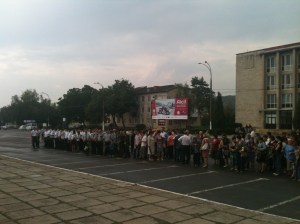

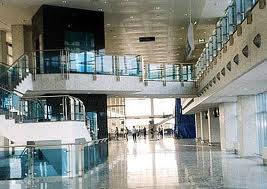
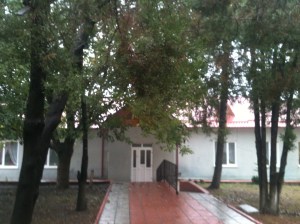


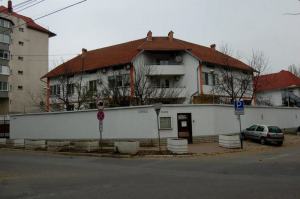
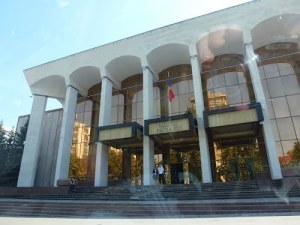




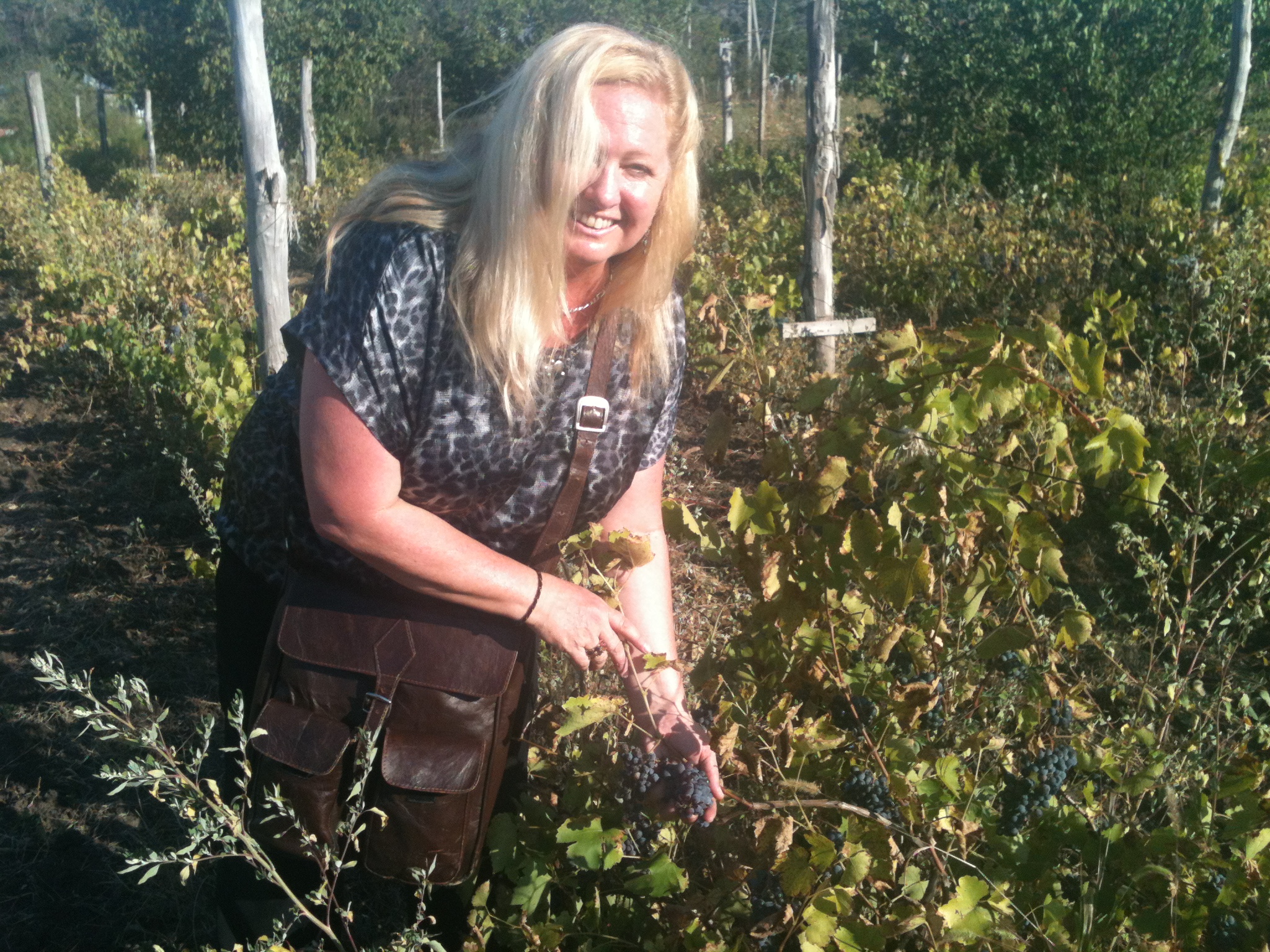
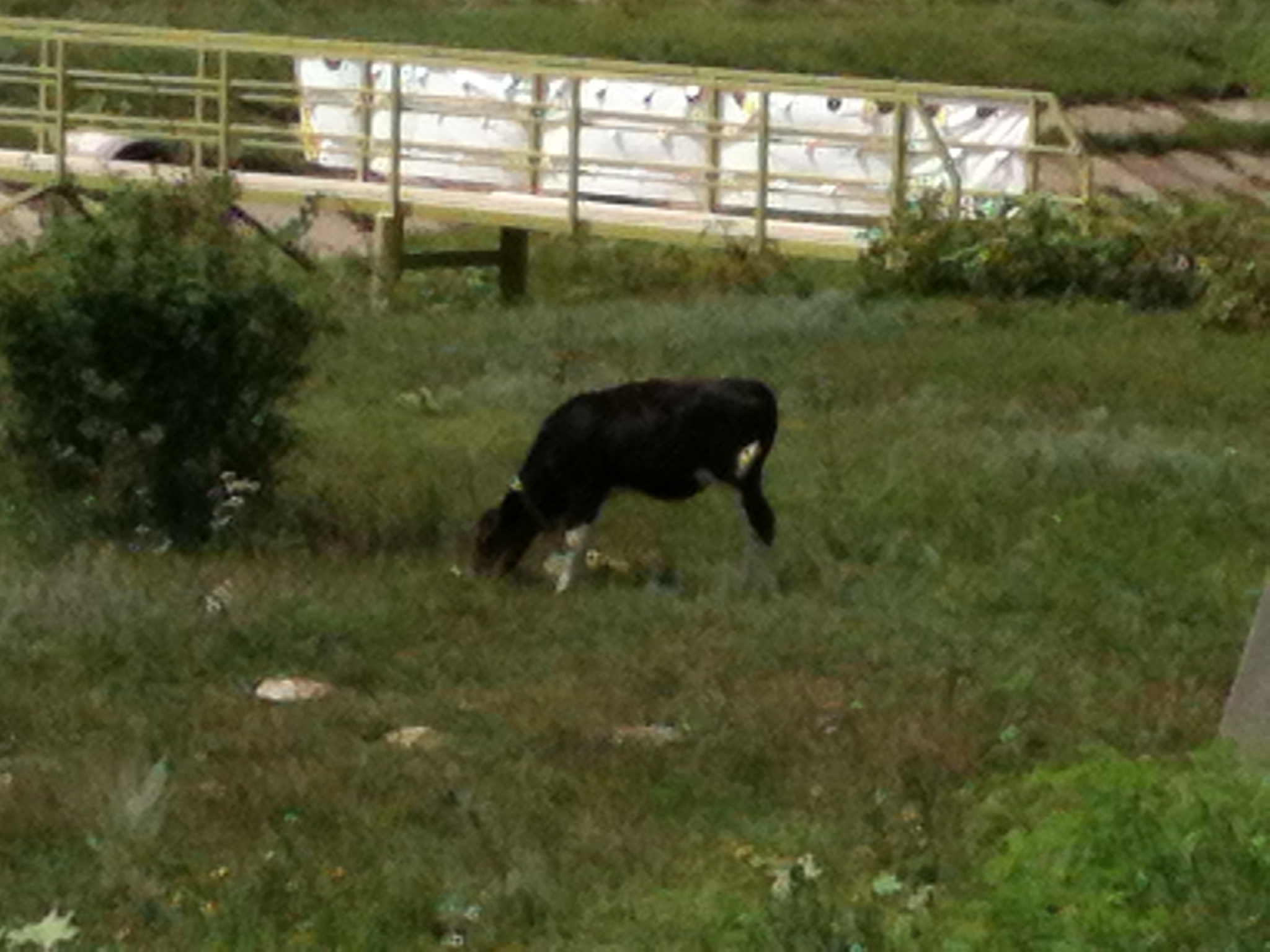

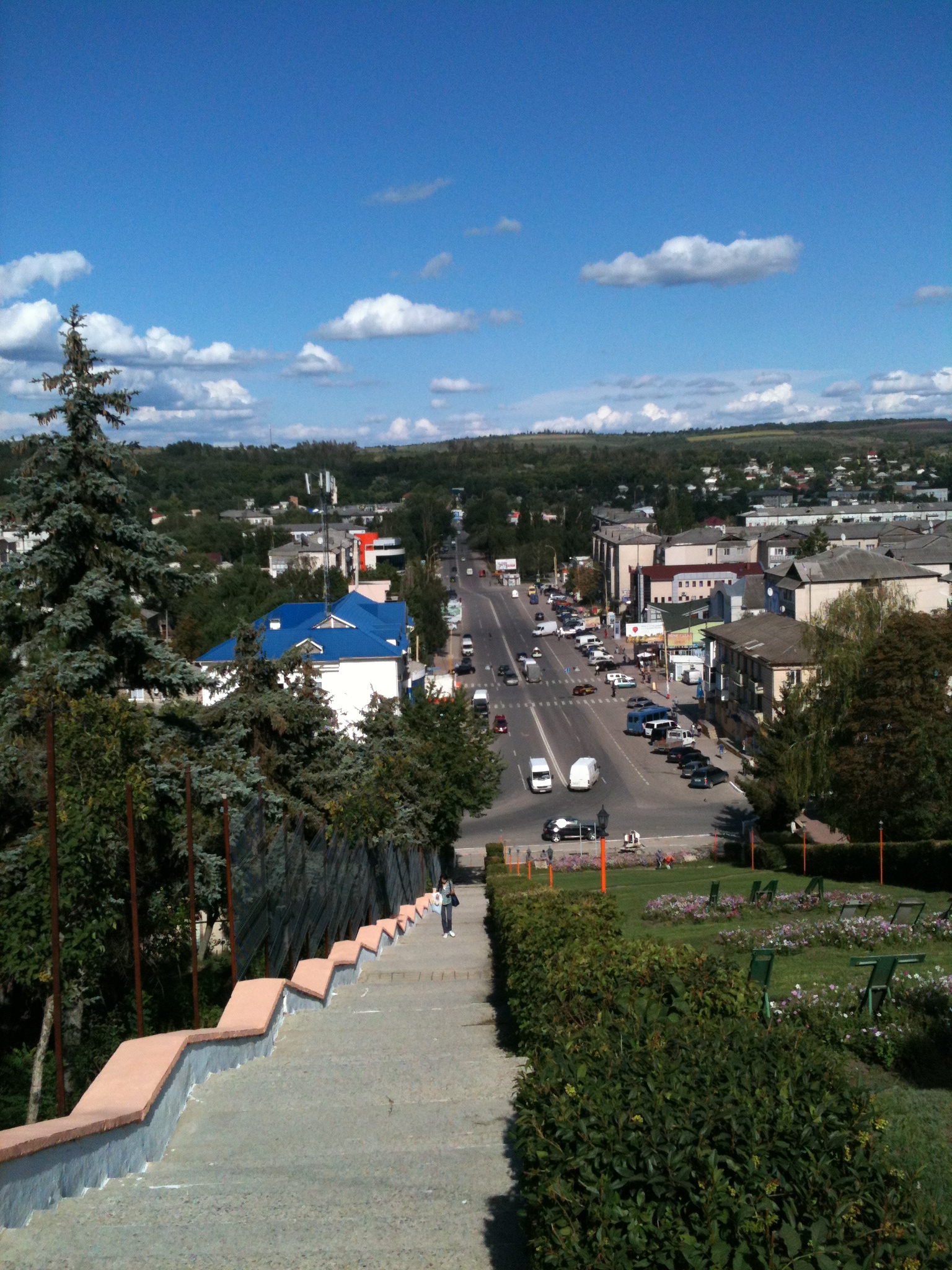
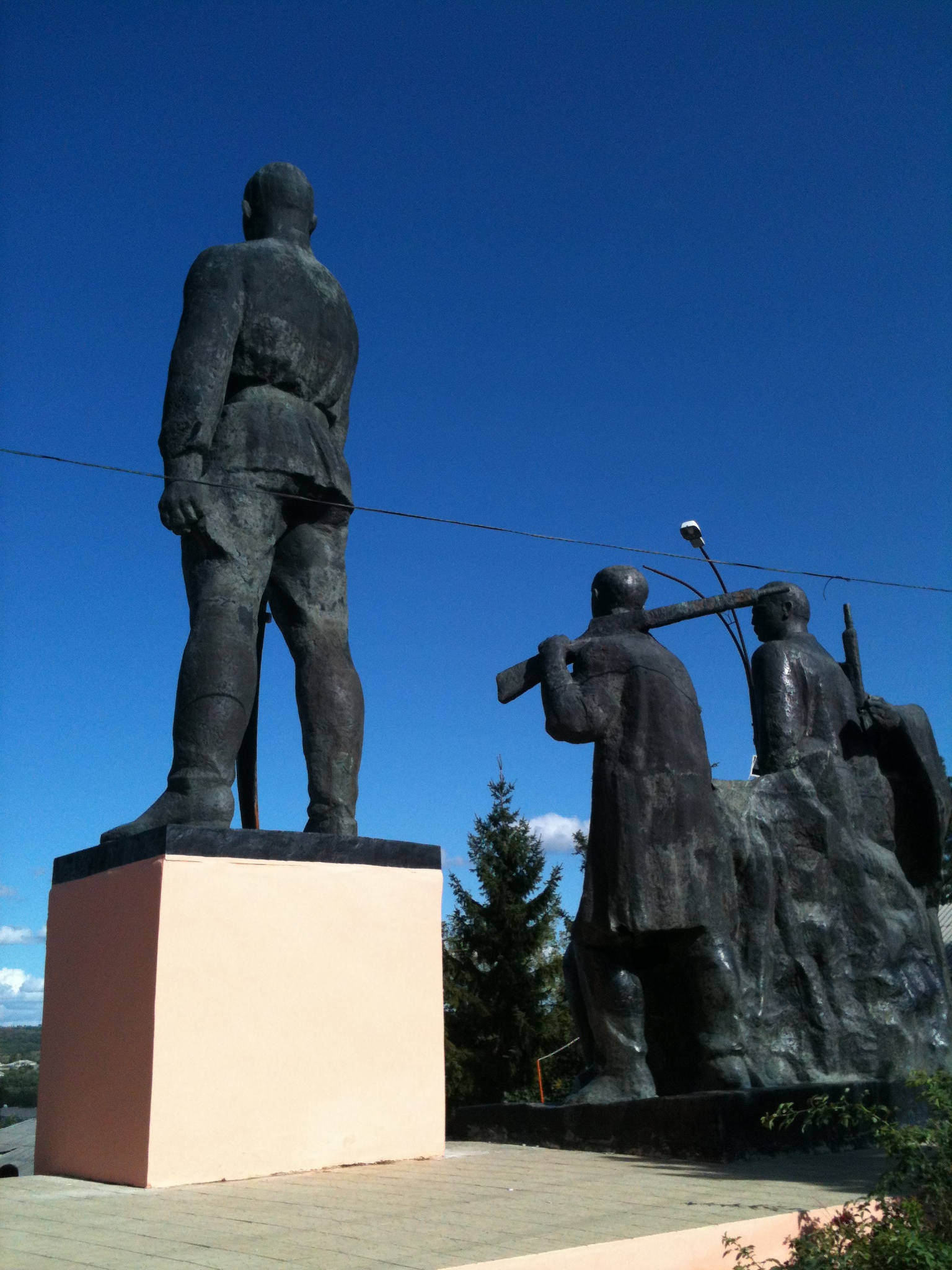
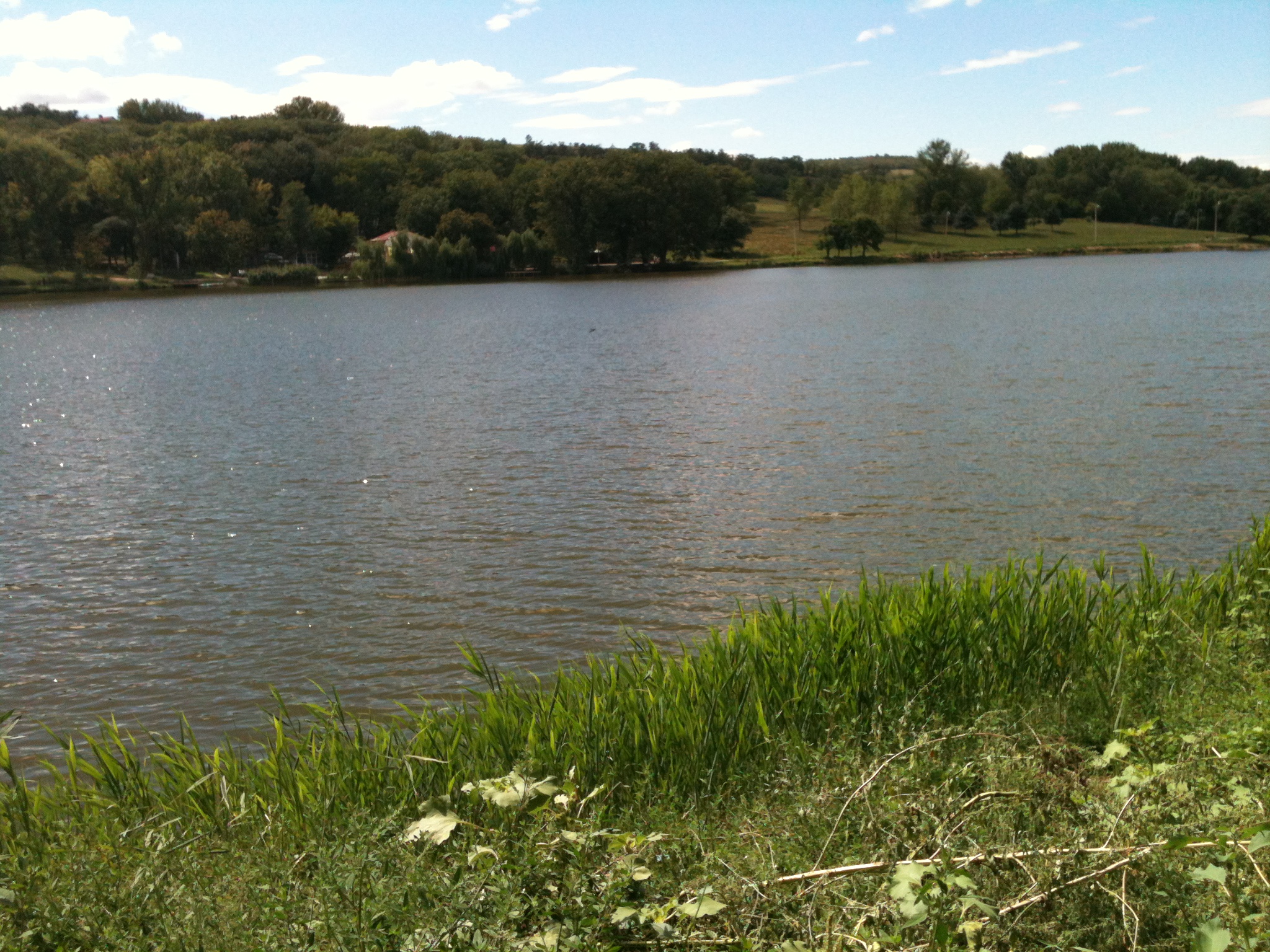



 From Now On I Live Mad