The (Worldwide) Webs We Weave

This morning I viewed a video on Facebook that gave me pause, causing me to appreciate the interconnectedness of my world and the multi-layered, radiating webs of relations we all weave while plodding through our daily lives.  Posted by one of my sister’s best friends, it was an acoustic rendition of “Happy Birthday” plucked out on a guitar by a former band mate of one of my dearest high school pals, dedicated to a 50+ man with whom I attended Catholic school some 45 years ago.  What makes these connections so mind-bending is that my sister has been dead for almost 29 years; her friend was, for a brief spate of time after my sister’s passing, my sister-in-law; I haven’t seen my high school friend (in person – I’m not counting Skype) in over 15 years nor the man from Catholic school in 25 and they met and became friends independently, years after I attended school with the latter.  The band mate and my former sister-in-law lived together back in the 80’s after being introduced by my high school friend.  Oh, the miracle of Facebook, that I can continue to witness the progression of all these relationships wherein I once played a role from minor plot development to headlining.

Spider web 2

I bother to record this here because of what it brings to bear on my experience of life in Moldova as I creep towards the conclusion (19 weeks and 2 days until it could end – but more on that in a sec) of my Peace Corps service term.  It is only now that the threads of disparate relationships are beginning to intertwine, forming stronger links to exciting projects and leading me in the direction of new prospects for actually employing the skills and experience I gathered in twenty years of people management and human resources back in the States.  It feels like it has taken so long to become grounded and integrated here, but now that I am I can barely keep pace with the flow of opportunities coming my way.

I remember so clearly, back in training, instructors and second-year PCVs constantly reinforcing how important it would be to successful service to just get out and meet people, make connections, follow-up on introductions, be persistent and pesky and endlessly curious.   What Peace Corps does, really, is put you at the starting gate in a particular place in the developing world after giving you a pep talk that lasts ten weeks, then they open the gate, wave you on and turn back to prepare for the next person stepping up to the plate.

In many ways, you truly do have the opportunity, challenge, and risk of creating your own service experience.  Some people (actually only a relative few) hit the ground running, blessed with dynamic, English-speaking counterparts and skill sets that match the needs of their communities. Others find their way more hesitantly, having to negotiate language and cultural barriers, misdirected goals, inflated expectations or complete lack of interest.  Some of them begin agitating for change, seeking a different partner, or a site move; a limited few ET. Others retreat into themselves, running daily marathons, baking pies and cookies, blowing through Candy Crush and Pet Farm Sagas, and/or consuming all available episodes of House of Cards, Game of Thrones, Downton Abbey and Breaking Bad after reading every award-winning book of the past decade. (I may have trod that particular path myself for more months than I will care to admit….except, of course, for the marathon part.)

But, finally, you meet some people. Or someone you’ve known since arrival introduces you to someone they just met. Or a new group of volunteers arrives a year after you and stirs the pot, forging new relationships that ultimately connect you. I have recently begun working with an amazing young woman who, through two degrees of separation, ended up being introduced to me after connecting with my husband on a volunteer software development project.   After 19 months of feeling like all I do in Moldova is teach English, I am beginning to formulate connections that lead to ideas that infuse energy into projects that are infinitely more challenging and interesting than any I would have the opportunity to implement in the States.

Which is the main reason why I will not be leaving, after all, in 19 weeks and 2 days on July 8, the date I drew in the Close of Service lottery held three weekends ago.  Ironically, it’s the only lottery I’ve yet ‘won’ in my life; July 8th is the very first day that anyone from the M27 group can leave Moldova. It will be tough, waving goodbye to so many people who have met so much to me for 27 months. But I already have a plan for my final year.  It involves significantly more writing, so – hopefully – I will be present here again with more frequency, and a more substantial amount of work devoted to exciting projects that are only just now developing.

It is also involves opening myself up to new people and more varied, far-flung connections. During the protracted process of staging and Pre-Service training Peace Corps Volunteers tend to bond closely with the members of their incoming group, perhaps even more closely with the 10-20 PCVs in their same program.  I have formed friendships here that I know will last for the rest of my life.  These friendships have sustained and nurtured me through some difficult periods; I have laughed and cried, celebrated and whined, shared meals, beds, and crowded rutieras with these folks.  I am lucky to have served with them and they represent a significant portion of what has been good and meaningful in my service thus far.  They have been my safety net and, unfortunately in some respects, my cocoon.

Again, my Peace Corps experience is presenting me with another meta-lesson (change leads to insight far more often than insight leads to change.)  Even the biggest changes – like ditching one’s routine existence to travel halfway across the world to volunteer in a country one never even knew existed – can be quickly subsumed by the fortifications one immediately, seemingly unconsciously, begins erecting again to shield oneself from further change.  I have (re)created a nice life for myself here, complete with English-speaking friends, lots of books, meetings in restaurants, and weekend spa dates.

Now I am preparing myself for a different experience, one filled to a much greater extent with Moldovans. Even as I write this, I am breaking every hour or so to watch another segment of a YouTube video on Moldova.  And as I was watching, I suddenly realized that large portions of it were in Romanian, which I was following without a hitch.  I feel like I have finally crossed that barrier that separated me from so much that went on around me, everyday.  I understand the language, I get the nuances of culture, and I interact with folks on a daily basis who are happy and forward-thinking and excited to have me in their lives.  I barter for ingredients in the local piața to prepare traditional dishes like zeamă and borsch that I have come to crave.  (And I know where to find cilantro and curry in Chișinau when I must have Mexican or Indian some days.) And I continue to appreciate the convenience of public transportation and not having to pay attention to the road.  Despite living on a stipend that is a meager percentage of the salary I made at home, I feel increasingly richer and more secure every day.  The web I am weaving is becoming denser, more intricate, and speckled with sparkling multi-cultured circumstances all the time.

Bine ați venit Moldova!
Spider web 1

The Road to Nowhere

I received an email from Peace Corps today. It kindly reminded me that, since there is but a scant six months separating me and my scheduled Close of Service (COS) date, the US Government will no longer be reimbursing me for any tutoring expenses I should choose to incur from this point on.   (The subtext being, of course: if you haven’t learned the language sufficiently by now we’re no longer subsidizing your lame efforts, loser.)  Now, I haven’t engaged a language tutor for some 9 or 10 months, not because I couldn’t have benefited from the tutelage but mostly because I was too lazy to search for a new one after I moved from my first site.  And now, seemingly, it’s too late.  I’m stuck with the primary grammar and intermediate vocabulary that I have cobbled together from 3 months of intense initial instruction followed up by 16 months of just living – using public transportation, making purchases, attending social gatherings, stepping on people’s feet and elbowing around them, trying to make friends and chase off hooligans, inquire as to the origin of the food I’m about to eat, and/or find my way back to familiar ground when I have inadvertently failed to follow rapidly communicated directions correctly.

And this is okay, I guess.   But it sparks the slow embers of a flaring realization: I am sliding inexorably towards an exit sign, leading to a vast, uncharted territory that I have not adequately planned, nor properly dressed for.  I am woefully unprepared for an appointment with my future.  Egads.

***

So, this is that time in most PCV’s service when our focus is suddenly jerked up – from our prospects, our projects, our parties, our partners, our preoccupation with all things toilet. We begin blinking our microscope eyes, searching for the plumb line of the horizon, flexing shoulders and toes, stretching, slowly, back into still life silhouettes, anticipating movement ahead.  Change is coming, certainly not tomorrow, but sooner than next year.  The train is still small, on its belly in the distance, smoke billowing faintly against a vague tree line; but the track is beginning to quiver, warning of its approach.

First, the days drag. They smother and weigh.  They mimic molasses and the last sticky drops of honey at the bottom of the jar. Then, they stretch and yawn, only to slump into stagnant heaps of furry formlessness for another gray sock of time.  It takes at least a year for them to muster strength, gain courage and gather some momentum, find an outline and draw a trajectory, to finally pop into a periodic semblance of productivity and purpose.  And so you have this idyllic six or seven, or even just four or five, months of actual, clear, and (hopefully) meaningful service before the powers that be jet you a reminder you that it will all be over sooner than you can fully plumb the depressing acknowledgement that you will never know Romanian better than you do now.  Party’s over folks.  Time to begin looking for your wallet and keys

***

So our group’s COS date selection is scheduled for February 2. I remember reading about this event when it happened for the M26’s last year.  Their blogs and Facebook pages were filled with it – how surprised they were, how fast it went, how unprepared they felt for leaving.  (Remember, this was when the molasses was still making its achingly slow passage across my calendar…..)   And now here I am, standing in the same corridor, facing the same blank doorway.  Oh my, how little we take away. (What is the use of all this incessant sharing anyway?  It has not an iota of impact on our individual decision making or planning processes.)

The plan is to meet, throw our desired dates into a hat, and hold our collective breath while the Country Director draws our fate, setting into stone the chronology of our individual departures – two or three days difference meaning the world to some.

Me?  I don’t really care.   I may, in fact, not be leaving this summer after all…

***

In my previous post I mentioned a quote.  “If you don’t know where you are going, then any road will take you there.”

I’ve been turning this over for days in my head.  At first, I read it as an admonishment against those who didn’t plan, a chastisement for blowing in the wind, having no direction or goal, no “personal vision” that guided their journey. But as this line of thinking simmered, I seasoned it with other spice blends of timeless wisdom stored in the keepsake box of memory: be here now; life is what happens when you’re busy making plans; change leads to insight far more often than insight leads to change; live the life you’re proud of or find the strength to start over again; make spontaneity a habit; life never stops but continues until it ends; become a connoisseur of your own mistakes; own yourself; it feels good to be lost in the right direction;…my mental stewing gained complexity, condensed and thickened… the aromas deepened.

During my time here, I have begun following a certain type of blogger – people who have made travel and ex-pat living a lifestyle.  They range in age from late 20’s to early 60’s; there are couples and single women.  There are people who have flexible jobs that allow them to work online and those that return stateside every 2-3 years to earn enough money to hit the road again.  Some of them could be deemed professionals, others are vagabond gypsies.  (One is a professional vagabond!)  They have various strategies for maintaining health and well-being, but the universal attribute they all seem to share is being ecstatically, blissfully, enchantingly happy.  They can’t get enough of their life.  I love to immerse myself in their experiences, to catch a whiff of the winds blowing them, to feel the world expand and embrace them, carry them along, going nowhere and everywhere.

***

I have spent the past couple of decades with a vague idea of a destination in my head. At some nebulous point I would reach a time when I would no longer be straight-jacketed by a job and then wonderful things would begin to happen: I would indulge my desire to write and travel and learn a new language and volunteer for a worthy cause.  I would eat better and meditate regularly. I would pare down my wardrobe and toss all my high-heeled shoes.  I would read a whole lot more.

But I had no idea how to get myself there other than stashing money in a retirement account and paying the mortgage every month.  Surely those activities would land me in the desired place, right?  It was during my late 40’s that I began to suspect that I was hoodwinking myself, that I had set my feet down a path in my 20’s that petered out on some dim horizon across a vast and arid desert.  Life was happening to me while I was scrabbling towards its end.

Joining the Peace Corps was, in part, an acknowledgement that I did not know, nor did I really care, where I was headed anymore.  I was tired of pretending that my daily activities were all coins placed in a piggy bank that I could break into someday to buy my reward.  When I lost the job, the safety net, the leash that kept me to the path, I fell.  Not just down to the ground, but through the ground; I was floating in undefined space.  There was not a road anymore, no signs pointing in any direction.  I was a ship unmoored, drifting from the harbor.  With nowhere to go, I could go anywhere.  Let the tide take me.

***

I appreciate being exactly this age, in my early 50’s, as a Peace Corps Volunteer.  Unlike those who joined after college, I am not using this experience to pad my resume, to gain legitimacy, to globally network or bolster my LinkedIn profile.  I am no longer hearing the thrum of a body clock ticking that those in their 30’s can’t shut out.  And yet, unlike (perhaps) those in their 70’s and 80’s, I still feel like I have a substantial chunk of time left to skip along to nowhere or anywhere or wherever this road I’m on might lead.  It feels good to not be planning on the future, to be fully present in what’s happening right here and now.

My past lifestyle rarely gave me the opportunity to make big changes.  I stayed in the same job, lived in the same neighborhood, patronized the same stores and restaurants, drove the same streets and freeways, and walked the same pathways with my dogs, for years and years and years.  And while this conferred an opportunity to nurture lifelong friendships, raise my daughter well, put a little money away, and grow my professional skills, it also deprived me of challenges and the courage to face them.  I began to harbor little yapping dogs of fear in my skull: “You’ll never have enough money to quit working,” “You’ll probably get cancer and die from all those year of smoking,” “By the time you retire, you’ll be too old and feeble to enjoy it,” yadda, yadda, yadda.   And while I certainly don’t knock those people who find fulfillment and reward and purpose on that particular path, it just wasn’t doing it for me anymore.  It hadn’t for a long, long time.

***

The long and short of it is that if my request for an extension is granted I am probably going to be spending another year in Moldova.  Right now I am not ready to leave this road going nowhere.  But the biggest surprise of all? I am indulging my desire to write and travel and learn a new language and volunteer for a worthy cause.  I am eating better and meditating regularly. I have pared down my wardrobe and tossed all my high-heeled shoes.  And I am reading a whole lot more.

And after that?  Perhaps next I will join those ranks of bloggers with ecstatic souls, whose feet are comfortable trodding any path, with or without signposts, or pavement, or destinations or direction.

There is so much left of life to live before it ends.

The Road to Anywhere

The Road to Anywhere

When you don’t know where you’re headed, any road will take you there. – Lewis Carroll

This thought has been spinning round in my mind all day. More to come…..

A Sliver of the Pie

I am recently returned from a much-needed and appreciated break from my Peace Corps life.  For my birthday, my mother splurged on tickets for a boutique river cruise down the Danube River. We sailed from Passau, Germany, into Budapest, stopping for port visits at Linz, Durnstein, and Vienna.  It was luxurious in every detail – from the gracious attentiveness of the ship’s crew to the sumptuous haute cuisine and 400-thread count bed linen, from the knowledgeable and humorous tour guides to the breathtaking scenery skimming by outside the window.  It was a little taste of heaven.

And yet.  (There’s always a caveat with me, isn’t there?)  One of my personal objectives in joining the Peace Corps was not just to journey to some foreign land, but to actually live there, to make a home there – to integrate into a daily routine so thoroughly that it would feel like sliding into a pair of worn-out slippers whenever I returned to it.  And I have achieved that; turning the key in the lock of my apartment at the end of my trip I caught myself thinking, “It’s good to be home again.”

And while this is gratifying to have experienced, it poses a whole new quandary for my nascent desire to keep wandering the world after my term in Moldova concludes.  For I was suddenly, oddly conscious while I trod the cobblestoned streets of Passau, craned my neck to take in the spire of St. Stephens, stopped in awe in front of a Rubens, or ordered schnitzel in Vienna, that I was a touring these sites, and as such was unable to access the true experience of being in these places, being of these places .  Traveling as a tourist is like skimming over the surface of a large body of water; oftentimes it feels as if the aim is to cover as much area as possible, rather than taking the time to stay still, immerse and dive deep.  I saw what Vienna looked like, what Salzburg had to offer, what comprised Budapest, respectively, for a scant 4-6 hours at best.  This is no way to catch the flavor of a place, a people, a culture, through such a miserly sip.

Robert Louis Stevenson once observed that there are no foreign lands: it is the traveler only who is foreign.   In Moldova, I have had the time to understand that.  Here, I have immersed, acclimated, no longer feel myself as ‘foreign’.  And I realize how much more that has added to my experience and comfort in the world.  I no longer look at a map and see the outlines of countries as delineations of strange, undecipherable exotica that could have no relation to me.   Instead, they represent convocations of communities, reverberating lives, little houses and neighborhoods, corner stores, and office buildings.  Cars drive down streets in those places. People do laundry and cook meals.  Dogs trot across dirt roads, stopping to scratch fleas.  Bicycles lean against buildings. Aromas waft across a breeze. Children laugh and hang from tree boughs.  Women gather and talk on corners. Life is happening in every corner of the world.  It is now conceivable to me that I could join in and participate fully, no matter where I found myself.

Quite by accident, I took a most interesting picture in Bratislava.  We stopped in the town square to admire a memorial built to commemorate the synagogue that had stood for hundreds of years in the town square, right next to the Protestant church, until the Nazis saw fit to blow it up.  Part of the memorial was the silhouette of the old synagogue etched into a sheet of smooth black marble. I didn’t realize until I was uploading my pictures at homeImage that the marble reflected back the shadowy outlines of people milling about the town square, with the etching of the synagogue super-imposed over all, only briefly and barely occluding the activities of people going about their days . It was a lovely visual metaphor, conveying not only that any church, synagogue, or temple is comprised of more than just a building, but also that when we travel all the icons, museums, memorials, parks, palaces, bridges, castles, and fortresses that may fascinate us and be the images we return with for our photo albums, they remain only a backdrop to lives still being lived in these historic places.  And the traveler is forever the foreign passerby, holding up a camera, skimming across the surface, dropping in to sample just a sliver of the pie.

The Long and Winding Road

“There is a myth, sometimes widespread, that a person need only do inner work…that a man is entirely responsible for his own problems; and that to cure himself, he need only change himself…. The fact is, a person is so formed by his surroundings that his state of harmony depends entirely on his harmony with his surroundings.”                                                Christopher Alexander, The Timeless Way of Building

The dirt road that winds from my living quarters into the town center is roughly a quarter of a mile long and probably the most unpleasant aspect of my daily life.  It is dusty in the heat, muddy in the rain, and treacherous with black ice during the winter.  During particularly heavy storms it becomes a river of loose rock and debris that can be a foot deep in some places. It is not a stretch, by any means, to say that scheduling the activities of my day is predicated largely by the specific condition of the road outside my door: the more unpleasant the journey looks to be, the less likely I am to make it.

However, the icing on the cake is not the road itself, but the trash dump that it skirts just around the corner from my house.  To call it an eyesore fails to accord it the true multi-sensory, aesthetically-offensive, soul-sucking status it attains.  Continually ravaged by rodents and dogs, perennially abuzz with flies and wasps, arrayed in a neon rainbow of tattered plastic and mouldering paper whose color palettes seem to have been mined from a bad acid trip, it sits sulkily putrefying amid the elements less than three feet from the road’s edge.  You smell it before you see it; the odor seeps into the folds of your clothes, clings to your nose hairs, coats your skin and stubbornly trails you long after you have left the heap behind.

***

I have to concentrate on not looking at it as I pass by because it angers me on such a visceral level, setting off a chain reaction of recrimination and blame that can blacken my mood long after the trash has been physically left behind.

It goes like this:

Why in the world can’t this neighborhood get together and buy a dumpster to hold their collective refuse so it won’t be accessible to the elements, the rodents and the dogs that roam the vicinity? (Of course, then how would the dogs eat – but that’s another chain reaction entirely…) There are countless two story villas on this road being slowly but inexorably constructed by remittances from family members working in other countries who seek to match the lifestyles they encounter there.  Every day, almost as many BMWs, Mercedes, Audis and Escalades whizz by me as litter the roads of southern California. Every other teen on the rutiera fiddles with her iPhone, or clutches her D&B bag, or reads on a Kindle while we bump over asphalt so pockmarked one wonders if it may have been bombed by an errant drone.   There appears to be no shortage of cash to satisfy individual appetites in many circumstances, but seemingly no funds, nor any will or desire, for any type of community-betterment project.

Then I remember that these appetites are quite deliberately cultivated, manipulated, and whetted by those very same corporate concerns whose un-booked externalities in the form of plastic bags, aluminum cans, cartons, crates, cardboard, and paper constitute the bulk of the materials feeding the midden on my road. but no – it doesn’t stop there, it gets even worse as I go deeper, folks.

***

I hearken back to my trip to Guatemala in 2012, walking beside a brilliant friend who spent two years living alongside the indigenous population helping them form a school for their children out of sticks and mud and determination.  I was bothered, immensely, by the amount of trash that filled the river ravines in the village.  I asked her about it – why it was there, what could be done, how she tolerated it.

She replied that it was the symbol of everything that stymied her about trying to help build a different sort of life for the disadvantaged in this world.  Thirty, forty years ago these people lived closer to the land, had their own farms and garden plots , grew most everything they needed and traded for what they couldn’t cultivate. But then, almost simultaneously (coinki-dink? Hmmm, I think not) large agricultural conglomerates bought up their land and began monoculture farming, exporting produce and inexorably cornering people into supplementing their diets with the relatively cheap and available Doritos and Pepsis and Snickers and fried pork rinds from the corner markets run by the families who no longer had income or staples from their land.

The people, of course, being so recently exiled from the natural occurring, unmaintained beauty that had heretofore surrounded them were disconcerted by the refuse that  was suddenly piling up in heaps everywhere, but attempts to collect and dispose of it only stranded them before the seemingly insurmountable obstacles of how?  who? where? There was no agency to build roads, no trucks to travel those roads, no money to pay people to drive the trucks, collect or haul the trash and no place to put it if they did.  So the trash piles up in the ravines until the seasonal floods come and wash it all out to the ocean where it flows into the Great Pacific Garbage Patch, a floating accumulation of trash the size of Texas that swirls and gyres with the currents outside of anyone’s purview.

Well, didn’t that make me feel all better.

***

There is no one to blame but everyone, more or less.  I consume and generate trash, everyday, only here it is not conveniently swept from my awareness by a union-scale worker in an automated machine who absolves me of guilt for all the detritus that feeding, cleaning, furnishing, adorning, and entertaining my ‘self’ creates.

I remember once in my life being taken to the dump by my father, who probably needed to dispose of a mattress or some construction material or an old appliance.  I was horrified. First, by the miasma that enveloped us a half mile out, then by the sight of those veritable mountains of trash which loomed into view, cranes and other indecipherable machinery hovering about their perimeters clutching great loads of plastic and food and tree limbs and clothing and car parts all mixed in together amid grinding gears and circling birds and clouds of flies and dust curtains.  I gagged and gagged and ended up swallowing my own vomit, not wanting to add one piece to the ferment bubbling around me.  Of course, I have conveniently filed away the fervent vow I made then to find a way to meaningfully reduce my waste while seeking a way to convince others to do the same.  It is so much easier to just keep buying, unwrapping, and tossing mindlessly.

So perhaps that’s what really angers me about having to pass this garbage heap day after day after day. It will not let me forget that every single solitary piece of plastic; every garbage bag; every carton; every length of foil; every battery, can of paint, container of hairspray or detergent or peanut butter; every granola bar wrapper, empty pen casing, and broken cassette vomiting tape;  all the broken (and too easily replaced) curling irons, blow dryers, toasters, waffle makers, crock pots, frying pans, blenders; every discarded pair of holey sneakers,  bleach stained blue jeans, worn out socks; each and every used toothbrush, toothpaste tube, strip of dental floss, empty mascara, dried out lip gloss – ad nauseum, etc., etc., etc. – all of it still exists, somewhere, and will for many, many years after I do not.

***

Somewhere along the line, responsibility has become disconnected from activity, as if we’re able to enjoy a pleasurable ‘cause’ without an attendant, oft times deleterious, effect.  We encourage production and consumption and first world lifestyles with our foreign aid dollars, our glamorized advertisements, our iconic status symbols and our willingness to saturate markets with goods that local infrastructures have no mechanisms for processing once they are discarded.

We are so adept at generating externalities – residual detritus that collects in our human wake, evidencing lifestyles that are powered by consumption, (why must the economy continually grow to be healthy?) which we personally do not need to worry about recycling or repurposing or permanently dismantling.  And we tend to take for granted the sub-system of sewers and power grids and water mains and transit networks that support that consumption, leaving little evidence behind.

Who can really blame the Moldovans for desiring the same goods that people in the EU or the United States or Canada enjoy with such fervor?  Who can fault the Guatemalans for satisfying hungry children’s bellies with the cheap and tasty snack foods that line the shelves of the local bodegas?  They have all the toys without having the ability to build the walls and raise the roof and carpet the floor of the playroom.

So this is my question, so elegantly posed by the quote that headed this piece: which comes first, the unhappiness or the garbage?  Do we consume and discard because we’re unhappy or do our mounting externalities actually end up fomenting the gnawing, existential unhappiness that, down the line, results in the sense of despair and distaste which we attempt to assuage by consuming even more?

I can’t help feeling if that garbage heap was gone, my environment would be so much more enjoyable, which would positively affect my mood and make my daily life here much more agreeable.   I can’t help thinking that Moldovans, as a whole, would have more hope and dreams for their future, and perhaps remain in their own country, if their neighborhoods were cleared of garbage, paved with smooth asphalt, furnished with sidewalks and pleasant open-air spaces for people to gather in community.

Meanwhile, I open the cellophane wrapper of my coffee and retrieve the carton of creamer from the refrigerator for my morning cup of joe….


Escape from the Isle of Skye

Lorraine at 20
Lorraine at 20

It is true that I went back and forth with myself about taking it with me: I packed it once, thought better of it, removed it from the suitcase, yet, as I was draping it back over the hangar, became bewitched again with the image of its soft black folds whirling about me in the winds whipping off the waves on the Isle of Skye. It was a fanciful accessory, a black cotton drape styled midway between cape and shawl, seemingly made by a costumer for a lass of the Scottish highlands. And, despite having left lass in the rearview mirror a couple of decades hence, I just couldn’t resist the notion of donning it on this quintessential stage. Perhaps it did carry a Iittle of the magic I had imbued it with over the years. A good luck charm for travel. Pulling it from the hangar, I bundled it up carefully and placed it in the front zippered pocket, readily accessible for the Kodak moment when it arrived.

______________________________________

Me & Lorraine0001
Me & Lorraine circa 1983

I had first seen it on my sister almost 30 years ago and immediately coveted it.  It was the height of my Fleetwood Mac phase, the mid-80’s, a time when it was surprisingly difficult to find the vintage, theatrical items that are a dime-a-dozen through Urban Outfitters, Buffalo Exchange, and hundreds of other outlets these days.  It actually shocked me that she didn’t offer it to me – her of the easy acquiescence, the pliable Beth to my fiery Jo, the good one that always shared and never complained; nursing the arm I’d accidently broken, when she was eight and I twelve, into the predawn hours before her stifled whimpering finally alerted our mom. My little sister adored me, completely and utterly, in that unique, submissive fashion that a less studied character holds for one more flamboyant and artful.

Still life from a family photo album: me, front and center, encircled by a halo of pink tutu, hair coiffed in stiffly sprayed curls, eyes rimmed with turquoise, toe pointed in front of me, back arched, arms bowed at my sides; her, standing in the background, a little to my right, pudgy hands folded at her belly button, tights sagging, leotard bunched at her waist, mouth slightly agape, eyes gazing up at me, rapturous, as if Glinda had just materialized in front of her.   An accidental, naked portrait of how it always was between us.

I had recently returned, reluctantly, to the dull harbor of my old bedroom at our parent’s house.  Lorraine had just fledged, leaving the boyfriend she had lived with since high school to share a freshly outfitted apartment with a co-worker.   There was a newly minted assurance coating her, a sheen of silvery confidence that signaled a subtle shift in our relationship.  While my post-adolescence wanderings may have increased the hip-cred I brandished to cover my wounds, she seemed to have glided over my years of awkward angst to alight, perhaps tentatively, in a place of adulthood.  She made me a little nervous.

But when she pulled out the black shawl one afternoon as we headed out to lunch, I immediately recovered my big sister voice.

“Oh wow, sissy – that is beautiful! Where did you get it? You have to give it to me!”

Closing my eyes I can still picture the careful compression of her puffy lips, the firm little shake of her head.

“Nope. It’s mine.”  Lilt at the end. Smiling, but implacable.

She wore it everywhere we went during those long ago months: a concert; the fair; furniture shopping for her new place.  And I continued to crave ownership, scooping it up and swirling it about my shoulders whenever I found it tossed on her couch, stomping about her living room like Stevie in her boots, belting out “Rhiannon” while flourishing an invisible tambourine. She would laugh and agree that it fit me.  But she never ceded.

So perhaps it was a matter of course that I had my way elsewhere, appropriating the swarthy Armenian jeweler she brought me to meet one sunny afternoon in March.  Perched on a Laguna bluff, his little shop part workspace, part bohemian haven, redolent of incense, curtained by vines and palm fronds. Andreas Vollenwieder rolled in buoyant waves over us as we sipped chardonnay from wrought iron chairs on his doorstep and watched the sun glint off the Pacific. Her flirting was so self-effacing and contained that it aggravated my chronic promiscuity. I was sleeping with him within a week.

Next, I impulsively acquired the same model car she had spent hours and hours making up her mind to buy, comparing color and interior options, gas mileage, performance ratings, and safety scores.  She was days away from purchase when I drove up to her place in a brand new, blue, 5-speed Mitsubishi Cordia.

“You wanted white.  I thought we could be twins.”

I think I actually made her mad with that one.  But she never said a word.  And within two weeks she had a Toyota Corolla fastback: smaller, sleeker, cuter.

It was the car she died in, it’s aroma of new carpet and leather seats not quite dissipated, a bare month later.

 ______________________________________

What does one do with dead people’s things?  How much of the person do they hold within, captured moments and memories, static icons of fluid emotions, precious objects with no other intrinsic value than of once having been curated by someone disappeared?

Within hours of learning of my sister’s accident, I find myself in her bedroom, spinning in slow circles, a lighthouse spotlight trying to pierce the syrupy morning sunlight replete with bobbing dust motes, tiny faeries trying to break free of amber.  My glance falls upon the cast off bathrobe crumpled on the bed; the brush full of hair lying on the windowsill; the smudged mirror reflecting tubes and compacts of make-up, bottles unscrewed, on the vanity; the open closet spilling forth clothing askew on its hangars. Bathrobe, brush, mirror, closet, bathrobe, brush, mirror, closet. The fairy dust shimmers as the sun rises higher. The smell of her conditioner lingers in the close air.

What to do with all of this?  How sudden is the moment when things change into useless, superfluous litter, floating in space.  Do I take that brush tangled with her last hair? The robe, still damp from last night’s shower? Or the lipstick she always wore, surely smeared with the tiny slivers of skin always flaking from her lips? I can’t seem to grasp it, the enormous, echoing void left by a life abruptly vacated, the cavernous, stretching emptiness of it, the detritus scattered on its shore. 

It is only as I turn to go that my eyes brush across the tail of black fabric snaking out from amidst the sandals, sneakers, and high heels jumbled atop each other on the floor of the closet.  I am in the doorway before it penetrates and I spin around.

Mine now.  Sissy, it’s mine.

 ______________________________________

The years since her passing kaleidoscope: I’m a young, single mother; a university student; a counselor; an executive; a wife; a homeowner. My bank account expands along with my waistline. The Armenian jeweler moves to Hawaii and I never hear from him again. I sell the Cordia to buy the ’64 Porsche of my first husband’s dreams.  Lace skirts and crystal beads give way to sensible pumps and blazers.  The detritus of my own life recedes in my wake, falling beyond the horizon.

But the shawl stays, a lasting imprint, the cocoon I wrap around me during cold months of grieving, the totem of resilience and serenity which I doggedly tote through all my incarnations. Mine, but still hers, it takes me ten years to wash it, convinced as I am that her DNA is still entwined amongst the threads.

My daughter, too, comes to covet it.  I let her wear it whenever; it fits her eclectic Echo Park, retro-Beat chic.  But I am firm when I find it amongst the clothing she has piled in the back of her truck, preparing to move to Tahoe.

“Really, mom?   It’s not like you can carry it off anymore.”

“It’s Lorraine’s, sweetie. It’s all I have left.”

She flings me the withering look.

“So I guess I’ll just wait for you to die, huh?”

It catches me.  When will – if ever – I let it go?  When will it would it be okay to let it slip from my grasp, to allow the last tangible piece of her to float away from me in space, to no longer have the least physical connection embody her?  Why not let the one have it who will most likely be packing up my abandoned things someday? A thought – not enormous – but elusive, slippery, fraught with tingles of pain like little electric shocks sparking beneath my skin.

                   No. Not yet.

 ______________________________________

I found out that just days before her death Lorraine had driven to my grandmother’s house in Montrose to type up her application for American Airlines.  (Yes, in 1985 we typed things.)  She never mentioned it to me, perhaps because she knew the derision I would express for such a safe, contained version of wanderlust.  Always methodical and practical, perhaps she had her own thoughts about my wanton attitude toward life at that time.  Perhaps she had drawn her own conclusion, never articulated, about the big sister who jumped without quite attaining flight.  About the web of scars filmed over by the gauzy persona of a world-weary, hippie-gypsy returned, hiding the tale between her legs.

I will never how it would have been between us, after the glitter faded.  I know that she loved me. And I her. But women are not so little girls; who knows what it would have been like, each with her own stage, a separate spotlight, different audiences to attend to?  In my imagination, at times, she eclipses me, meeting a middle-eastern businessman, moving to Turkey, having a passel of honey-bronze children, getting a PhD.

Me, I am more practical now. There are less and less occasions when a decades-old black shawl seems appropriate.  In part, joining the Peace Corps was a little homage to her: a safe, contained way to indulge wanderlust.  Yet, during the process of selling and giving away the bulk of my possessions before leaving, I hold the black shawl in my hands, weighing its significance, wondering if now is finally the right time to let go. And I recall the way the tangled gold of her hair spilled forth from the folds of the attached scarf when she wound it about her head. The way it enveloped her, hanging longer and looser about her smaller frame. The afternoons in her living room, draping it about myself seductively, twirling to the music with contrived abandon, hoping to win the prize.

I hold it up to my nose. Not a trace of her smell remains.  I am not sure I even remember what she smelled like. With a fleeting sense of panic, I toss it in the “keep” pile and bring it with me to Moldova.

______________________________________

I am wearing it in the picture of me on the boat from the mainland crossing over to the Isle of Skye, the land of the faeries. I am smiling, happy to be going to a place on my bucket list.  I am 51 years old; more lies behind me than in front of me these days. I can discern the dim outline of a horizon out there ahead.

100_2946

So the emotions are mixed, confused, when I discover it missing as I am packing the next day to depart.  Long, slow breaths as the realization floods in.  It is gone, disappeared, leaving  a black hole within my suitcase.  Had I tossed it on the bed in the hostel, where some transient backpacker espied it, liberating it for it new adventure?  Or placed it on the back of the chair at the bar, ready for the next itinerant guest to don before she boarded the cross-country train to distant realms?  Or perhaps it went home with the server, to reside on the Isle of Skye for a handful of decades until her daughter packs it in a box or hangs it in up in her own closet someday?  Who knows?  It happened. It is gone from my life, the last trace of her, without me having to decide, choose, finally let go.

I tell myself she would be proud of me, that our love would have blossomed and flourished through the years, that we would have grown to stand next to each other, holding hands, shoulders touching, heads tilted slightly towards each other. In my mind’s eye, we share center stage and the spotlight cloaks us both in warm brilliance. Neither one of us is wearing the cape. A Kodak moment, a studied, slightly fuzzy portrait of the people we became.

And a clenched hand releases, letting her drift, the last anchor now lifted, finally free to roam the space of this world.

Godspeed, my dear sissy.

100_2951

Life IS Full of Heroism

I must confess it was disheartening for me to visit NPR’s web page today and learn that George Zimmerman had been acquitted of the murder of Trayvon Martin (by a six-woman jury, no less) not because I was hungry after some kind of revenge in a situation where the legality and justifications for Zimmerman’s actions are so hotly contested, but because of what seems to be an increasingly prevalent fear percolating below the surface of so many Americans’ interactions with each other during the course of daily life.

The verdict prompted a lively debate on NPR’s website, generating more than 400 comments at the time of this writing.  The top-rated comment on the story was this one by B Free:

“One thing I don’t understand is what was the young man supposed to do when approached by an armed guy on the side of the road? Black, white, whatever, if a guy with no obvious authority stops anybody on the side of the road in an accusatory manner, exactly what could they say to put them at ease?”

Responses included observations like this one, from commenter Brian Watkins:

“Since the guy was twice his age… maybe a “Hello, how are you tonight sir?”, “just on my way home, is everything ok for you? is your car ok? you need some help with a tire?” … that’s the SAFEST things to SAY. Then when confronted, respectfully chat. I don’t know… those are the best things I can come up with.”

 To which I say, poftim. Barring the obvious elephant in the room – that Zimmerman was armed with a GUN and his demeanor was confrontational – I do believe that simple pleasantries go a long way toward easing awkward social situations.  In most uncomfortable circumstances, I find that a smile does much better than a growl.  However, here is what Watkins goes on to observe:

“America is scared all the time, so everyone is a threat to each other. This is the difficulty we have to live with being a diverse country, but regressing to simple pleasantries is the safest thing to do. To prevent this from happening to more youth, I advise all to stay closer to home and not be out when it gets too dark. It’s dangerous anyhow… it’s harder to identify people at night.”

To which all I can say is, wow.  Americans are basically scary people whom one should be afraid to encounter after dark, so hole up in your homes in order to be safe?  And this is a consequence – a ‘difficulty” – of living in a diverse country? And we need to “regress” to pleasantries in order not to be shot walking home from the neighborhood convenience store?

Is this what it’s come to?

Coincidentally, I was talking with another PCV just this morning about a recent vacation she took with her mom to several European countries.  Her mom suffered a mishap on a bike in Croatia and a local eating at an outdoor café saw it happen and came to their assistance.  He offered to drive my friend to a nearby pharmacy to help her purchase some first aid supplies; she gratefully accepted.  Her mom chastised her later, warning her that the guy might have had ill intentions of rape, robbery, and other mayhem and that my friend was foolhardy for trusting a veritable stranger.  On another occasion, they found themselves hopelessly lost in a Parisian suburb. Despite her mother’s fierce objections, my friend stopped to ask directions of a group of young men gathered on the street, who proceeded to get in their own car and gallantly lead them through the confusing maze of streets and back out onto the main highway.

She and I reflected on an integral lesson which usually occurs to most travelers who have spent some time out in the world; most people are not harboring an inherent desire to hurt you. In fact, many, many people will help you, begrudgingly or not, when asked. Travel in foreign countries often involves getting lost, or needing assistance with language or purchases, or just finding the best spot to eat in town.  To get the most out of the experience sometimes requires putting your trust in a stranger.

How have so many Americans lost this ability to see others as potential allies rather than threats?  And especially in our own neighborhoods?

I have commented on this blog before how increasingly important I am finding the second and third goals of Peace Corps service to be: 2) helping promote a better understanding of Americans on the part of the peoples served, and 3) helping promote a better understanding of other peoples on the part of Americans.   I feel like my daily interactions with Moldovans and other visitors to this country are ending up to be much more meaningful and impactful than the professional skills or work experience I bring.

It was with no small measure of pride that we posted this observation made by a young Moldovan who walked the entire southern route of Turul Moldovei:

“I think that volunteerism is important, and I talked to some people about volunteering and they said that this thing in Moldova has been lost and now American Volunteers help us to understand that we can give the community help that brings us pleasure to help them. I liked very much to be a volunteer, I really get a lot of pleasure, pleasure to have fun, pleasure to work, pleasure to give happiness.

I want to be a volunteer and know when Turul Moldovei ended I am trying to do more.”

Living where I do, at an internationally sponsored NGO that hosts many volunteers from European countries, I have the pleasure of meeting diverse people who use their own vacation time and funds to come to Moldova to help strangers.  For the past two weeks there have been three young women from the Netherlands here, aged 18 to 28, who have gone into the homes of house-bound elderly to empty buckets of feces and bottles of urine, scrub down cockroach infested kitchens, haul water from wells, air out mattresses and blankets, sweep mud-encrusted floors, massage arthritic feet, and then shed tears of joy to have had the honor to do so.

What if, instead, the lesson they learned was to stay close to home, to distrust diversity, or to ‘regress to pleasantries’ to keep safe?

My primary desire in sharing my experiences here is to provide a small window on a faraway place, a country most Americans (and Europeans, it turns out) have never heard of.  I hope my voice can find a place among the incessant fear-mongering that hammers away at our trust, at our empathy, our vulnerability, our ideas about the strangers we meet along the way.

Exercise caution in your business affairs, for the world is full of trickery. But let this not blind you to what virtue there is: many persons strive for high ideals and everywhere life is full of heroism.”

Desiderata

Amen.

The Episode with the Kitten

The other day, an hour or so after another momentous thunderstorm, I was walking up the muddy river that serves as a road in more temperate conditions when I happened upon a weeks-old kitten perched precariously on a rock jutting just above the rushing water. Yapping dogs lined the road’s perimeter, but apparently none of them were ready to brave the water in order to munch the wee morsel.

Steeling myself against sentiment, I shooed away the dogs and continued on to the store.  I have had little patience with PCVs who adopt animals here: unless one plans on making a permanent home in Moldova, how fair is it to subvert an animal’s natural instincts by accustoming it to hand-feeding, doting attention and a warm, dry sanctuary?

Ten minutes later, on the way back, a thinly bleated chorus of mews wafted up to greet me.  The kitten was no longer in the road but I could hear it crying close by.  Again, I steeled myself.  You must not interfere, I told myself sternly.  There are hundreds – most likely thousands – of stray kittens and puppies born each year in Moldova that will not survive a month, much less their first winter.  If I had not happened down this path at just this moment I would never know about this one.  But the mewling seemed to get louder and more desperate as I left it behind.

I recited all the logical reasons why rescuing a kitten was not a rational move on a my part: I live within a community where pets are not cultivated (the one dog that hangs around the center is not allowed indoors, nor provided any food other than kitchen scraps. I am the only one who pets it;) my income is barely sufficient to feed myself;  I am away from site for days at a time; I cannot afford to spay or obtain vaccines; it probably has a ton of worms and fleas; yada, yada, yada. All these valiant attempts at hardening my heart steadily weakened as the calls grew more piercing and urgent in my wake.

So I did what any other smart PCV would do: upon my arrival back at the center I posed the question to another volunteer who happened to be staying the night with me.  “Tell me, should I rescue this kitten?” Of course, Georgiana immediately leapt to the call of an animal in need.  Arming ourselves with a bag and a pair of sturdy gloves, we set off back down the road to retrieve said kitten.

Only what we found was TWO kittens, cowering under a low carpet of bushes, soaked to the skin and shivering, almost skeletal with hunger.  Great.  One of them – a tabby with the big mouth that I had already seen in the road – was readily amenable to being picked up and placed in the bag.  The other, a Russian Blue, was decidedly not.  It scampered even further into the bushes, spitting and hissing for all its 2 ounces worth.  Oh well, I thought, I really didn’t bargain for more than one anyway. But Georgiana was now on a mission; she determinedly flattened the bushes right after it and caught it within seconds.

Damn.

***

Soon after finding them a box and warm blanket, we introduced them to the three young Dutch volunteers that are currently staying at my center.  One of them, Leonie, immediately fell in love. She had one or both of them curled up into her neck for the remainder of the day, and took them both to sleep with her that night.  Poftim.

I began formulating a convincing argument for why it would be good for HER to adopt two Moldovan kittens and take them home to Holland.  She was easy to convince.  Soon, she was researching transport options and firing off emails to an aunt back home who had successfully adopted several cats and dogs during her life travels.

The next day, the tabby disappeared. Leonie accidently stepped on it while taking off her muddy shoes after a run. It appeared to be unharmed and scampered off into the bushes.  But later on when she went to bring the kittens in for the night, it was gone.  This caused her a great deal of anguish and not a few tears; how can I admit to be slightly relieved that we were back to the original one I had first envisioned rescuing?  It was doubly sad that it was the tabby – the one that fostered my sympathy in the first place with his persistent cries.

However, now there’s Jane.  That’s what Leonie has named the Russian Blue, the one now so attached to people that she sets up a fuss whenever you walk away. And it looks as if she will be staying with me, after all.  Though a process does exist for adopting animals and exporting them to other countries, it is complicated, tedious, expensive and time-consuming; certainly beyond anything Leonie can manage in her remaining week in Moldova.

***

For a time, I watched a television show called How I Met Your Mother.  There is a character on the show, Robin Scherbatsky, who fantastically kept five dogs of various sizes in her tiny New York apartment.  Despite Robin only being home perhaps one episode out of 20, these dogs appeared placid and happy, not requiring food, or walks, or attention, apparently going to sleep for long stretches of weeks whilst Robin cavorted about New York with her friends.  Her furniture stayed pristine, big clumps of hair did not collect on the carpet and numerous throw pillows on her living room couch remained miraculously intact. Those of us who live with dogs – especially without the benefit of large suburban backyards or rural fields to set them loose in – know that five dogs in an 800 square foot apartment is a recipe for certain disaster, if not complete and irrevocable destruction of all one’s favored belongings.

This is one aspect of modern media that contributes to our continued naiveté in approaching the mechanics of our lives.  I remember my daughter pining for Carrie Bradshaw’s life in Sex and the City, a part-time newspaper columnist who inexplicably could afford Manolo Blahnik shoes, long lunches at high-end eateries, and a darling apartment in Manhattan.  When I would insert my (unsought) opinion that the likelihood of an actual columnist’ salary supporting such an extravagant lifestyle was pretty unlikely, she would froth and foam at my nitpicking lack of imagination.  Couldn’t I just appreciate the story?

I should no more adopt a cat in Moldova than Robin Scherbatsky should cram five canines into a New York walk-up.  But we continue to fool ourselves by referencing the glut of misleading, manipulative entertainment and advertising that does its concerted best to get us to watch, buy, and consume by convincing us that we are all better people for doing so.   We tell ourselves the stories that we fervently wish to believe about life.  And here I go with mine.  I still don’t think I’ve done Jane any favors in the end by bringing her into my life.  But, at least for this episode, she seems happy and I feel just a tad bit better for having ‘rescued’ her from an uncertain fate.  Catch me next season to see how the story progresses….

Image
Leonie and Jane – inseparable!

Image

Vara #3: New Projects (or how serendipity infuses my PC service)

According to Wikipedia, the word „serendipity” is one of the hardest to translate in the English language.  Perhaps this is due to the amorphous nature of the experiences it attempts to pinpoint.  There are fortuitous things that happento  us so unexpectedly, from such unanticipated sources or directions, that at times it is difficult to not percieve the pointing finger of a god or the shadowy trail of a red thread leading one on.  And perhaps this how other cultures/languages describe it: through religion, or mythic archetypes, or the unspooling of one’s fate.  We Anglo-Saxons term it “a talent for making fortunate discoveries while searching for other things.”

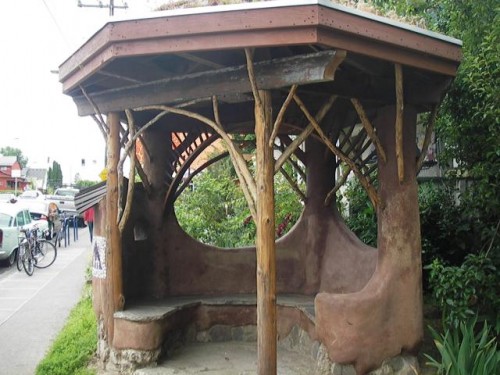
Straw bale construction. These are used to build houses, walls, and benches.

Some months into the period of unemployment which preceded my Peace Corps service, I stumbled upon the concept of “intentional communities” or “co-housing,” as it is known in some circles.  Back in the day, we would have termed these alternate living styles “communes” but the whole concept has evolved and adapted through the decades to better fit the myriad identities, lifestyle choices, and personal philosophies of most Western Europeans and Americans.  These are communities sometimes, but not always, based on particular political views, philosophical principles, or religious beliefs.  Most often, they represent a desire to live in closer proximity and connection to one’s neighbors; to own in common those resources, like lawn mowers and ladders and paint brushes and socket wrenches, that we may only utilize once or twice a month; to have the opportunity to partake in a collective meal two or three times a week and forego shopping, preparing, serving, and cleaning up after a long day at work; to build small neighborhoods devoid of cars and asphalt; in short, to move out of that weird idea that living entirely in an enclosed, private space (suburban home) from which we emerge only to enter another enclosed private space (automobile) to travel alone to yet another enclosed, private space (the office or cubicle) somehow meets the needs of social animals.

Feeling cut off from the world and as thoroughly rejected as only a soon-to-be-fifty, suddenly-unemployed, worked-at-one-job-for-practically-my-whole-life person can feel, this idea of living collectively more than intrigued me – it lit a burning candle of longing that fed countless hours of research and many inopportune proposals to friends, family, and acquaintances to throw in our lots together, buy piece of land, and start some sort of eco-social living arrangement.  (I think they thought I’d gone off the deep end.)

It was one of the few simmering fires left when I boarded the plane to Moldova; I consoled myself with the notion that perhaps someday in the future, upon my return from Peace Corps, I could resurrect and tend it to fruition.

***

Interestingly, some months later during a sidebar conversation with my then-COD Program Manager Liliana, I was intrigued by her mention of a project conceived by her (former PCV) husband David to build an ‘eco-village’ from natural, native-harvested materials in Moldova.  They had both been researching different building types and designs, real estate offerings, and incorporation options with the intent of forming an NGO devoted to sustainable living that would also serve as a platform for launching their own co-housing community.  I must have related my own interest in this particular brand of habitation.

Last February Liliana surprised us all by resigning from the Peace Corps to pursue this project on a full time basis.  She and David spent many weeks traveling in the USA and Ukraine, visiting similarly positioned communities, networking, gathering data and comparing outcomes.  They are passionate and intentioned and fully loaded with information.  Now, they are ready to commence.  And the biggest, most serendipitous aspect for me in all this is that they have invited me to help.  Apparently, during this sidebar conversation that I barely remember having I impressed on Liliana my like-minded interest in living communally, a notion largely at odds with the impression that most Moldovans form of Americans and their typical bent for self-inflicted privacy.  She remembered me.

The gazebo we will be building on the grounds of the shelter

In the way that these circumstances play out, there is a connection between the amazing long-term care center for adults where I live and David and Liliana’s project: Liliana and her mother were part of the core group which conceived and built this shelter 10 years ago.  Liliana’s mom still works here and has gained permission for model structures composed of these natural materials to be built here this summer as concrete examples of what an eco-village might look like someday.  I am now charged with creating and implementing a fundraiser to complement this endeavor.

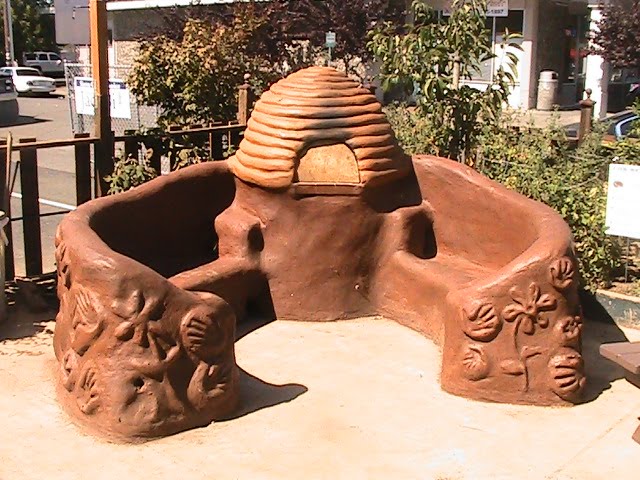
An oven with surrounding benches - also in the plans for the shelter
An oven with surrounding benches – also in the plans for the shelter
Tiles that can be purchased, personalized and added to the structures as a fundraising option

Which then led to the shelter’s director asking me to assist with a eco-social tourism project connecting our center with one in Chisinau and another in Brasov, Romania, that will entail hosting (paying) vacationers to come volunteer for a 10-14 days at all three sites.  It’s cutting-edge social entrepreneurism, an arena that I have been mad about entering but felt completely unqualified to entertain.  And now I’ve been invited to participate in building it from the ground up!

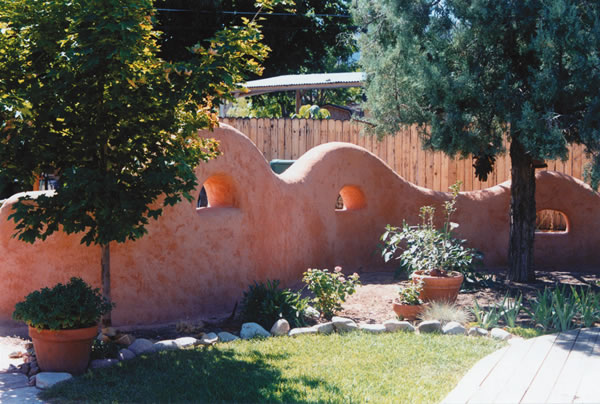
A camouflaging wall that will be built as a model of construction capabilities

I’ve also, quite inadvertently, become a consultant to a youth-run NGO, Cultura Noua, which is comprised of a group of talented, idealistic young people who are intent on learning English, leadership skills, and project management.  When it rains, it flows…

***

I just re-read a posting of mine from mid-winter, when I was sunk in a vortex of confusion and lost-identity.  I am so relieved that I made it to the other side.  I am so busy right now that I am having to bow out of opportunities that I blindly clutched at when my days were empty but which no longer match the excitement and opportunity that are coming at me from all sides.

Serendipity does translate into Romanian, after all.

Maybe not in so many words, but definitely into the narrative of everyday experience.

Vara #2: Turul Moldovei 2013!

Last Saturday, June 15th, Turul Moldovei participants showed up in Soroca (north) and Taraclia (south) to begin 150 mile treks across Moldova that will land them in the capital of Chișinău (just about dead center of the country) on Sunday, June 30th.  For me, this is the culmination of 9 months of planning fraught with all the usual suspects: headaches, fretting, fighting, second-guessing, over-preparation, under-preparation, wasted hours, jam-packed meetings, and long hours spent staring at a computer screen.

And every single moment was absolutely worth it.

***

100_2741
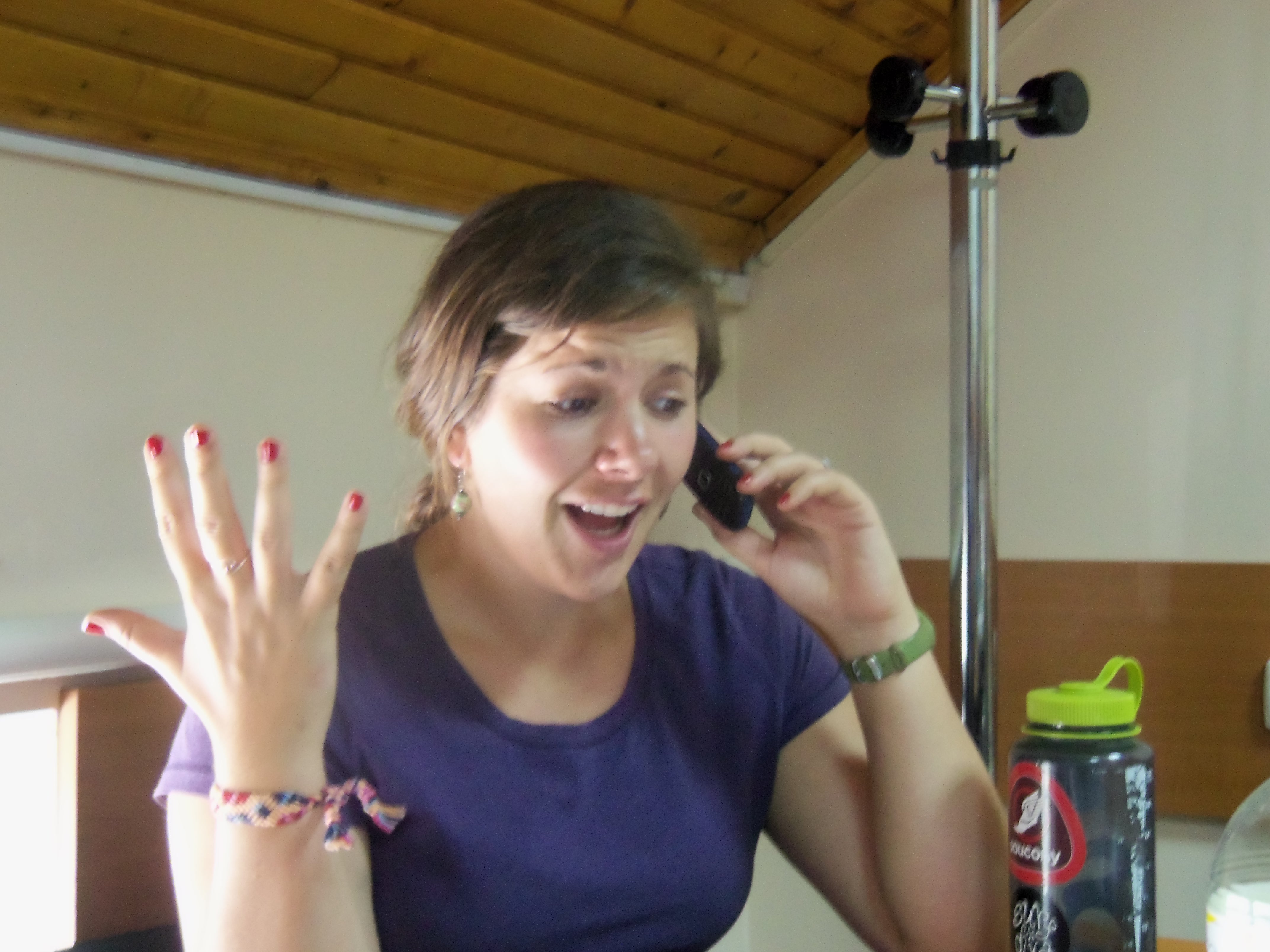
Sue, diplomatically fielding the 102nd call from PC administration…
100_2743
Tori, TM’s most accomplished Romanian speaker, negotiating with a Moldovan vendor.

What began as an off-hand remark made over a beer on a sweltering afternoon in the middle of PST morphed into a three-headed beast with a gaping maw that required seemingly endless permutations of tact, diplomacy, patience, willpower, and plain-old pig-headedness to tame.  Sue may (or may not) have tossed off the flippant observation that “Moldova is so small we could probably walk across it” and Yvette may (or may not) have seized on this bon mot as a brilliant kernel with dynamic potential and we may (or may not) have co-opted Tori into subsuming the Heath Education PCVs’ fuzzily conceived bike trip into our vision; all I know is this particular narrative has now become the stuff of PC Moldova lore.

(20 years from now they will be telling some version of this story as they pack up the banners and toss the old posters when closing this site down….I do know that Sue and Tori will have completely different memories – as they should – of what this project brought to their Peace Corps service, so I do not attempt to relate their viewpoints here. )

Attempting to plan an event or activity with Moldovans is a little like trying get a kindergartner to anticipate her high school graduation: sure it’s something that (theoretically) may occur at some point in the distant future but at this moment in time is so far beyond the horizon that it bears no serious consideration.  Really?  You want me to think about June when it’s only April?  You can’t be serious.

Former admin executive-cum-complusive organizer-cum control freak (some would say) that I am, this inability to engage in proper project-and time-management activities caused my brain to fritz and fry.  I was on permanent melt-down status from January through April until I finally came to terms with the reality that things would either work out or not regardless of how many hours I spent worrying about my inability to anticipate and direct outcomes.

It has been a great exercise in letting go, mostly because I had no choice.  The tighter I held on the greater the tension I created between me and my co-planners and the more I fantasized about plunging fiery paper clips into their eyes as we glared across the table at each other through every meeting that failed to elicit crossed-off agenda items to clear the slate for the next meeting.

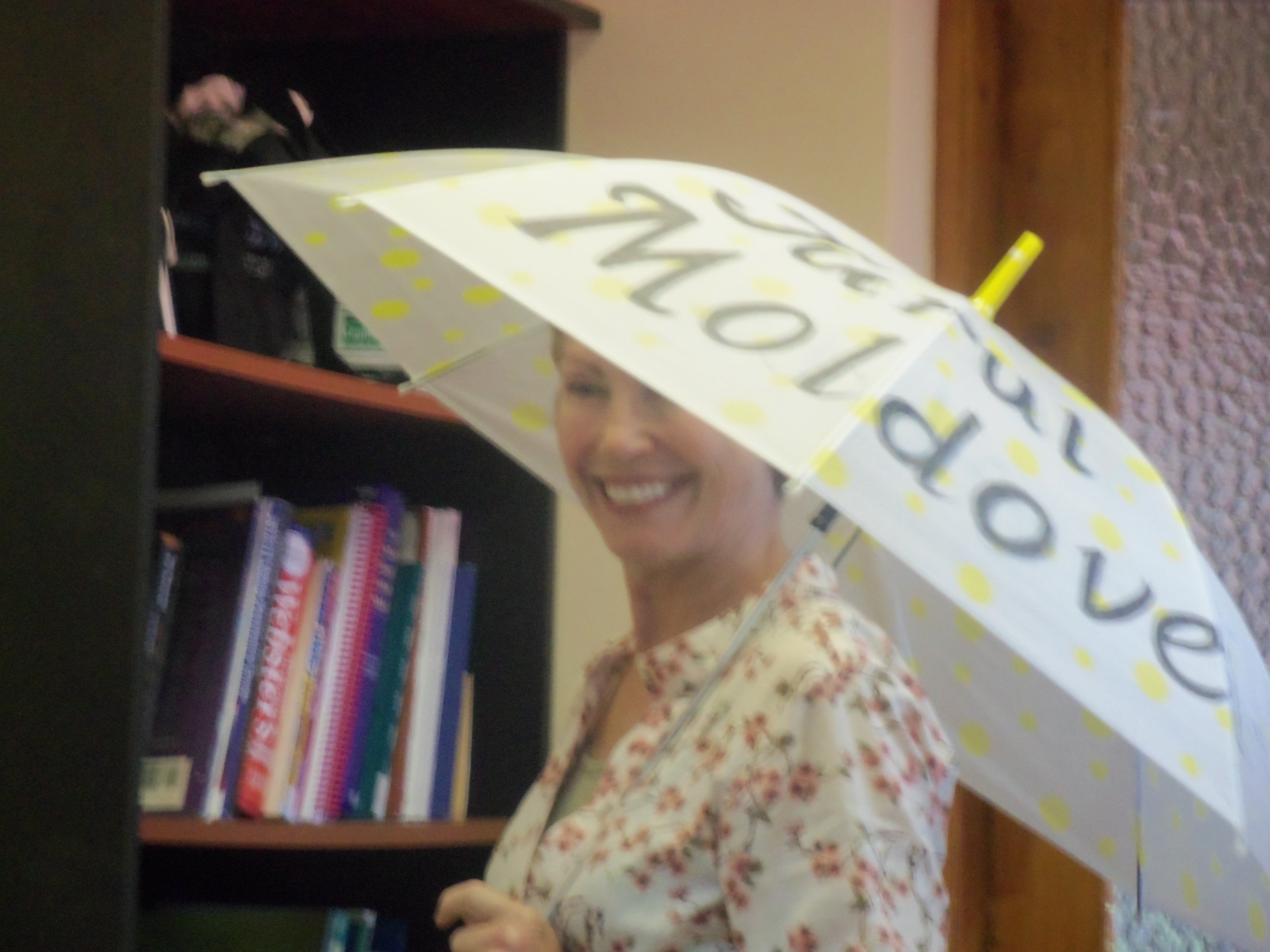
Sue, modeling the official Walk Captain umbrella.

Nothing was ever done to satisfaction.  Nothing was ever completed at all.  Walkers started the journey one day after we eliminated a village on the southern route, not sure where the walkers would go on day 12 of the trek.  The donated water was not delivered until five days after the Tour began.  We had to ship 175 one-and-a-half liter bottles by rutiera and trust that the driver would deliver it to a person standing by the side of the highway.  Events in some of the villages have still not been formulated. We’re not sure that there is a vehicle at every site to transport luggage, water, and equipment to the next site.  And you know what?  It will all be fine.

South Taraclia - wedding party
Turul joins the wedding party – de sigur!

Because I have fielded tens of calls and received a ton of emails and read ecstatic FB postings about the amazing experience that the walkers have had in just a short amount of time on the road.  Peopl e who had registered for one or two days are now signing up for as many more days as they can find open.  Others who had not registered at all are spontaneously showing up to the village sites by bus to join in the celebrations.

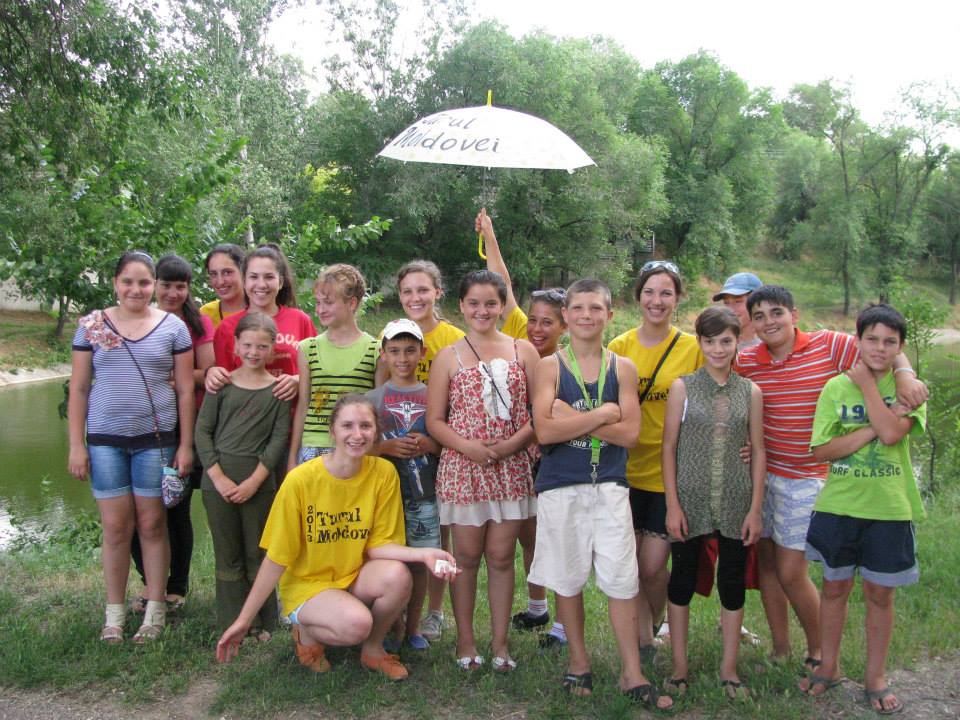
The walkers have been feted and applauded and put to back breaking labor.  They have slept in comfy beds and on the wet grass adjacent to the Nistru River.  They have had to buy and prepare their own meals and been wined and dined in a fancy restaurant, gratis.   In the space of 120 hours they have walked almost 50 miles and met at least a hundred new people.  They have not only shown a whole host of Moldovans what spreading peace and friendship means, they themselves have been the recipients of an abundance of curiosity, hospitality, and good will.South Taraclia - with kids

Four teenaged Moldovan students of a English English Education PCV are accompanying her on the entire southern route.  Apparently, they have been among our best ambassadors.  There are myriad pictures of them in their bright yellow Turul Moldovei t-shirts, playing with kids, dancing with other girls, shoveling dirt, picking up trash.  A particularly poignant photo was taken of one of them seated next to an older Moldovan gentleman, both of them resting on a curb, deep in animated conversation.  We liked it so much we posted it to the Turul webpage.  When she saw it, I heard that she started to cry.  She said that never in her life had she imagined she could undertake such a journey, have such an amazing experience; never in her life did she imagine her picture would be featured on a web page.  She said that she will remember this walk for the rest of her life and maybe nothing could ever make her this happy again.   (Of course, I freaking cried.)

South Taraclia - old manThe picture of a lifetime

***

This project is succeeding far beyond our wildest dreams.   After all the pain and frustration and headaches, the result has been a fantastic, life-altering (for some) experience, and the most perfect way to embody the ups and downs of the Peace Corps journey.

Poftim Moldova. Drum Bun!

*****************************************************************************************************************************To all of my blog followers, friends and family who donated to this project – a huge hug and a shower of love and appreciation.  I wish I could share with you what a unique story you have helped write, what a difference you have made to so many people.  You have helped to create a treasured experience that will live on in peoples’ spirits, uniting particular Moldovans and American through many years and distances and which – hopefully – will contribute to a new knowledge of what an amazing experience volunteering can be for both of our nations’ citizens. 

To follow the daily progress of Turul Moldovei 2013, visit our our official website.